

AI Content Strategy: Why Faster Blogs Perform Worse
The longest-running survey in content marketing just recorded its worst year. Not its slowest year. Its worst.
Orbit Media surveyed 1,042 content marketers this month for its thirteenth annual blogging study. Only 13.9% said their blog delivers strong marketing results. For twelve straight years that number sat between 20% and 30%. It just fell six full points below its previous floor.
Here is the part that should reshape your AI content strategy: the research does not blame AI. It points somewhere else, and the somewhere else is fixable.
One number just broke a twelve-year pattern
Two findings in the 2026 data matter more than the rest. Start with the success rate collapse. The second finding is quieter and arguably worse: 18.9% of marketers now say they simply do not know whether their blog delivers results. That figure held between 9% and 14% for a decade. Nearly one in five people producing content today cannot tell you if the work is working.
Meanwhile, production got faster. The average blog post now runs 1,312 words, down from a peak of 1,427 in 2023. Average writing time fell to 3 hours and 20 minutes, down from 4 hours and 10 minutes in 2022. Orbit did the math and found the typical content marketer now spends 50 fewer hours per year writing than they did four years ago.
A full week of labor recovered. Results cut roughly in half over the same window. That trade looks bad on its face, and it explains why so many teams feel busy and stuck at the same time.
Your AI content strategy is not the problem
This is where the research gets interesting, and where most commentary gets it wrong.
92.4% of content marketers now use AI. The remaining 8% do not. Both groups report strong results at exactly the same rate. No advantage either way.
What the data does show is that the non-AI group is significantly more likely to report disappointing results. Using AI does not make you more likely to win. Skipping it appears to make you more likely to lose.
Read that twice, because it inverts the popular story. In this data, AI delivers efficiency without a performance advantage. The marketers skipping it were the ones more likely to land in the disappointing column. An AI content strategy does not buy you an edge, because your competitors point the same tools at the same topics.
None of the AI use cases in the survey correlate with performance. Marketers simply got faster at producing the same things they were already producing.
So most of the AI content strategy advice sold over the last two years optimized the wrong variable. Speed was never the bottleneck. No blog on earth failed because the posts took four hours instead of three.
What actually broke
Every practice that correlates with strong results is in decline, while every practice that correlates with weak results is on the rise. That pattern is the study’s own explanation for the collapse, and it has nothing to do with your AI content strategy.

The specifics are worth sitting with:
- Expert and influencer collaboration is the single best predictor of success in the entire dataset. Marketers who do it beat the benchmark by 2.6 times. It is also the most abandoned practice, down from 25% of marketers in 2017 to 7% today.
- Original research improves the odds of strong performance by about 50%, and it is the one thing an AI model cannot manufacture. Fewer marketers publish it every year.
- Formal human editing is associated with nearly double the benchmark rate. Handing editing to AI produced the lowest strong-results rate of any editing method measured.
- Guest posting fell 29% in a single year. Influencer collaboration fell 22%.
- Keyword research still separates winners from losers, and marketers are less likely than ever to do it.
Orbit identified eight strategies tied to strong performance. Marketers using six or more report strong results at 39%. Those using one or none report 4%. Out of 1,042 respondents, exactly zero used all eight.
Orbit’s own conclusion is blunt. Content marketing did not stop working. The people doing it stopped doing the parts that work.
Search changed shape at the same time
While teams were cutting effort, search itself changed shape. Three independent measurements tell the same story from different angles.

Pew Research tracked 68,879 real Google searches from 900 US adults. When an AI summary appeared, users clicked a traditional result 8% of the time. Without a summary, 15%. Clicks on links inside the summary happened in roughly 1% of visits.
Ahrefs analyzed 300,000 keywords using Search Console data and found a 58% lower click-through rate for the top-ranking page when an AI Overview is present. Eight months earlier the same methodology measured 34.5%. The effect is intensifying as the rollout matures.
Seer Interactive, tracking informational queries across 42 organizations, watched organic click-through rate on affected queries fall from roughly 1.8% to 0.6%.
Google applied pressure from another direction. Its spam policies continue to target content produced at scale primarily to manipulate rankings, whether a person or a machine wrote it. A spam update ran in late March 2026, followed days later by a broad core update that reshuffled results again. Google did not name AI-generated content as a specific target of that core update. Its stated position, from Search Liaison Danny Sullivan, focuses on the quality of content rather than how the content was produced.
None of that is a reason to stop publishing. It is a reason to change what you publish and how you show up in AI search results.
The uncomfortable overlap: Ahrefs found that 99.2% of the keywords triggering AI Overviews carry informational intent. That overlaps heavily with the question-shaped content most blog programs produce at scale. Content that is easiest to generate turns out to be content most easily absorbed and answered without a click.
Rebuilding an AI content strategy that performs
None of this calls for abandoning AI. It calls for putting the effort back in a different place. Five moves turn an AI content strategy from a speed play into a results play, listed in the order we would run them.
1. Count your practices before you change anything
Go down the list honestly: expert collaboration, original research, formal human editing, keyword research, paid promotion, meaningful visuals, longer and more varied formats, consistent analytics. How many does your program run today? Most teams land on two or three. That count predicts your outcomes better than your publishing calendar does, and adding one more is a smaller lift than doubling output.
2. Get one real human voice into every post
Fifteen minutes with your service manager gets you two or three sentences nobody else on the internet has. Ask what customers get wrong most often. Write the answer down in their words instead of cleaning it up into marketing language, because the slightly awkward phrasing is the part that proves a person said it. Attribute by name and role. This is the cheapest of the eight practices and it carries the strongest correlation to results, and no model can invent it.
3. Publish half as often and spend the hours on the other half
Effort alone is not the answer, and speed alone is definitely not. Marketers who spend six or more hours per post and run four or more of those strategies report strong results at 31%, more than double the overall benchmark. Depth plus strategy wins. For most teams, two deeply developed posts a month are a better bet than eight thin ones, and they cost about the same in total hours.
4. Change the number on your dashboard
Volume metrics are the most watched and the weakest. About 39% of marketers name traffic or pageviews as their primary measure, and only 11% of that group reports strong results, below the overall benchmark. In a zero-click environment, traffic can fall while influence rises.
Watch branded search volume, direct traffic, conversion rate by source, and whether AI assistants name your business when asked about your category. Treat that last one as a visibility check rather than a clean metric, because AI answers vary from run to run. Branded search volume and online reputation both rated among the strongest signals in their categories in the Zyppy survey. They earn a spot on the dashboard twice over.
5. Point AI at the work it is genuinely good at
Research synthesis, outlining, headline variants, alt text, repurposing one post into five formats, first-pass copy edits, visual production. All of that is fair game and saves real hours.
Keep the human on the reporting, the point of view, the sourcing, and the final read. A working AI content strategy is mostly a decision about where the human hours land. That is the design question we work through with clients on the AI marketing solutions side. Send the saved time back into the post, not out of the budget.

Write the one post nobody else could have written
Search engines and AI assistants have both moved toward rewarding distinctive information over repetition. The practical version is simple. If every fact on your page also appears on twenty other pages, there is nothing distinctive for a model to pull, cite, or credit you for.
Academic work on generative engine optimization, published at ACM KDD in 2024, tested this directly. Adding statistics, direct quotations, and source citations raised visibility inside AI answers by as much as 40%. Treat that figure carefully. The study measured visibility inside generated answers, not rankings, referral traffic, leads, or revenue, and 40% is a ceiling from a controlled benchmark rather than an average. Follow-up reviews have found the real-world effect smaller and heavily dependent on context. The direction holds even where the number does not.
Practitioners see the same thing. Zyppy’s 2026 ranking factors survey asked 131 SEO professionals to rate 103 possible signals, collecting 13,665 ratings in total. Content relevance, backlinks, and content quality came out on top. Inside the content quality group, original research and first-party data drew some of the highest scores of any single factor. Several respondents named information gain as the deciding signal when competing pages answer the same search intent.
That survey also drew a clean line on AI content strategy. Respondents rated AI-generated content favorably when it carried real human review and added something new. They rated it negatively when it shipped at scale with little added value.
Two different groups of people, two different methods, one answer.
A post built on your own data, your own testing, and a named person’s actual experience cannot be reproduced by a competitor typing a prompt.
Build your AI content strategy around producing exactly that. It is one of the few positions a competitor cannot copy in an afternoon, and regional businesses are unusually well equipped to take it. You have the job sites, the service calls, the twenty-year customers, and the numbers nobody else has seen.
Where this leaves your next quarter
The 2026 data delivers an oddly encouraging message. Content marketing is not broken. The practices associated with strong performance are still sitting right there in the data, still working for the minority who run them. Most teams stopped running them, mistook speed for strategy, and are now measuring the results of that trade.
Pick two abandoned practices. Add them back this quarter. Cut your publishing frequency to protect the time. An AI content strategy built on that foundation puts you in the small minority still winning. The barrier to entry has never been lower, because almost nobody is doing the work.
Not sure how many of the eight your program actually runs? We will walk through your content, your analytics, and your search visibility with you and tell you which two moves would change the most. No pitch, just an honest read. Start the conversation or call 603.645.2500.
Ready to Take Your Brand Beyond Ordinary?
Your marketing shouldn’t just exist. It should perform. If you’re done settling for “good enough,” let’s build something impossible to ignore. Brandit helps you connect every digital, physical, and promotional touchpoint into one unstoppable brand experience.
Real Results,
Real Reactions
What Our Clients Say

"I sent out three bids for my marketing needs for this year and Brandit was the most responsive and provided great ideas. One company I reached out hadn't even gotten back to me while the other wasn't even close to being comparable to Brandit's creativity, pricing and service."
"I have used Brandit for several projects and they always come through with fantastic pricing and customer service. I highly recommend them."
Southern New Hampshire University

"Thanks to Brandit's generous contribution to the Big Ideas for Building Independence Capital Campaign, Easterseals NH is now better able to serve people with disabilities or special needs. With your support, we raised nearly $2.6 million for renovations to our headquarters."
"It has been an incredible journey! We couldn't have done it without you, and wish to take this opportunity to thank you and your team at Brandit Marketing Solutions for all that you have done and your generous donation."
Easterseals, NH

"Bringing Brandit Marketing Solutions into the CMC-fold is the best thing and most appreciative thing I've done since being at the Hospital."
Catholic Medical Center
"Exceptional does not even begin to cover the work that these people do. I have worked closely with other marketing firms and Brandit tops them every time. From innovative ideas to customer service that rivals the best of the best. I just couldn't speak more highly of them."
Southern New Hampshire University

"The Granite Group, headquartered in Concord, NH, distributes plumbing, heating, cooling, water and propane supplies to contractors and fuel dealers across New England through over 45 wholesale branches and their Online Store. The company also operates 15 retail showrooms under The Ultimate Bath Store name.
Brandit is pleased to say that we have been working with the Granite Group for over ten years which happens to be almost as long as this company has been in existence. In 2020, TGG was named one of New Hampshire's best places to work."
The Granite Group
10+ Year Partnership

"Over my long career, I have been in a position where I have worked closely with numerous vendors/suppliers. I can honestly say that I have never engaged with a company that is as amazing and responsive as Brandit."
"A sincere thanks to the team for the hustle on getting our shirts and tradeshow materials done for our group! You really relieved our pressure and I know it wasn't an easy task. Your effort and turnaround time was and is appreciated. Believe me when I say that I do not take for granted the relationship we have built over the years. Your service is top notch."
C&S Wholesale Grocers

"For almost a decade, the team at Brandit delivered successful and effective marketing solutions, spearheaded the merchandising of the FIRST brand by creating one-of-a-kind products, built, hosted, and managed their very first ecommerce store supporting all programs, staff, partners, sponsors, teams, and customers globally.
In addition, Brandit set up and managed multiple on-site retail stores at their premier Championship events where we serviced over 65,000 attendees. Today we provide web services as well as branded merchandise for regional partners".
FIRST Robotics

"The Brandit Marketing Solutions Ltd Team is wonderful to work with and we appreciate what they do to make us look good! They have expanded their services in recent years to meet whatever marketing needs you may have…from apparel and giveaway items to video and web services to graphic design and printing services, even graphic enhancements for your interior/exterior office space."
"I have worked with this team since the founding of their company and look forward to many more years of working together!"
Boys & Girls Club of Manchester

"The Brandit team is a talented group of creative professionals that I've worked with for years. Top notch!"
Art Murphy
Our Insights
.

Why People Keep Branded Gifts (and Why They Toss Them)
Open your kitchen cabinet. There is a good chance a travel mug from a bank, a vendor, or a charity 5K is sitting in there right now. Now think about all the giveaways that never made it past the car. That gap is where your budget lives. PPAI’s 2026 consumer research found that more than…

Why Customer Reviews Matter More in AI Search
A few years ago, your star rating was a tiebreaker. Google showed a searcher three nearby businesses. Your customer reviews then helped them choose between you and the two competitors beside you on the map. That role is changing. AI search tools can now use reviews as part of the evidence they weigh when recommending…

Your Team Already Forgot Last Year’s Gift Card
The $50 gift card lands in the inbox on December 18. It gets spent on gas, or groceries, or the earbuds somebody was going to buy anyway. By the second week of January, nobody remembers who sent it. That is the whole problem with the safest choice in employee holiday gifts. It works, and then…

Co-op Advertising Funds: How They Work & How to Use Them?
Somewhere on a distributor statement you do not read closely, or in a dealer portal you have not logged into since spring, there may be a line with a dollar figure next to it. It went up every time you bought qualifying equipment this year. Depending on the program, some or all of it may…

You Have More Inboxes Than You Think: Where Your Leads Are Actually Going
Somebody filled out the contact form on your website three weeks ago. It said thank you. The page worked exactly the way it was supposed to. Nobody got an email. That is how missed leads often happen. Your business almost certainly does not have one inbox anymore. It has a collection of contact forms, social…

Employee Onboarding Kits: Ideas, Costs & a 90-Day New Hire Plan
Your newest hire accepts the offer in September, then spends two quiet weeks at home wondering if they made the right call. That stretch between yes and day one is where a lot of New Hampshire employers lose good people before the work even starts. Employee onboarding kits close that gap. A well-built welcome package…
Brand Consistency: Make Your Site & Sign Match
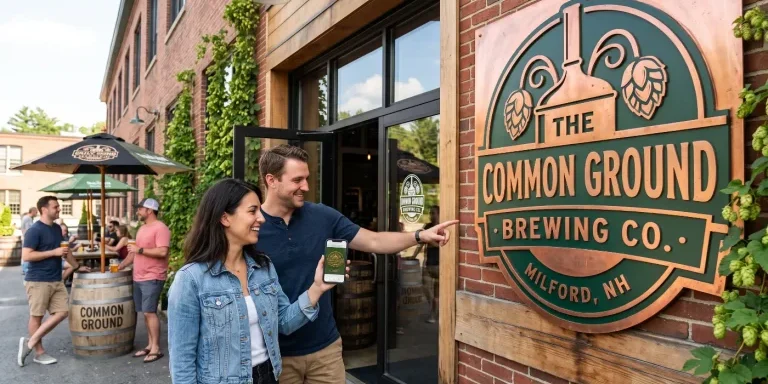
Your website looks sharp. Your storefront sign looks fine. Your business cards came back a slightly different shade of blue than you remembered. Each one on its own seems like a small thing. Together, they cost you customers and money. Brand consistency is whether everything a customer sees from you looks and sounds like it…

Sustainable Promotional Products: A Buyer’s Reality Check
That recycled tote you ordered for the trade show has a problem. The product page called it eco-friendly, you felt good about the choice, and you moved on. Here is the uncomfortable part: when auditors actually test merchandise carrying self-declared green labels, close to half cannot back up the claim. The word on the page…

What Is AI Search Readiness and How Can Local Businesses Improve Visibility?
Your next lead may begin with an AI agent researching your company before a person ever visits your website or contacts your team. Google is expanding the ways its AI-powered Search tools can help people find and compare local providers. A customer can describe what they need, ask Google to research nearby businesses, and use…
Premium vs. Volume: Rethinking Your Promotional Products Budget
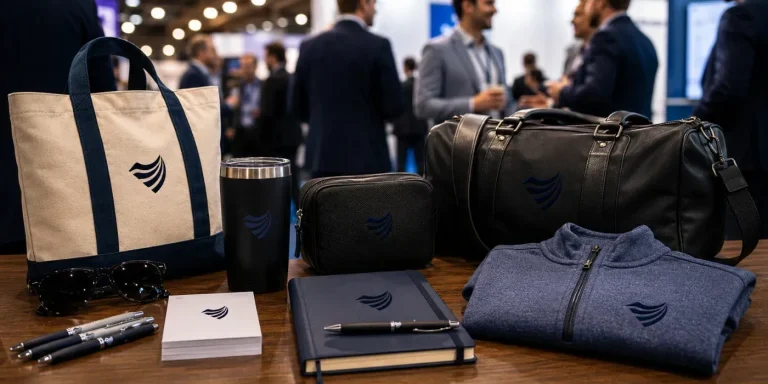
You order 500 pens for the trade show. They cost a little over a dollar each, they have your logo, and they feel like a responsible use of the budget. Three weeks later, most of them are in a junk drawer, a parking lot, or a trash can. A few never made it out of…
Omnichannel Marketing Solutions
Merging creativity and technology for comprehensive brand experiences.

PIXELS
Harnessing digital platforms for impactful brand promotion and audience engagement through strategic touchpoints.

PROMOS
Making the intangible tangible through high-quality promotional items that echo your brand's voice and values.

PLACES
Transforming physical environments into powerful brand narratives that forge connections with everyone who enters your space.