

Your Team Already Forgot Last Year’s Gift Card
The $50 gift card lands in the inbox on December 18. It gets spent on gas, or groceries, or the earbuds somebody was going to buy anyway. By the second week of January, nobody remembers who sent it. That is the whole problem with the safest choice in employee holiday gifts. It works, and then it vanishes.
This is not an argument against the gift card. It is an argument that the card and the “same mug for everyone” box are the two weakest options on the table, and that the middle path between them is easier to run than most companies think.
There is a third option: a gift-of-choice employee holiday program. Give employees a curated choice of useful, high-quality physical gifts while keeping the experience easy to administer, consistent with your brand, and practical for remote or multi-location teams.
Learn more about the differences, benefits, and tradeoffs in our guide: Gift Cards vs. Gift-of-Choice Programs: Which Employee Gift Strategy Works Better?
What Makes a Good Employee Holiday Gift?
A good employee holiday gift is useful, high quality, relevant to the recipient, appropriate for a diverse workforce, and easy for the company to deliver consistently.
Price alone does not determine whether a gift succeeds.
PPAI’s consumer research found usefulness to be a major driver of perceived merchandise value, while quality strongly affects how recipients perceive the brand behind an item. In other words, the gift has to earn a place in someone’s life before the logo on it can do much work.
For employers, five factors matter most:
- Usefulness: Will the employee actually use it?
- Quality: Does it feel like a gift rather than leftover promotional inventory?
- Choice: Can employees select something suited to their needs or preferences?
- Inclusivity: Does the program accommodate different roles, sizes, locations, lifestyles, and traditions?
- Execution: Can you collect selections, decorate products, package them, and deliver everything on time?
That framework matters more than finding one supposedly perfect product.
If sustainability is an important purchasing factor for your company, our sustainable promotional products buyer’s guide explains how to evaluate materials, product longevity, packaging, and environmental claims without sacrificing usefulness.
Why Gift Cards Remain Popular for Employee Holiday Gifts?
Gift cards are popular because they eliminate decisions.
There are no apparel sizes to collect. No product preferences to predict. No boxes to pack. No shipping addresses to chase. The employee can buy whatever they want, and the employer can distribute the reward quickly.
Employees clearly value that freedom.
Ask employees what they want from employee holiday gifts and the card comes up fast. A 2025 survey of more than 1,000 US workers ranked gift cards as the most popular holiday gift category, ahead of food and drink and outerwear.
Custom Ink’s 2025 employee holiday survey found that 52% would rather pick from several gift options than receive the same item as everyone else. Only 31% wanted the identical gift.

People want a say in what they get, and a gift card looks like the cheapest way to give them one. For the person placing the order, the card wins on effort too. There are no sizes to collect, no shipping addresses, and no “I don’t wear hoodies” email on December 20. One afternoon, one spreadsheet, done.
That is a real case, and it explains why so many companies default to it every year. The trouble is that the card solves your problem, not your employee’s.
Many employees view one-size-fits-all gifting as outdated and that personalization can come from choice, timing, and the message around the gift—not only from printing somebody’s name on a product.
The lesson is not simply that employees want gift cards.
It is that employees want agency.
That distinction gives employers more options.
Gift Cards vs. Physical Employee Gifts: What Companies Need to Consider
Gift cards solve one important problem: they give employees freedom. But they also remove some of the elements that make employee holiday gifts memorable — personal recognition, physical brand connection, and the experience of receiving something chosen specifically for them.
1. Branded Employee Gifts Create Longer-Lasting Brand Connections
Once the balance hits zero, the card is a piece of plastic in a junk drawer or a deleted email. Nothing about it says who it came from. A well-made physical item does the opposite.
PPAI’s 2026 consumer study of more than 3,400 US adults found that 68% say usefulness makes branded merchandise feel valuable, and nearly 90% say high-quality merchandise improves how they see the company behind it. A good insulated jacket with a small logo on the sleeve gets worn to the hardware store for three winters. The card is gone by Valentine’s Day.
For companies investing in branded merchandise, product selection matters as much as decoration. See our guide on promotional products and apparel for examples of how quality, usability, and branding work together.
2. Personalized Employee Gifts Better Match Different Employee Preferences
A $50 card is the same object to the 22-year-old apprentice and the office manager who has been with you for thirty years. It carries no thought. In that same workforce survey, 82% of employees said they would value a gift more if it were personalized in some way.
The bottom of their list was just as telling. Office products and stationery, the pens and desk gear employers love to hand out, ranked among the least wanted gifts. A card skips the part where you show you noticed who someone is.
Modern employee gifting is moving toward personalization at scale.
That does not require manually selecting a different product for every person. Personalization can come from:
- Letting employees choose from a curated gift collection
- Allowing apparel size and color selection
- Offering products that fit different work environments
- Including a personal message from leadership
- Creating branded packaging or gift kits
The strongest employee gift programs do not force one product onto everyone.
They create enough choice for employees to feel considered while keeping the company’s budget, branding, and fulfillment process controlled.
3. Employee Holiday Gifts Create Recognition Moments Beyond Transactions
Redeeming a card is a transaction. Opening a box is an event, and employee holiday gifts should feel like one. That difference sounds small until you watch a crew open shipments in the break room versus glancing at a payroll notification. Only one of those becomes a story people tell at home that night.
A branded package, a personal note, and a useful product can create a moment employees share with their families or coworkers.
This is where custom kitting and fulfillment becomes valuable.
A complete employee gift experience can include:
- Curated merchandise selection
- Branded packaging
- Printed thank-you notes
- Multiple product combinations
- Direct-to-employee shipping
The product creates value, but the presentation creates the moment.
For companies building broader appreciation programs, employee holiday gifts can also support a larger employee recognition strategy.
Gift-of-Choice Programs: The Alternative to Traditional Employee Gift Cards
The middle path for employee holiday gifts is a gift-of-choice program. Your team gets the say they asked for, and each person still ends up holding something with your name on it.
Instead of choosing between:
- A gift card that provides freedom but little brand connection
- A single product that provides branding but may not fit everyone
companies can create a curated collection of useful gifts and allow employees to select what works best for them.
A successful gift-of-choice program connects:
Employee preference → personalized selection → useful product → stronger recognition experience
Brandit can help companies build these programs through curated merchandise, employee storefronts, company stores, custom packaging, and fulfillment support.
What Is a Gift-of-Choice Employee Holiday Gift Program?
A gift-of-choice program lets an employer curate a limited assortment of approved gifts at a defined budget, then lets each employee choose the item that fits them best.
Instead of handing everyone the same product or issuing an unrestricted gift card, the company controls the product quality, branding, and overall experience while employees control their individual selection.
A simple program might include:
- Short menu: Five to eight items at one price point across a few categories, such as outerwear, drinkware, tech, something for the kitchen, and something for the truck
- Pop-up store link or simple order form: Employees pick, size themselves, and enter their own ship-to address, so nobody chases anyone for a sweatshirt size
- Two-week window: One announcement email, one reminder, and then ordering closes
- One kitted delivery: Orders ship home or land at the office in one drop, boxed so the unboxing still feels like a gift
The model connects two things that employers often treat as opposites: employee choice and brand consistency. The company maintains control over the quality and presentation of the gift, while employees receive something that better matches their needs, preferences, and lifestyle.
Why Gift-of-Choice Programs Work Better for Diverse Employee Teams?
This setup solves the problems the card only appears to solve. Sizing is handled because people size themselves. Mixed holiday traditions stop being an issue when you frame the program as a year-end thank-you and keep the menu neutral.
Your field-crew-versus-office problem disappears too. The technician takes the beanie and the 40-ounce bottle while the office manager takes the blanket. And the box still shows up, so the surprise survives.
Brand names matter here. More than three-quarters of employees in that workforce survey said they would appreciate a gift from a name like Nike, The North Face, YETI, or Carhartt more than a generic item. Put the money into the product and keep the logo small. It gets worn more, and it gets seen more.
If you already run a company store, the holiday menu can live inside it. Without one, a simple order form does the job just as well for a single season.
With a curated selection:
- Employees choose products that fit their daily routines.
- Apparel sizing becomes easier because employees select their own sizes.
- Different work environments and lifestyles can be considered.
- Companies maintain consistent branding and budget control.
- HR teams avoid manually managing individual preferences.
Personalization does not always require creating a completely different gift for every employee.
In modern employee gifting, personalization can come from:
- Choice of product
- Size and color selection
- A personal message
- Branded packaging
- A gift collection designed around employee preferences
That is personalization at scale.
Employee Holiday Gifts, Payroll, and Tax Considerations
IRS Publication 15-B treats gift cards as cash equivalents, which means they count as taxable wages no matter the amount. They go through withholding and show up on the W-2. Holiday gifts other than cash with a low fair market value can qualify as de minimis benefits and stay off the paycheck entirely. The option that felt easier in October can turn into a payroll task in January.
This is not tax advice, and the rules on value and frequency have specifics your accountant will want to walk through. Ask before you decide, not after the cards go out.

Employee Holiday Gift Planning Timeline: When Should Companies Order Gifts?
Employee holiday gifts fail on timing more than on taste. Name-brand outerwear inventory thins out by mid-November, and decorators are booked solid through December. Here is the schedule that works:
- Mid-October: Menu locked, price point set, artwork approved
- Early November: Ordering opens with one announcement and one reminder
- Week before Thanksgiving: Orders close and decoration starts
- First two weeks of December: Kits ship home or arrive at the office in one drop
If you are reading this in late September, you have a few weeks of slack. Reading it in November, a curated menu of in-stock items is still possible. A custom kit is not.
If you are planning a highly customized program with special packaging, multiple products, or individual shipments, earlier planning provides more flexibility.
For a complete planning guide, see our corporate holiday gifting timeline.
Employee Holiday Gifts That Get Kept, Used, and Remembered
The real question with employee holiday gifts was never card or no card. It is whether the thing you give is still in someone’s life in March. A gift card answers that question by February.
The good jacket, a bottle that rides in the truck every morning, or a blanket on the couch answers it for years, and every one of them carries your name.

Want a menu built around your team? The Brandit team takes on a limited number of holiday programs each fall for New Hampshire companies.
Send us your headcount and a rough price point, and we will put together a curated menu your team can choose from. No pitch, just a list.
- What Makes a Good Employee Holiday Gift?
- Why Gift Cards Remain Popular for Employee Holiday Gifts?
- Gift Cards vs. Physical Employee Gifts: What Companies Need to Consider
- What Is a Gift-of-Choice Employee Holiday Gift Program?
- Why Gift-of-Choice Programs Work Better for Diverse Employee Teams?
- Employee Holiday Gift Planning Timeline: When Should Companies Order Gifts?
- Employee Holiday Gifts That Get Kept, Used, and Remembered
Ready to Take Your Brand Beyond Ordinary?
Your marketing shouldn’t just exist. It should perform. If you’re done settling for “good enough,” let’s build something impossible to ignore. Brandit helps you connect every digital, physical, and promotional touchpoint into one unstoppable brand experience.
Real Results,
Real Reactions
What Our Clients Say

"I sent out three bids for my marketing needs for this year and Brandit was the most responsive and provided great ideas. One company I reached out hadn't even gotten back to me while the other wasn't even close to being comparable to Brandit's creativity, pricing and service."
"I have used Brandit for several projects and they always come through with fantastic pricing and customer service. I highly recommend them."
Southern New Hampshire University

"Thanks to Brandit's generous contribution to the Big Ideas for Building Independence Capital Campaign, Easterseals NH is now better able to serve people with disabilities or special needs. With your support, we raised nearly $2.6 million for renovations to our headquarters."
"It has been an incredible journey! We couldn't have done it without you, and wish to take this opportunity to thank you and your team at Brandit Marketing Solutions for all that you have done and your generous donation."
Easterseals, NH

"Bringing Brandit Marketing Solutions into the CMC-fold is the best thing and most appreciative thing I've done since being at the Hospital."
Catholic Medical Center
"Exceptional does not even begin to cover the work that these people do. I have worked closely with other marketing firms and Brandit tops them every time. From innovative ideas to customer service that rivals the best of the best. I just couldn't speak more highly of them."
Southern New Hampshire University

"The Granite Group, headquartered in Concord, NH, distributes plumbing, heating, cooling, water and propane supplies to contractors and fuel dealers across New England through over 45 wholesale branches and their Online Store. The company also operates 15 retail showrooms under The Ultimate Bath Store name.
Brandit is pleased to say that we have been working with the Granite Group for over ten years which happens to be almost as long as this company has been in existence. In 2020, TGG was named one of New Hampshire's best places to work."
The Granite Group
10+ Year Partnership

"Over my long career, I have been in a position where I have worked closely with numerous vendors/suppliers. I can honestly say that I have never engaged with a company that is as amazing and responsive as Brandit."
"A sincere thanks to the team for the hustle on getting our shirts and tradeshow materials done for our group! You really relieved our pressure and I know it wasn't an easy task. Your effort and turnaround time was and is appreciated. Believe me when I say that I do not take for granted the relationship we have built over the years. Your service is top notch."
C&S Wholesale Grocers

"For almost a decade, the team at Brandit delivered successful and effective marketing solutions, spearheaded the merchandising of the FIRST brand by creating one-of-a-kind products, built, hosted, and managed their very first ecommerce store supporting all programs, staff, partners, sponsors, teams, and customers globally.
In addition, Brandit set up and managed multiple on-site retail stores at their premier Championship events where we serviced over 65,000 attendees. Today we provide web services as well as branded merchandise for regional partners".
FIRST Robotics

"The Brandit Marketing Solutions Ltd Team is wonderful to work with and we appreciate what they do to make us look good! They have expanded their services in recent years to meet whatever marketing needs you may have…from apparel and giveaway items to video and web services to graphic design and printing services, even graphic enhancements for your interior/exterior office space."
"I have worked with this team since the founding of their company and look forward to many more years of working together!"
Boys & Girls Club of Manchester

"The Brandit team is a talented group of creative professionals that I've worked with for years. Top notch!"
Art Murphy
Our Insights
.

Why People Keep Branded Gifts (and Why They Toss Them)
Open your kitchen cabinet. There is a good chance a travel mug from a bank, a vendor, or a charity 5K is sitting in there right now. Now think about all the giveaways that never made it past the car. That gap is where your budget lives. PPAI’s 2026 consumer research found that more than…

Why Customer Reviews Matter More in AI Search
A few years ago, your star rating was a tiebreaker. Google showed a searcher three nearby businesses. Your customer reviews then helped them choose between you and the two competitors beside you on the map. That role is changing. AI search tools can now use reviews as part of the evidence they weigh when recommending…

AI Content Strategy: Why Faster Blogs Perform Worse
The longest-running survey in content marketing just recorded its worst year. Not its slowest year. Its worst. Orbit Media surveyed 1,042 content marketers this month for its thirteenth annual blogging study. Only 13.9% said their blog delivers strong marketing results. For twelve straight years that number sat between 20% and 30%. It just fell six full…

Co-op Advertising Funds: How They Work & How to Use Them?
Somewhere on a distributor statement you do not read closely, or in a dealer portal you have not logged into since spring, there may be a line with a dollar figure next to it. It went up every time you bought qualifying equipment this year. Depending on the program, some or all of it may…

You Have More Inboxes Than You Think: Where Your Leads Are Actually Going
Somebody filled out the contact form on your website three weeks ago. It said thank you. The page worked exactly the way it was supposed to. Nobody got an email. That is how missed leads often happen. Your business almost certainly does not have one inbox anymore. It has a collection of contact forms, social…

Employee Onboarding Kits: Ideas, Costs & a 90-Day New Hire Plan
Your newest hire accepts the offer in September, then spends two quiet weeks at home wondering if they made the right call. That stretch between yes and day one is where a lot of New Hampshire employers lose good people before the work even starts. Employee onboarding kits close that gap. A well-built welcome package…
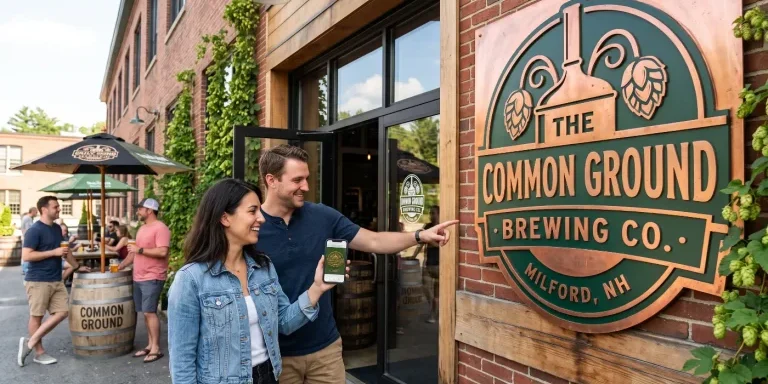
Brand Consistency: Make Your Site & Sign Match
Your website looks sharp. Your storefront sign looks fine. Your business cards came back a slightly different shade of blue than you remembered. Each one on its own seems like a small thing. Together, they cost you customers and money. Brand consistency is whether everything a customer sees from you looks and sounds like it…

Sustainable Promotional Products: A Buyer’s Reality Check
That recycled tote you ordered for the trade show has a problem. The product page called it eco-friendly, you felt good about the choice, and you moved on. Here is the uncomfortable part: when auditors actually test merchandise carrying self-declared green labels, close to half cannot back up the claim. The word on the page…
What Is AI Search Readiness and How Can Local Businesses Improve Visibility?
Your next lead may begin with an AI agent researching your company before a person ever visits your website or contacts your team. Google is expanding the ways its AI-powered Search tools can help people find and compare local providers. A customer can describe what they need, ask Google to research nearby businesses, and use…
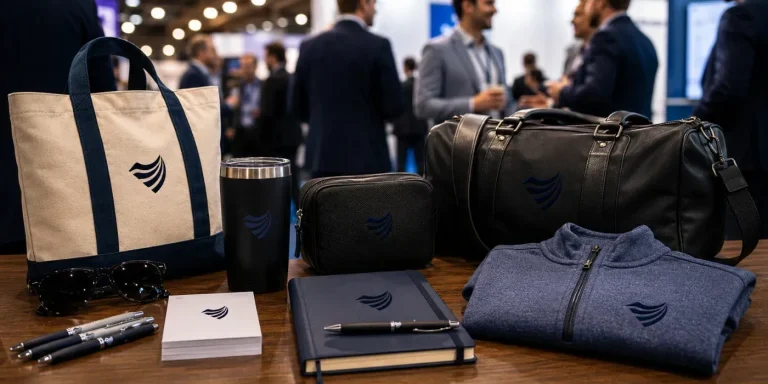
Premium vs. Volume: Rethinking Your Promotional Products Budget
You order 500 pens for the trade show. They cost a little over a dollar each, they have your logo, and they feel like a responsible use of the budget. Three weeks later, most of them are in a junk drawer, a parking lot, or a trash can. A few never made it out of…
Omnichannel Marketing Solutions
Merging creativity and technology for comprehensive brand experiences.

PIXELS
Harnessing digital platforms for impactful brand promotion and audience engagement through strategic touchpoints.

PROMOS
Making the intangible tangible through high-quality promotional items that echo your brand's voice and values.

PLACES
Transforming physical environments into powerful brand narratives that forge connections with everyone who enters your space.