

Co-op Advertising Funds: How They Work & How to Use Them?
Somewhere on a distributor statement you do not read closely, or in a dealer portal you have not logged into since spring, there may be a line with a dollar figure next to it. It went up every time you bought qualifying equipment this year. Depending on the program, some or all of it may disappear at year end.
That line is your co-op advertising fund, and if you sell or install a national brand, there is a decent chance you have one. Manufacturers and distributors set money aside for dealers to promote the brand locally, they fund it as a percentage of what you purchase, and many of them take back whatever has not been claimed when the program year closes.
A lot of program years close on December 31. That makes September an important month to find your balance, find your actual deadline, and put the money toward something your customers will see instead of whatever ships fastest in December.
This post covers how co-op advertising funds work, why so much of the money goes unused, what real dealer programs let you buy, which documents can serve as proof of performance, and a month-by-month plan to spend yours before the deadline. Brandit’s co-op advertising solutions can also help identify available funds, navigate manufacturer guidelines, select eligible marketing materials, and manage the claim-submission process.
What Co-op Advertising Funds Actually Are?
Co-op is short for cooperative advertising. A manufacturer or distributor shares the cost of local marketing with the dealers who sell its products, on the condition that the marketing features the brand and follows the program’s co-branding requirements.

The mechanics vary more than most owners expect, but the shape is consistent: qualifying purchases generate an available balance, approved marketing activities use that balance, and supporting documentation triggers a reimbursement or account credit.
- You accrue funds based on qualifying purchases. Programs commonly calculate available marketing money as a percentage of what you buy, but the rate varies a lot by manufacturer, product, and dealer tier. Daikin’s 2026 contractor program, for example, accrues anywhere from 1% on thermostats to 9% on its premium equipment line.
- The program pays part of each approved expense. Many traditional co-op programs use a 50/50 split. Lennox reimburses up to 60% of a co-branded activity from a dealer’s earned funds. Some accrual-style programs require no dealer match at all. The percentage is in your policy, not in an industry average.
- Many programs reimburse after the expense. You typically pay or document the approved cost, then submit the invoice plus proof the work happened, and the money comes back as a credit or reimbursement. The exact process varies, and some programs handle claims for you.
- Everything has rules. Logo size, logo placement, which products can appear, which media qualifies, and whether you needed approval before you spent the money.
- Balances often expire. Many programs zero out unused funds at the end of the program year, and many program years end December 31. Not all do, which is why the first job is reading yours.
Co-op, Accrual, and Marketing Funds Are Not Always the Same Thing
Dealers use “co-op” loosely to describe any manufacturer marketing money, and the manufacturers do not.
Daikin says it directly on its program page: because it runs an accrual fund rather than a co-op, 100% of the accrued funds become available once program requirements are met, with no matching contribution from the contractor. Lennox separates a dealer’s own investment in its advertising program from the co-op marketing funds the dealer earns on purchases, and treats them under different rules with different deadlines.
Some manufacturers also offer market development funds (MDF). Unlike purchase-based accrual funds, MDF may be allocated for a proposed campaign, event, sales initiative, or other channel-marketing activity. However, manufacturers do not use these terms consistently, so the current program policy remains the controlling source.
Why this matters to you: the type of program decides whether you need to spend a dollar to get a dollar, whether the balance expires, and who files the paperwork. Ask your rep which kind you have before you plan around it.
Why So Much of the Money Goes Unused?
The best available national estimate is old, but it is still the one the industry quotes. A 2016 Local Search Association white paper put the pool of co-op dollars offered by U.S. manufacturers at $36 billion to $70 billion a year, and estimated that $14 billion to $35 billion of it went unclaimed.
The same study found that about 43% of small businesses sold national brands that potentially qualified, and only 42% of those had ever used the funds. It remains one of the most frequently cited figures on the subject, although a newer comprehensive U.S. benchmark is hard to find. A contemporaneous MediaPost report on the LSA findings supports the available and unclaimed fund estimates.
The reasons the money goes unspent are consistent from one program to the next:
- Nobody at the business knows the balance. It may live on a distributor statement, in a dealer portal, on a rewards dashboard, or only with your account rep. It rarely lives in the marketing budget.
- The rules feel like homework. Pre-approvals, proof-of-performance photos, logo guidelines, and claim windows all sit between the dealer and the reimbursement.
- Responsibility is not clearly assigned. The owner may expect the marketing team to manage the fund, while the marketing team assumes the distributor, vendor, or accounting department is handling it. Without a designated fund owner, balances and deadlines are easily missed.
- The deadline arrives in the busiest month. By the time someone remembers the fund, it is December and every vendor is backed up.
- Rejected claims teach the wrong lesson. One denied submission and a lot of owners decide the program is not worth the trouble.
None of that is a reason to skip the money. It is a reason to start in September.
What Happens at the End of the Program Year?
Deadlines are the part owners most often get wrong, and the programs really do differ. A fund-expiration date is not necessarily the same as the activity deadline, invoice window, or claim-submission cutoff. A few current program examples show why each date must be checked separately:
- Trane’s dealer co-op guide describes a program that runs January 1 through December 31, with the official terms and accrual set by your distributor and your co-op sales plan. Deposit claims for events are due within 90 days of the invoice or activity date.
- Ecoer earns funds within the calendar year, does not allow carryover, and accepts funding requests for up to 45 days after December 31.
- Daikin lets funds accrued in its 2026 program be used through March 31, 2027.
- Lennox does not state an expiry for earned co-op funds on its public Consumer Advertising and Promotions program overview and points dealers to its separate co-op guidelines. It does say a dealer’s own advertising-program investment must be allocated by November 15 or it is forfeited, which is a different deadline on a different pot of money.
The most detailed public example of how a claim deadline can arrive before the expiry date comes from Carrier Enterprise Canada’s 2026 Bryant dealer policy. Under that program, funds not used by December 31 are lost, but every claim has to be submitted by December 15 and within 60 days of the vendor’s invoice.
Activity that runs in December and invoices late can be held open with a purchase order and pre-approved creative by December 15, then closed with the invoice and proof by January 15, or the credit is reversed.
U.S. Carrier and Bryant programs are administered through regional distributors, so the exact dates in yours may differ. The pattern is what matters: the claim deadline is usually earlier than the day the money disappears.
The safe assumption is December 31. The correct assumption is whatever your policy says.
What the Rules Actually Let You Buy?
Owners tend to assume co-op means newspaper ads. The eligible lists in real dealer programs are broader than that, and a lot of what qualifies is physical. Depending on the manufacturer’s policy, an approved marketing expense may include co-branded merchandise, apparel, vehicle graphics, event materials, sponsorships, signage, or digital advertising.

Trane’s U.S. dealer guide lists these as eligible categories, each with the brand logo at least half the size of the dealer’s logo:
- Vehicle wraps and full designs, with the logo prominent on at least two sides
- Branded uniforms and apparel worn by customer-facing employees
- Branded merchandise, promotional items, and vehicle decals
- Events, shows, and exhibits, with brand signage and product on display
- Sponsorships, as long as the sponsorship includes prominent brand signage
These categories also connect directly to practical marketing needs. Dealers can use approved funds to strengthen their trade-show and sales-event presence, create compliant employee uniforms and company apparel, or invest in branded displays and signage. Whether those expenses qualify still depends on the dealer’s specific program.
Lennox lists branded vehicle wraps, branded apparel, and branded signage among the activities its earned co-op funds can reimburse at up to 60%.
Then come the fine-print rules that decide whether a claim gets paid. From the Trane guide:
- Uniform rental and cleaning services are ineligible, even when the uniforms themselves qualify.
- Gift certificates are not eligible. Neither are tickets, suite access, or parking passes bought as part of a sponsorship, though they can be included as added value in a package.
- Charity events are excluded unless they meet the sponsorship requirements.
- Photos are the proof. A vehicle claim needs a photo of at least two sides. A merchandise claim needs a picture of the item with the logo showing. Items ordered from the program’s preferred vendors skip the photo requirement.
- Pre-approval is strongly recommended for every ad, and the program’s portal processes requests within eight business hours.
And one cap worth knowing about, because your program may have a version of it: under Carrier Enterprise Canada’s Bryant policy, no more than 25% of a dealer’s available funds can go to apparel in a year, and shirts, hats, and jackets visible to the customer qualify while pants and socks do not.
If you sell a different brand, the categories will look similar and the caps and exclusions will be different. Branded apparel is eligible under the programs above. It may not be under yours. Read it.
Who Has Co-op Advertising Funds and Does Not Know It?
Co-op programs cluster in industries where an independent local business sells or installs a national brand. If you are in one of these, it is worth a phone call to your rep this week:
- HVAC, plumbing, and electrical contractors who carry a manufacturer’s equipment line
- Appliance, mattress, and furniture retailers
- Flooring, window, door, roofing, and siding dealers
- Auto, powersports, tire, and outdoor power equipment dealers
- Paint, hardware, and building supply stores
- Eyewear, hearing aid, and other brand-supplied healthcare retailers
The strongest candidates are authorized dealers, certified installers, resellers, franchisees, and other channel partners whose qualifying purchases or dealer status may earn access to manufacturer-sponsored marketing funds. Having a brand relationship does not automatically mean funds are available; eligibility may depend on purchase volume, dealer tier, territory, certification, or enrollment in the current program.
This is especially common in the plumbing, heating, and cooling supply chain, where marketing funds may flow from a manufacturer through a regional distributor to an eligible contractor. Brandit’s marketing services for plumbing, heating, and cooling professionals explain how these manufacturer, distributor, and contractor relationships work in practice.
The pattern is the same everywhere. The manufacturer wants its logo in front of your customers, it is willing to pay for part of the cost, and it needs you to do the work.
Ask your rep four direct questions: Do we qualify for a marketing program? What is our available balance? Which expenses are eligible? What deadlines and documentation apply?
A New England Note on Timing
The seasons here line up with co-op deadlines better than most regions.
Fall home shows run September through November across New Hampshire, southern Maine, and the Boston area, and events, shows, and exhibits are an eligible category in the Trane guide as long as the brand is on the signage and the product is on display. A branded booth, a table cover, and a stack of door hangers can all sit inside one claim. Brandit’s sales event planning and marketing services can help coordinate these physical campaign elements before production deadlines tighten.
Winter apparel is the other opportunity. Branded apparel is eligible under the Trane and Lennox programs above, and a co-branded jacket is the one piece of apparel a technician will wear from November to April in front of every customer. Ordering it in September means it arrives before the first cold call, and the invoice clears the claim window with room to spare.
Youth sports sponsorships fit too, with a caveat. Trane treats sponsorships as eligible when the brand signage is prominent, and treats charity events as excluded unless they meet the same requirements. A fall or winter league banner with the brand and dealer logos together is a small, easy claim that most dealers never file. A donation without signage is not a claim.
Your September-to-December Co-op Fund Plan
The whole thing fits in four months if you start now.

The four-month process moves from identifying the available balance to obtaining approval, documenting each activity, and submitting the final claims.
September: find the number.
- Ask your distributor rep or account manager for your current balance. It may be on your statement, in a dealer portal, on a rewards dashboard, or only in the rep’s system.
- Get the current year’s policy document. Not last year’s. Rules, rates, and caps change.
- Write down three dates from the document: the claim deadline, the invoice window, and the fund expiry. They are usually not the same date.
- Decide what you want the money to do. Fill the truck lettering gap, put the team in matching jackets, cover a home show, fund a website project. Pick one or two, not six.
A website project should only be included if the current policy explicitly identifies website development or digital marketing as an eligible expense. Do not assume it qualifies because other forms of advertising do.
October: get approvals and place orders.
- Send proofs of anything you are creating yourself to the program contact for pre-approval. Do this before you order, not after.
- Place apparel and signage orders now. Decoration lead times stretch in Q4, and major parcel carriers begin applying holiday demand surcharges as early as late September.
- Confirm the logo file you are using is the approved version at the required size.
- Verify whether the program requires an approved vendor or allows you to select your own supplier.
- Keep the written approval with the estimate and artwork so the entire claim record stays together.
For campaigns involving booths, banners, or physical displays, Brandit’s display solutions can help coordinate brand-compliant materials before production begins.
November: collect the paperwork as it arrives.
- Pay each invoice and file the claim within the invoice window. Do not wait to batch them.
- Take the photos as items arrive. Vehicles from two sides, the team in the jackets, the booth at the show.
- Track what has been submitted and what has been approved.
December: close it out.
- Submit every remaining claim before the program’s cutoff, which may be well before December 31.
- For anything running in December that invoices late, ask the program contact how to hold the claim open, and calendar the January follow-up.
- Note next year’s accrual rate and start the list for January.
Illustrative Co-op Fund Example
Take a dealer buying $300,000 of equipment a year on a program that accrues at 2%. That is $6,000 of co-op available.
Under a program that reimburses 50% and caps apparel at 25% of the fund, the $6,000 covers half of $12,000 in qualifying spend. One way to split it:
- Apparel, at the 25% cap: $1,500 in co-op against $3,000 of co-branded jackets and shirts for the crew
- Vehicle graphics: $1,500 against $3,000 for two trucks
- Fall home show: $1,000 against $2,000 for a booth package and handouts
- Local search or social advertising: $2,000 against $4,000 in Q4 campaigns
After reimbursement, that is $12,000 in qualifying marketing at a net cost of $6,000 to the dealer. Leave the fund alone and you get nothing, and in January the balance starts from zero again.
The rates, caps, and split here are a hypothetical built from the kinds of rules quoted above. Yours will differ.
The Mistakes That Get Co-op Claims Denied
Most co-op claim rejections come from the same short list:
- Spending before approval on materials the dealer designed
- Missing the invoice window by holding claims until year end
- Using the wrong logo file or placing the dealer logo larger than the brand allows
- Claiming ineligible items, like uniform cleaning, gift certificates, or the vehicle itself
- No proof of performance, meaning no photo, no tear sheet, no screenshot
- Exceeding a category cap without checking the balance first
Every one of those mistakes is avoidable in September and expensive in December. Before submitting a claim, compare the final activity against the written approval, confirm the eligible amount, attach every required document, and save the submission confirmation. If a claim is returned as incomplete, correct it before the program’s correction deadline rather than assuming it has been denied permanently.
How to Start Without Reading a 20-Page Co-op Policy?
You do not need to become an expert in reimbursement paperwork. You need three things: the balance, the policy, and someone who will handle the process end to end.
That is the part Brandit does. We start with a co-op fund assessment, which means looking at your vendor relationships to identify which suppliers offer programs and what you qualify for.
From there we handle compliance with the manufacturer’s guidelines, recommend merchandise and materials that satisfy the program and fit your marketing, and manage the documentation and submission so the claim gets paid. Creative ideation and sourcing guidance are part of the service, not a line item.
Ready to find out what your balance is before it expires? Brandit works with dealers and contractors across New Hampshire, southern Maine, and the Greater Boston area to identify co-op advertising funds and put them to work on merchandise, signage, and campaigns your customers actually see.
Request a co-op fund assessment and we will help you get the number and a plan to spend it before your deadline.
- What Co-op Advertising Funds Actually Are?
- Co-op, Accrual, and Marketing Funds Are Not Always the Same Thing
- Why So Much of the Money Goes Unused?
- What Happens at the End of the Program Year?
- What the Rules Actually Let You Buy?
- Who Has Co-op Advertising Funds and Does Not Know It?
- A New England Note on Timing
- Your September-to-December Co-op Fund Plan
- Illustrative Co-op Fund Example
- The Mistakes That Get Co-op Claims Denied
- How to Start Without Reading a 20-Page Co-op Policy?
Ready to Take Your Brand Beyond Ordinary?
Your marketing shouldn’t just exist. It should perform. If you’re done settling for “good enough,” let’s build something impossible to ignore. Brandit helps you connect every digital, physical, and promotional touchpoint into one unstoppable brand experience.
Real Results,
Real Reactions
What Our Clients Say

"I sent out three bids for my marketing needs for this year and Brandit was the most responsive and provided great ideas. One company I reached out hadn't even gotten back to me while the other wasn't even close to being comparable to Brandit's creativity, pricing and service."
"I have used Brandit for several projects and they always come through with fantastic pricing and customer service. I highly recommend them."
Southern New Hampshire University

"Thanks to Brandit's generous contribution to the Big Ideas for Building Independence Capital Campaign, Easterseals NH is now better able to serve people with disabilities or special needs. With your support, we raised nearly $2.6 million for renovations to our headquarters."
"It has been an incredible journey! We couldn't have done it without you, and wish to take this opportunity to thank you and your team at Brandit Marketing Solutions for all that you have done and your generous donation."
Easterseals, NH

"Bringing Brandit Marketing Solutions into the CMC-fold is the best thing and most appreciative thing I've done since being at the Hospital."
Catholic Medical Center
"Exceptional does not even begin to cover the work that these people do. I have worked closely with other marketing firms and Brandit tops them every time. From innovative ideas to customer service that rivals the best of the best. I just couldn't speak more highly of them."
Southern New Hampshire University

"The Granite Group, headquartered in Concord, NH, distributes plumbing, heating, cooling, water and propane supplies to contractors and fuel dealers across New England through over 45 wholesale branches and their Online Store. The company also operates 15 retail showrooms under The Ultimate Bath Store name.
Brandit is pleased to say that we have been working with the Granite Group for over ten years which happens to be almost as long as this company has been in existence. In 2020, TGG was named one of New Hampshire's best places to work."
The Granite Group
10+ Year Partnership

"Over my long career, I have been in a position where I have worked closely with numerous vendors/suppliers. I can honestly say that I have never engaged with a company that is as amazing and responsive as Brandit."
"A sincere thanks to the team for the hustle on getting our shirts and tradeshow materials done for our group! You really relieved our pressure and I know it wasn't an easy task. Your effort and turnaround time was and is appreciated. Believe me when I say that I do not take for granted the relationship we have built over the years. Your service is top notch."
C&S Wholesale Grocers

"For almost a decade, the team at Brandit delivered successful and effective marketing solutions, spearheaded the merchandising of the FIRST brand by creating one-of-a-kind products, built, hosted, and managed their very first ecommerce store supporting all programs, staff, partners, sponsors, teams, and customers globally.
In addition, Brandit set up and managed multiple on-site retail stores at their premier Championship events where we serviced over 65,000 attendees. Today we provide web services as well as branded merchandise for regional partners".
FIRST Robotics

"The Brandit Marketing Solutions Ltd Team is wonderful to work with and we appreciate what they do to make us look good! They have expanded their services in recent years to meet whatever marketing needs you may have…from apparel and giveaway items to video and web services to graphic design and printing services, even graphic enhancements for your interior/exterior office space."
"I have worked with this team since the founding of their company and look forward to many more years of working together!"
Boys & Girls Club of Manchester

"The Brandit team is a talented group of creative professionals that I've worked with for years. Top notch!"
Art Murphy
Our Insights
.

Why People Keep Branded Gifts (and Why They Toss Them)
Open your kitchen cabinet. There is a good chance a travel mug from a bank, a vendor, or a charity 5K is sitting in there right now. Now think about all the giveaways that never made it past the car. That gap is where your budget lives. PPAI’s 2026 consumer research found that more than…

Why Customer Reviews Matter More in AI Search
A few years ago, your star rating was a tiebreaker. Google showed a searcher three nearby businesses. Your customer reviews then helped them choose between you and the two competitors beside you on the map. That role is changing. AI search tools can now use reviews as part of the evidence they weigh when recommending…

Your Team Already Forgot Last Year’s Gift Card
The $50 gift card lands in the inbox on December 18. It gets spent on gas, or groceries, or the earbuds somebody was going to buy anyway. By the second week of January, nobody remembers who sent it. That is the whole problem with the safest choice in employee holiday gifts. It works, and then…

AI Content Strategy: Why Faster Blogs Perform Worse
The longest-running survey in content marketing just recorded its worst year. Not its slowest year. Its worst. Orbit Media surveyed 1,042 content marketers this month for its thirteenth annual blogging study. Only 13.9% said their blog delivers strong marketing results. For twelve straight years that number sat between 20% and 30%. It just fell six full…

You Have More Inboxes Than You Think: Where Your Leads Are Actually Going
Somebody filled out the contact form on your website three weeks ago. It said thank you. The page worked exactly the way it was supposed to. Nobody got an email. That is how missed leads often happen. Your business almost certainly does not have one inbox anymore. It has a collection of contact forms, social…

Employee Onboarding Kits: Ideas, Costs & a 90-Day New Hire Plan
Your newest hire accepts the offer in September, then spends two quiet weeks at home wondering if they made the right call. That stretch between yes and day one is where a lot of New Hampshire employers lose good people before the work even starts. Employee onboarding kits close that gap. A well-built welcome package…
Brand Consistency: Make Your Site & Sign Match
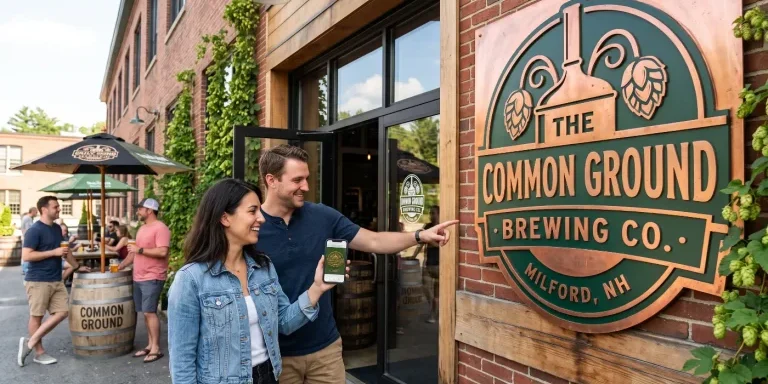
Your website looks sharp. Your storefront sign looks fine. Your business cards came back a slightly different shade of blue than you remembered. Each one on its own seems like a small thing. Together, they cost you customers and money. Brand consistency is whether everything a customer sees from you looks and sounds like it…

Sustainable Promotional Products: A Buyer’s Reality Check
That recycled tote you ordered for the trade show has a problem. The product page called it eco-friendly, you felt good about the choice, and you moved on. Here is the uncomfortable part: when auditors actually test merchandise carrying self-declared green labels, close to half cannot back up the claim. The word on the page…
What Is AI Search Readiness and How Can Local Businesses Improve Visibility?
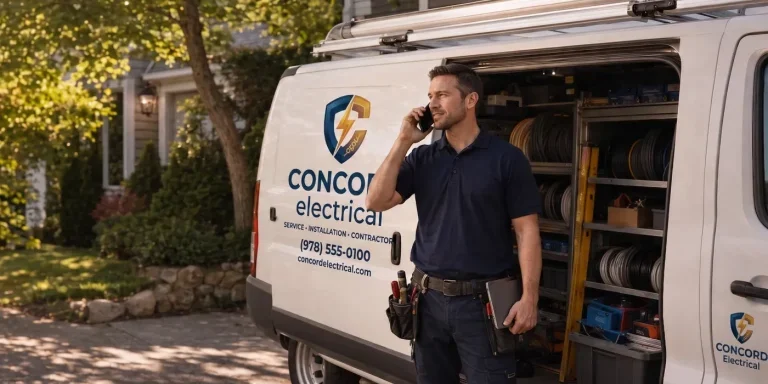
Your next lead may begin with an AI agent researching your company before a person ever visits your website or contacts your team. Google is expanding the ways its AI-powered Search tools can help people find and compare local providers. A customer can describe what they need, ask Google to research nearby businesses, and use…
Premium vs. Volume: Rethinking Your Promotional Products Budget
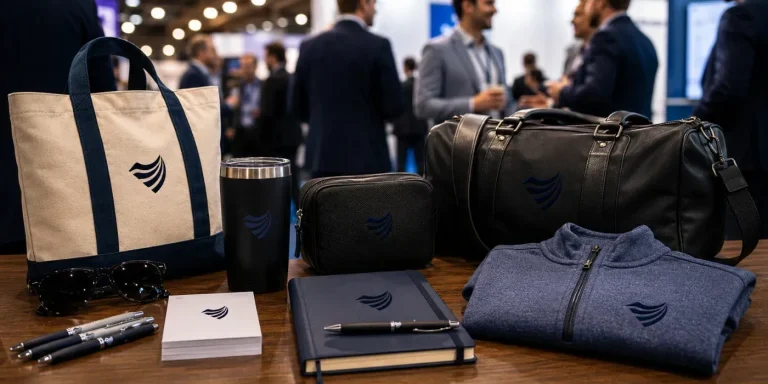
You order 500 pens for the trade show. They cost a little over a dollar each, they have your logo, and they feel like a responsible use of the budget. Three weeks later, most of them are in a junk drawer, a parking lot, or a trash can. A few never made it out of…
Omnichannel Marketing Solutions
Merging creativity and technology for comprehensive brand experiences.

PIXELS
Harnessing digital platforms for impactful brand promotion and audience engagement through strategic touchpoints.

PROMOS
Making the intangible tangible through high-quality promotional items that echo your brand's voice and values.

PLACES
Transforming physical environments into powerful brand narratives that forge connections with everyone who enters your space.