

Data Privacy in Digital Marketing: The Complete Guide for 2025
Picture this: You’re scrolling through your social media feed when an ad pops up for the exact product you were just discussing with a friend. Coincidence? Not quite. Welcome to the world of modern digital marketing, where data drives everything—but at what cost?
In today’s digital landscape, data privacy isn’t just another checkbox on your marketing compliance list—it’s a fundamental element that can make or break your brand’s relationship with customers. Let’s dive into why this matters more than ever and how you can turn privacy protection into a competitive advantage.
Quick Take: Recent studies show that 79% of consumers will stop engaging with a brand if their personal data is used without their knowledge. In today’s privacy-conscious world, protecting customer data isn’t just good practice—it’s essential for business survival.
The New Reality of Data Privacy
Remember the days when collecting customer data was as simple as adding a newsletter signup form? Those days are long gone. Today’s digital marketing landscape is a complex maze of regulations, consumer expectations, and technological challenges. Here’s what’s changed:
- Consumers are more aware: Thanks to high-profile data breaches and privacy scandals, your customers know more about data privacy than ever before—and they’re demanding better protection.
- Regulations are stricter: From GDPR to CCPA, privacy laws are becoming more comprehensive and penalties more severe.
- Technology is evolving: With the death of third-party cookies and rise of privacy-focused technologies, traditional tracking methods are becoming obsolete.
The Big Three: Privacy Regulations You Can’t Ignore
1. GDPR: The Global Game-Changer
Think of GDPR as the privacy regulation that started it all. Since 2018, it has revolutionized how businesses handle personal data, with fines that can make even tech giants nervous. Just ask Meta, which faced a record €1.2 billion fine in 2023.
GDPR Quick Guide:
• Need explicit consent for data collection
• Must provide data access to users
• Required to report breaches within 72 hours
• Fines up to 4% of global revenue
2. CCPA: America’s Privacy Pioneer
The California Consumer Privacy Act might sound state-specific, but its impact ripples across the entire U.S. market. Why? Because what starts in California rarely stays in California when it comes to digital regulations.
3. CPRA: The New Kid on the Block
Think of CPRA as CCPA 2.0—it’s newer, stronger, and comes with even more teeth. This regulation introduces concepts like sensitive personal information and automated decision-making requirements that every marketer needs to understand.
Real-World Challenges (And How to Tackle Them)
The Personalization Paradox
Here’s the million-dollar question: How do you create personalized experiences without crossing the privacy line? The key lies in finding the sweet spot between customization and consent.
Pro Tip: Use zero-party data—information that customers voluntarily share—to create personalized experiences without privacy concerns. This could include preference centers, surveys, and interactive content.
The Technology Tangle
From AI-powered analytics to machine learning algorithms, modern marketing tools are becoming increasingly sophisticated. But with great power comes great responsibility—and greater privacy risks.
Your Privacy-First Marketing Playbook
1. Embrace Transparency
Make your data collection practices crystal clear. Use plain language in your privacy policies, and consider creating user-friendly privacy centers on your website.
2. Build Privacy into Your Marketing DNA
- Privacy by Design: Make privacy considerations part of your marketing planning from day one, not an afterthought.
- Regular Audits: Conduct periodic privacy impact assessments of your marketing activities.
- Team Training: Ensure your marketing team understands privacy principles and best practices.
3. Leverage Privacy-Enhancing Technologies
Invest in tools that help you maintain marketing effectiveness while protecting privacy:
- Consent Management Platforms: Streamline consent collection and management.
- Privacy-Preserving Analytics: Use tools that provide insights without compromising individual privacy.
- Data Encryption: Protect collected data with robust security measures.
The Future of Privacy-First Marketing
The privacy landscape isn’t just changing—it’s evolving at breakneck speed. Here’s what to watch for:
- AI Regulation: Expect new rules specifically targeting artificial intelligence and automated decision-making.
- Enhanced User Controls: More granular privacy controls will become the norm.
- Privacy as a Brand Differentiator: Companies that prioritize privacy will win customer trust and loyalty.
Looking Ahead: By 2025, Gartner predicts that 75% of the world’s population will have its personal data covered by modern privacy regulations. The time to prepare is now.
Your Next Steps
Privacy-first marketing isn’t just about compliance—it’s about building trust and creating sustainable, ethical marketing practices. Start by:
- Auditing your current data collection practices.
- Updating your privacy policies and consent mechanisms.
- Training your team on privacy best practices.
- Implementing privacy-enhancing technologies.
Remember: In the age of data-driven marketing, privacy isn’t just a legal requirement—it’s a competitive advantage. The brands that master this balance will be the ones that thrive in the privacy-first future.
Ready to Take Your Brand Beyond Ordinary?
Your marketing shouldn’t just exist. It should perform. If you’re done settling for “good enough,” let’s build something impossible to ignore. Brandit helps you connect every digital, physical, and promotional touchpoint into one unstoppable brand experience.
Real Results,
Real Reactions
What Our Clients Say

"I sent out three bids for my marketing needs for this year and Brandit was the most responsive and provided great ideas. One company I reached out hadn't even gotten back to me while the other wasn't even close to being comparable to Brandit's creativity, pricing and service."
"I have used Brandit for several projects and they always come through with fantastic pricing and customer service. I highly recommend them."
Southern New Hampshire University

"Thanks to Brandit's generous contribution to the Big Ideas for Building Independence Capital Campaign, Easterseals NH is now better able to serve people with disabilities or special needs. With your support, we raised nearly $2.6 million for renovations to our headquarters."
"It has been an incredible journey! We couldn't have done it without you, and wish to take this opportunity to thank you and your team at Brandit Marketing Solutions for all that you have done and your generous donation."
Easterseals, NH

"Bringing Brandit Marketing Solutions into the CMC-fold is the best thing and most appreciative thing I've done since being at the Hospital."
Catholic Medical Center
"Exceptional does not even begin to cover the work that these people do. I have worked closely with other marketing firms and Brandit tops them every time. From innovative ideas to customer service that rivals the best of the best. I just couldn't speak more highly of them."
Southern New Hampshire University

"The Granite Group, headquartered in Concord, NH, distributes plumbing, heating, cooling, water and propane supplies to contractors and fuel dealers across New England through over 45 wholesale branches and their Online Store. The company also operates 15 retail showrooms under The Ultimate Bath Store name.
Brandit is pleased to say that we have been working with the Granite Group for over ten years which happens to be almost as long as this company has been in existence. In 2020, TGG was named one of New Hampshire's best places to work."
The Granite Group
10+ Year Partnership

"Over my long career, I have been in a position where I have worked closely with numerous vendors/suppliers. I can honestly say that I have never engaged with a company that is as amazing and responsive as Brandit."
"A sincere thanks to the team for the hustle on getting our shirts and tradeshow materials done for our group! You really relieved our pressure and I know it wasn't an easy task. Your effort and turnaround time was and is appreciated. Believe me when I say that I do not take for granted the relationship we have built over the years. Your service is top notch."
C&S Wholesale Grocers

"For almost a decade, the team at Brandit delivered successful and effective marketing solutions, spearheaded the merchandising of the FIRST brand by creating one-of-a-kind products, built, hosted, and managed their very first ecommerce store supporting all programs, staff, partners, sponsors, teams, and customers globally.
In addition, Brandit set up and managed multiple on-site retail stores at their premier Championship events where we serviced over 65,000 attendees. Today we provide web services as well as branded merchandise for regional partners".
FIRST Robotics

"The Brandit Marketing Solutions Ltd Team is wonderful to work with and we appreciate what they do to make us look good! They have expanded their services in recent years to meet whatever marketing needs you may have…from apparel and giveaway items to video and web services to graphic design and printing services, even graphic enhancements for your interior/exterior office space."
"I have worked with this team since the founding of their company and look forward to many more years of working together!"
Boys & Girls Club of Manchester

"The Brandit team is a talented group of creative professionals that I've worked with for years. Top notch!"
Art Murphy
Our Insights
.

Stale Service Pages Tell Google You’ve Closed. Here’s How to Tell It You Haven’t
Your phone used to ring. Then it slowed. Now your top service page sits on page two of Google, and you have no idea why. Nothing is broken. Your site loads. Your contact form works. Your services are the same ones you offered last year, and the year before that. So what changed? Probably nothing…

Your New Hire’s First Day Says a Lot About Your Company. The Welcome Kit Decides What.
Your new hire shows up on day one. Their laptop isn’t ready. Their manager is in back-to-back meetings. Someone hands them a stack of forms and a pen with another company’s logo on it. You just told them everything they need to know. The first day isn’t just paperwork. It’s the moment a new employee…
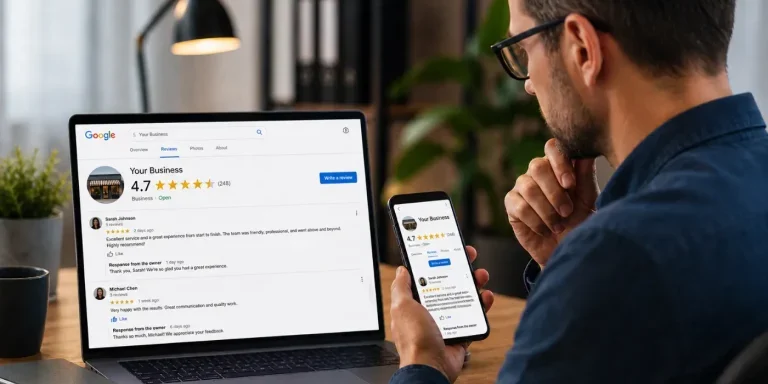
Your 4.7-Star Rating Is Quietly Losing You Customers
You opened your Google Business Profile this morning and saw a 4.7-star average across 34 reviews. Solid, right? Here’s the uncomfortable part. The most recent review is eight months old. None of them have owner responses. And down the street, a competitor sitting at 4.5 stars with 180 reviews, fresh feedback, and visible replies is…

Regional Trade Show Marketing: Why Smaller Shows Can Deliver Bigger ROI
You just spent $25,000 on a booth at a massive industry expo. Three days, 40,000 attendees, and a fishbowl full of business cards. Back at the office, your team starts making calls. Most numbers go to voicemail. The ones who do pick up barely remember your booth. Sound familiar? Here’s a number that should change…

Website Security for Businesses: Your 2026 Survival Guide
Picture this. At 2:47 on a Tuesday morning, a retailer in Portsmouth has 3,400 login attempts hit the admin page of her WordPress site in under six minutes. By 2:53, one of them works. By sunrise, her homepage is redirecting customers to a fake pharmaceutical site, her Google rankings have collapsed, and her payment processor…
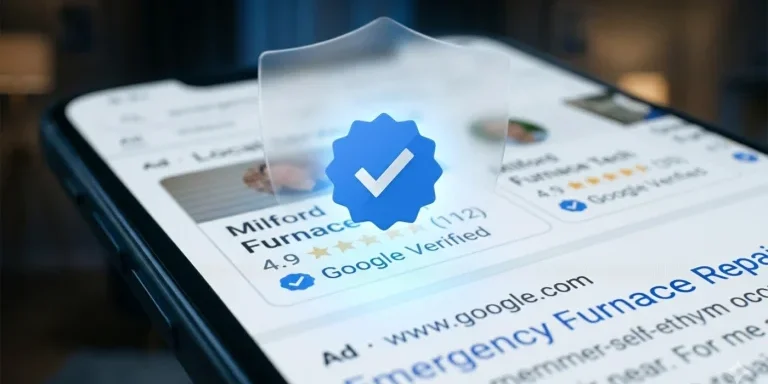
Google Local Services Ads: The Most Valuable Digital Real Estate for Local Businesses.
It’s 11 PM on a Thursday in January. The temperature outside is nine degrees. And your furnace just stopped working. You grab your phone. You type “emergency furnace repair near me.” And you do what every single person in that situation does: you tap the first thing that looks trustworthy. You don’t scroll. You don’t…

How to Build a Brand That Feels Human in an AI-Heavy Marketing World
There’s a beverage company you’d recognize by name. Last holiday season, their marketing team decided to rebuild their iconic TV ad using generative AI. New technology. Massive efficiency gains. Fraction of the production cost. The internet tore it apart. Viewers called it soulless. They weren’t wrong. The ad looked technically perfect in every sense, and…

Is Zero-Click Search Killing Your Website Traffic? Here’s the Real Answer
She refreshed the analytics dashboard one more time, hoping the numbers had changed. They hadn’t. Website sessions were down 31% year over year. The phone wasn’t ringing less. Leads were actually up. But her web traffic looked like it was falling off a cliff, and she couldn’t explain it to her business partner without sounding…

How to Turn Customer Wins Into B2B Success Stories That Actually Drive Sales
In B2B marketing, trust matters more than ever. Most buyers are not looking for another polished pitch. Instead, they want proof. They want to know your solution works, that companies like theirs have seen results, and that choosing you feels like a smart move. That is why customer success stories are so valuable. A strong…

Schema Markup: The Invisible Code That Gets Your Business Found on Google
You searched for a plumber at 9 PM on a Tuesday. Not just any plumber. One near you, with good reviews, open right now. Google handed you three options at the top of the page. Stars. Hours. Phone number. One click to call. You picked the first one. Here’s what you probably didn’t think about:…
Omnichannel Marketing Solutions
Merging creativity and technology for comprehensive brand experiences.

PIXELS
Harnessing digital platforms for impactful brand promotion and audience engagement through strategic touchpoints.

PROMOS
Making the intangible tangible through high-quality promotional items that echo your brand's voice and values.

PLACES
Transforming physical environments into powerful brand narratives that forge connections with everyone who enters your space.