

Google Business Profile Optimization: Visuals, Posts & Products That Drive Local SEO
Once your Google Business Profile (GBP) is verified and fully filled out, the next step is engagement and heading into 2026, that’s not optional. Google’s local algorithm now tracks not just what’s on your profile, but how often it’s updated, how visually compelling it is, and how well it answers a searcher’s intent. The businesses that win aren’t just listed; they’re active, visual, and trustworthy.
The Zero-Click Reality: Why Your GBP Is Your New Storefront
Google Business Profiles now function as interactive storefronts hosted directly on the Search Engine Results Page. This “zero-click” phenomenon means potential customers often make decisions without ever visiting your website. They browse your photos, read your posts, check your inventory, and decide right there in the search results.
The stakes are clear: Businesses maintaining complete, actively managed profiles generate up to 50% more customer actions than inactive competitors.
Why Visuals Are Critical for Local SEO
People don’t just search, they scan and compare. And what they see influences what they choose:
- Listings with photos get 42% more direction requests
- 35% more website clicks than those without
- Businesses with 100+ images receive 520% more calls and 1,038% more direction requests
If you own a salon near Hooksett Village Shops or a café on West River Road, showing real, high-quality visuals can make the difference between being clicked on or completely overlooked.
Authenticity Beats Polish
Google’s AI now prioritizes genuine, unpolished imagery over sterile marketing shots. Stock photos create a disconnect between digital expectation and physical reality, often triggering algorithmic de-prioritization. When searchers see authentic photos (real staff, actual interiors, genuine customer moments), they build trust before ever walking through your door.
Technical Standards for 2026
Quality isn’t subjective anymore. Google’s computer vision AI evaluates your images against specific technical criteria:

| Asset Type | Optimal Dimensions | Aspect Ratio | Format |
|---|---|---|---|
| Profile Logo | 720 x 720 px | 1:1 (Square) | JPG, PNG |
| Cover Photo | 1024 x 576 px | 16:9 | JPG, PNG |
| Post Images | 1200 x 900 px | 4:3 | JPG, PNG |
| Product Photos | 720 x 720 px | 1:1 | JPG, PNG |
The Cover Photo: Your Digital Front Door
Your cover photo is your most critical visual element. Many businesses see random, unflattering images displayed instead of their chosen cover because:
- Using a square logo as a cover photo (needs 16:9 landscape)
- Images below minimum resolution (480×270)
- Stock-looking photos with excessive text overlay
The solution: Upload a high-resolution (minimum 1024×576) JPG at exactly 16:9 aspect ratio, showing a clear, authentic view of your business. Place important visual elements in the center, as edges may be cropped on different devices.
Video: The Underutilized Advantage
Video remains underutilized on GBP, representing a significant competitive advantage heading into 2026.
Specs: 30 seconds max, 75 MB file size, 720p minimum resolution
High-converting video types:
- Interior Walkthroughs – Alleviates “entrance anxiety” for new customers
- Staff Introductions – Builds immediate rapport and humanizes your brand
- Product Demonstrations – Shows products in use, increases conversion confidence
Profiles with videos see a 20% increase in conversions and videos are clicked twice as often as regular photos.
Essential Photo Categories
Google categorizes and analyzes photos for relevance. Properly organizing your visual assets helps the algorithm match your business to specific user queries.

The Essential Photo Mix:
Exterior Photos (3-5 images): Storefront from street view, building signage close-up, parking area, entrance visibility
Interior Photos (5-8 images): Reception area, main service/retail space, unique features, atmosphere photos
Product/Service Photos (8-12 images): Best-sellers, before/after transformations, quality detail shots, seasonal offerings
Team Photos (3-5 images): Authentic staff photos (not staged), team serving customers, behind-the-scenes moments
Customer Experience: Happy customers (with permission), popular gathering spots, events, community involvement
Real Example (Local to NH):
The Honey Cup Café & Tearoom in Hooksett uploads new staff and food photos weekly, not professionally shot, just authentic moments. Within two months, their Google Maps engagement tripled, with more direction clicks and reviews. The secret? Their photos looked real, not manufactured.
Google Posts: Your Weekly Visibility Engine
Google Posts transform your GBP from a static listing into a dynamic social feed. But there’s a critical catch: most posts lose visibility after 7 days.
The visibility rule: While “What’s New” posts remain in your archive, Google stops surfacing them prominently after one week. This means weekly posting is the minimum cadence to maintain active visibility.
The Four Post Types
| Post Type | Shelf Life | Best Use Cases |
|---|---|---|
| What’s New | 7 days prominent | Company news, staff spotlights, community involvement |
| Offer | Until expiration date | Flash sales, seasonal promotions, coupon codes (yellow tag stands out) |
| Event | Until event ends | Workshops, grand openings, holiday hours |
| Product | Perpetual (until removed) | Showcase inventory, high-margin items, new arrivals |
Anatomy of a High-Performing Post
- Scroll-Stopping Image (1200 x 900px, 4:3) – Vibrant, high-contrast visuals showing people using products/services
- Benefit-Driven Title – “20% Off Color Services This Week Only” not “Spring Sale at Main Street Salon”
- Clear, Concise Copy (100-300 words) – Lead with benefit, create urgency, include specific details
- Strong Call-to-Action Button – Book Now, Learn More, Get Offer, Call Now
Avoiding Post Rejection
Google’s automated filtering (the “Nanny Bot”) aggressively rejects posts violating content policies. Understanding these triggers prevents frustration:
What Gets Posts Rejected:
- Phone numbers in post text – Use the “Call Now” button instead
- Images with heavy text overlay – Looks like spam (keep text to 10-20% of image)
- Excessive hashtags – This isn’t Instagram
- Low-quality or blurry images – Fails quality threshold
- Stock photography watermarks – Signals inauthentic content
- Banned words: “Guaranteed profit,” “Get rich quick,” “Cure,” “Miracle treatment,” excessive urgency phrases
Best Posting Times by Industry
| Industry | Optimal Days | Best Times |
|---|---|---|
| Restaurants | Mon-Tue, Fri-Sat | 7-9 AM, 5-7 PM |
| Retail | Weekends | 10 AM – 2 PM |
| Professional Services | Tue-Thu | 1-3 PM |
| Healthcare | Thursday | 11 AM – 1 PM |
Products & Services: Your Digital Inventory
For retail and service businesses, the Products section captures “zero-click” shoppers: people who find what they need on Google and visit your store without ever clicking through to your website.
The impact: Businesses actively updating products see a 100% increase in local discovery searches.
Product Requirements:
- Image: 720x720px, square format, clean background
- Product Name: Specific and searchable (“Nike Air Zoom Pegasus 39” not “Running Shoe”)
- Price: Transparency dramatically increases click-through rate
- Description: Up to 1,000 characters of SEO-rich content
Writing Product Descriptions That Rank
String together specific “entities” (brand names, models, materials, use cases, locations):
❌ Generic: “Great running shoes for athletes.”
✅ Optimized: “The Nike Air Zoom Pegasus 39 features responsive foam cushioning perfect for road running and marathon training. Lightweight mesh upper with breathable design. Available in sizes 7-13 at our Manchester running store on Elm Street.”
This helps the product rank for queries like “marathon training shoes Manchester” or “breathable running shoes near me.”
Product Description Template:
- Hook (1 sentence on primary benefit) – “Professional-grade hair color that lasts 8 weeks without fading”
- Key Features (3-5 specific attributes) – Ammonia-free formula, 45+ vibrant shades, gray coverage technology
- Use Case – “Perfect for clients seeking long-lasting color with minimal damage”
- Local Context – “Available at our Manchester salon, just minutes from downtown”
Advanced Features for 2026
Social Media Integration
Google now allows explicit linking of social profiles: Edit Profile → Contact → Social Profiles. Add one link per platform (Instagram, Facebook, LinkedIn, X, TikTok, YouTube, Pinterest). This reinforces entity authority and displays recent social posts directly on your GBP.
WhatsApp Integration
Google deprecated native GBP chat in favor of WhatsApp integration. Add “Chat on WhatsApp” button for more stable messaging and better lead quality. Set up “Quick Replies” in WhatsApp Business to handle common queries instantly; response speed influences rankings.
The Review-Photo Connection
A significant update presents reviews with photos in an Instagram-style “Story” format: vertical, full-screen, immersive view. Actively encourage customers to include photos with reviews. Visual reviews receive prominence and drive significantly higher engagement.
The Local Ranking Formula
Google’s local ranking algorithm operates on three core factors:
1. Relevance
Product listings with detailed descriptions help Google match you to specific queries. If someone searches “vegan gluten-free cupcakes,” a bakery with that exact product listed is far more relevant than a generic bakery profile.
2. Distance
While you can’t change your location, high relevance and prominence can occasionally override distance, allowing you to rank in a wider radius.
3. Prominence
How everything connects:
- High-quality photos → Higher CTR → Behavioral signal of quality
- Regular posts → Activity signal + engagement opportunities
- Complete product listings → Satisfies user intent without clicks
- Fast review responses → Customer service signal
- Video content → Increased dwell time on profile
These signals feed a positive feedback loop: Higher engagement → Higher ranking → More visibility → Higher engagement.
The Manchester Advantage: Local Context Matters
For businesses serving Manchester, Concord, Nashua, Portsmouth, and surrounding NH communities, local context dramatically strengthens relevance signals.
Hyper-Local Optimization:
- Reference specific neighborhoods: “Serving families in the North End and Hooksett Village”
- Mention local landmarks: “Across from Veterans Park” or “Next to the Millyard downtown”
- Highlight community connections: “Proud sponsors of Manchester Little League”
- Use regional language: “Wicked good coffee” signals New England authenticity
- Geo-tag photo filenames:
manchester-nh-salon-interior-view.jpg
Common Questions
How many photos is too many?
There’s no maximum. Businesses with 100+ images see dramatically better performance. Focus on quality and variety, but more authentic, high-quality images always help.
Do I need to post every single day?
No. Weekly posting is the minimum to maintain “active” status. Industry leaders post 2-3 times per week, but consistency matters more than frequency.
Should I delete bad photos customers upload?
You can flag inappropriate images, but Google determines removal. Focus instead on uploading so many great official photos that customer uploads become less prominent.
Do hashtags work on Google Posts?
No. Unlike Instagram or Facebook, hashtags have no function on GBP and may look unprofessional or trigger spam filters.
How do I get more photo reviews?
Ask directly, make it easy (give them photo-worthy moments), and respond enthusiastically when customers do include photos. The new Stories format makes visual reviews more prominent than ever.
The Bottom Line
Looking ahead to 2026, your Google Business Profile isn’t just a listing; it’s your most powerful local marketing asset. The businesses dominating local search aren’t necessarily spending the most on ads. They’re the ones investing in consistent, strategic profile management.
The competitive reality: Your competitors in Manchester, Nashua, Concord, and Portsmouth are implementing these strategies. The difference between showing up in the Local 3-Pack and being buried on page two comes down to execution: who actually implements week after week.
Start with one thing: If you do nothing else, commit to posting once per week with an authentic photo and a clear call-to-action. That alone puts you ahead of 70% of local businesses.
The zero-click future is here. Make sure when searchers find you on Google, they see exactly why you’re the right choice, before they ever visit your website.
Need Help Optimizing Your Google Business Profile?
Brandit Marketing Solutions specializes in local SEO and digital presence management for New Hampshire businesses. From Manchester to Portsmouth, we help local businesses dominate their markets through strategic GBP optimization, content creation, and integrated digital marketing.
Contact us today to schedule a free GBP audit and discover how we can help you stand out in local search.
- The Zero-Click Reality: Why Your GBP Is Your New Storefront
- Why Visuals Are Critical for Local SEO
- Technical Standards for 2026
- Essential Photo Categories
- Google Posts: Your Weekly Visibility Engine
- Avoiding Post Rejection
- Products & Services: Your Digital Inventory
- Advanced Features for 2026
- The Local Ranking Formula
- The Manchester Advantage: Local Context Matters
- Common Questions
- The Bottom Line
Ready to Take Your Brand Beyond Ordinary?
Your marketing shouldn’t just exist. It should perform. If you’re done settling for “good enough,” let’s build something impossible to ignore. Brandit helps you connect every digital, physical, and promotional touchpoint into one unstoppable brand experience.
Real Results,
Real Reactions
What Our Clients Say

"I sent out three bids for my marketing needs for this year and Brandit was the most responsive and provided great ideas. One company I reached out hadn't even gotten back to me while the other wasn't even close to being comparable to Brandit's creativity, pricing and service."
"I have used Brandit for several projects and they always come through with fantastic pricing and customer service. I highly recommend them."
Southern New Hampshire University

"Thanks to Brandit's generous contribution to the Big Ideas for Building Independence Capital Campaign, Easterseals NH is now better able to serve people with disabilities or special needs. With your support, we raised nearly $2.6 million for renovations to our headquarters."
"It has been an incredible journey! We couldn't have done it without you, and wish to take this opportunity to thank you and your team at Brandit Marketing Solutions for all that you have done and your generous donation."
Easterseals, NH

"Bringing Brandit Marketing Solutions into the CMC-fold is the best thing and most appreciative thing I've done since being at the Hospital."
Catholic Medical Center
"Exceptional does not even begin to cover the work that these people do. I have worked closely with other marketing firms and Brandit tops them every time. From innovative ideas to customer service that rivals the best of the best. I just couldn't speak more highly of them."
Southern New Hampshire University

"The Granite Group, headquartered in Concord, NH, distributes plumbing, heating, cooling, water and propane supplies to contractors and fuel dealers across New England through over 45 wholesale branches and their Online Store. The company also operates 15 retail showrooms under The Ultimate Bath Store name.
Brandit is pleased to say that we have been working with the Granite Group for over ten years which happens to be almost as long as this company has been in existence. In 2020, TGG was named one of New Hampshire's best places to work."
The Granite Group
10+ Year Partnership

"Over my long career, I have been in a position where I have worked closely with numerous vendors/suppliers. I can honestly say that I have never engaged with a company that is as amazing and responsive as Brandit."
"A sincere thanks to the team for the hustle on getting our shirts and tradeshow materials done for our group! You really relieved our pressure and I know it wasn't an easy task. Your effort and turnaround time was and is appreciated. Believe me when I say that I do not take for granted the relationship we have built over the years. Your service is top notch."
C&S Wholesale Grocers

"For almost a decade, the team at Brandit delivered successful and effective marketing solutions, spearheaded the merchandising of the FIRST brand by creating one-of-a-kind products, built, hosted, and managed their very first ecommerce store supporting all programs, staff, partners, sponsors, teams, and customers globally.
In addition, Brandit set up and managed multiple on-site retail stores at their premier Championship events where we serviced over 65,000 attendees. Today we provide web services as well as branded merchandise for regional partners".
FIRST Robotics

"The Brandit Marketing Solutions Ltd Team is wonderful to work with and we appreciate what they do to make us look good! They have expanded their services in recent years to meet whatever marketing needs you may have…from apparel and giveaway items to video and web services to graphic design and printing services, even graphic enhancements for your interior/exterior office space."
"I have worked with this team since the founding of their company and look forward to many more years of working together!"
Boys & Girls Club of Manchester

"The Brandit team is a talented group of creative professionals that I've worked with for years. Top notch!"
Art Murphy
Our Insights
.
Brand Consistency: Make Your Site & Sign Match
Your website looks sharp. Your storefront sign looks fine. Your business cards came back a slightly different shade of blue than you remembered. Each one on its own seems like a small thing. Together, they cost you customers and money. Brand consistency is whether everything a customer sees from you looks and sounds like it…
Sustainable Promotional Products: A Buyer’s Reality Check
That recycled tote you ordered for the trade show has a problem. The product page called it eco-friendly, you felt good about the choice, and you moved on. Here is the uncomfortable part: when auditors actually test merchandise carrying self-declared green labels, close to half cannot back up the claim. The word on the page…
What Is AI Search Readiness and How Can Local Businesses Improve Visibility?
Your next lead may begin with an AI agent researching your company before a person ever visits your website or contacts your team. Google is expanding the ways its AI-powered Search tools can help people find and compare local providers. A customer can describe what they need, ask Google to research nearby businesses, and use…
Premium vs. Volume: Rethinking Your Promotional Products Budget
You order 500 pens for the trade show. They cost a little over a dollar each, they have your logo, and they feel like a responsible use of the budget. Three weeks later, most of them are in a junk drawer, a parking lot, or a trash can. A few never made it out of…

Holiday SEO Timeline: Why December Rankings Start in Summer
The businesses that dominate search results this December made their move back in July. Not out of habit. They moved early because search rewards steady, consistent work in a way that no last-minute push can replicate. Holiday SEO is not a campaign you switch on when the decorations come out. It is an advantage you…

Corporate Holiday Gifting Timeline: Why Q4 Planning Starts in July
Here is the part nobody tells you about corporate gifting: the best time to lock in your holiday program is right now, in July. Not October. Not “right after Halloween.” July. That sounds early enough to be a joke. It is not. The companies that run corporate gifting well, sending memorable and on-time gifts to…

Website Performance Audit: Why Q3 Beats Q4 Every Time
Your website traffic is about to drop. Vacations start, inboxes go quiet, and the steady hum of summer browsing replaces the urgency of buying season. Most businesses read that slowdown as a reason to coast. That is the expensive mistake. The quiet stretch from July through September is the best window all year to run…

Summer Foot Traffic: Win It With a Mobile-First Website
Picture a family on a sidewalk in Portsmouth on a Saturday in July. It is 86 degrees, the kids are hungry, and someone pulls out a phone and types “lunch near me.” Three places show up on the map. They tap the first one. If that site loads fast and the menu is right there,…

Modern Phishing Scams: What Smart Businesses Need to Know
The old advice for spotting a scam email no longer works. Watch for bad spelling, awkward grammar, and a generic greeting, and you were safe. That rule protected people for years. Modern phishing scams have erased every one of those tells. Attackers now write clean, personalized messages, hide their links inside images, and move the…
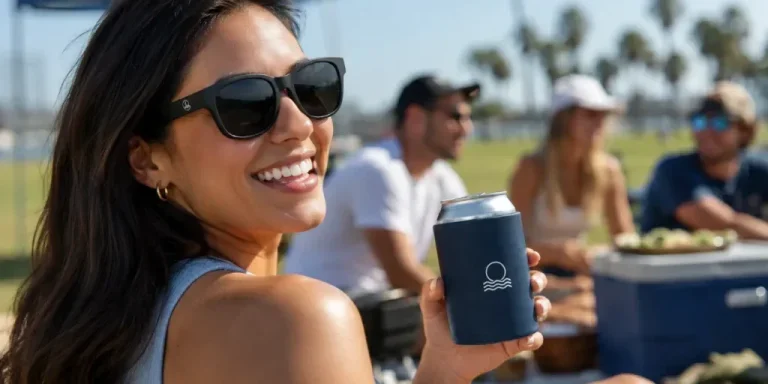
Branded Koozies and Sunglasses Aren’t Lazy: High-Yield Summer Promotional Products
Someone on your team just rolled their eyes at the idea of branded sunglasses. Too obvious. Too expected. Let’s do something clever instead, maybe a little desk gadget or a puzzle nobody asked for. That instinct feels smart. It usually costs you the campaign. Here’s the part most people miss: the “clever” item lives on…
Omnichannel Marketing Solutions
Merging creativity and technology for comprehensive brand experiences.

PIXELS
Harnessing digital platforms for impactful brand promotion and audience engagement through strategic touchpoints.

PROMOS
Making the intangible tangible through high-quality promotional items that echo your brand's voice and values.

PLACES
Transforming physical environments into powerful brand narratives that forge connections with everyone who enters your space.