

Optimize Your Website for SEO: A Beginner’s Guide
Website SEO Best Practices
As a beginner in the world of search engine optimization (SEO), it’s crucial to understand the fundamental elements that influence your website’s visibility on search engine results pages (SERPs). This article will guide you through the essential aspects of SEO, including meta tags, descriptions, header tags, image optimization, keyword research, content optimization, the future impact of AI on website crawling, and more.
Meta Tags and Descriptions
Meta tags provide valuable information about your webpage to search engines and users. The most important meta tags for SEO include:
- Meta Description: A concise summary of your page’s content, typically 120-160 characters long. It appears under the page title in search results and can influence click-through rates. To optimize meta descriptions, make them unique, compelling, and relevant to the page content, and include your target keyword naturally.
- Title Tags: The most important on-page SEO element. Keep titles under 60 characters, include your target keyword, and make them compelling.
H1 and H2 Header Tags
Header tags help structure your content and signal its importance to search engines. The H1 tag is the most critical, serving as the main title or headline of your page. It should clearly describe the content, include your target keyword naturally, be unique and compelling, and be kept under 60 characters.
H2 tags act as subheadings, supporting the main H1 topic. They break up content into scannable sections, summarize key points, and use relevant keywords sparingly. Properly using both H1 and H2 tags can positively impact your page’s visibility and user experience.
Image Optimization
Image performance directly influences your website’s loading speed and user experience, making it a crucial factor for SEO. To optimize images:
- Choose efficient formats like JPEG, PNG, and WebP to reduce file sizes without sacrificing quality.
- Compress images through cropping, resizing, and lossless compression to decrease their size by 50-80%.
- Use descriptive, keyword-rich file names and alt text to help search engines understand your images and improve their discoverability in image search results.
- Implement responsive design to serve the right image size for each device screen size, ensuring fast load times across all platforms.
Keyword Research
Conducting thorough keyword research is essential for creating content that aligns with your target audience’s search intent and optimizing your website for relevant search queries. To perform effective keyword research:
- Identify your main topics and themes, and brainstorm seed keywords related to your business, products, or services.
- Use keyword research tools like Google Keyword Planner, SEMrush, or Ahrefs to discover related keywords, long-tail variations, and search volume data.
- Analyze the search intent behind the keywords to ensure your content meets the user’s needs, whether informational, navigational, commercial, or transactional.
- Prioritize keywords based on relevance, search volume, competition, and your ability to create high-quality, authoritative content on the topic.
Content Optimization
Creating high-quality, optimized content is crucial for improving your website’s search visibility and engaging your target audience. To optimize your content for SEO:
- Use your target keyword naturally throughout the content, including in the title, headings, introductory paragraph, and body text.
- Ensure your content comprehensively covers the topic, providing valuable information and answering common questions related to the keyword.
- Structure your content with proper headings (H1, H2, H3), short paragraphs, bullet points, and images to improve readability and user engagement.
- Incorporate internal links to other relevant pages on your website and external links to authoritative sources to improve your content’s credibility and help search engines understand your site structure.
- Optimize your content for featured snippets by providing concise, direct answers to common questions related to your target keyword.
Accessibility and the Future of AI in SEO
Accessibility and SEO are becoming increasingly intertwined. There is significant overlap between accessibility best practices and SEO ranking factors, such as clear metadata, descriptive alt text, and mobile-friendly design. Google has long promoted website usability and accessibility together, suggesting that accessibility could become a more direct ranking factor in the future.
The integration of generative AI into search engines is expected to significantly impact click-through rates, as users may get their answers directly in search results. SEO strategies will need to shift towards “Answer Engine Optimization” (AEO) to optimize content for these AI-powered search features. AI and machine learning are transforming how search engines crawl and understand websites, driving the need for SEO strategies to evolve towards optimizing content for direct answers and AI-driven crawling and indexing.
Additional SEO Tips for Beginners
- Focus on creating high-quality, informative, and engaging content that addresses your target audience’s needs and interests.
- Build high-quality backlinks from authoritative websites to improve your site’s credibility and search rankings.
- Ensure your website has a fast loading speed, as this is a critical ranking factor and directly impacts user experience.
- Optimize your website for mobile devices, as mobile-friendliness is a key ranking factor and a growing share of web traffic comes from mobile users.
- Utilize internal linking to help search engines understand your site structure and distribute link equity among your pages.
- Implement schema markup to provide structured data about your website to search engines, enhancing your search listings and potentially improving click-through rates.
- Monitor your website’s analytics and search console data to track your SEO progress, identify areas for improvement, and adjust your strategies accordingly.
In conclusion, as a beginner in SEO, focusing on meta tags, descriptions, header tags, image optimization, keyword research, content optimization, accessibility, and creating high-quality content will lay a strong foundation for your website’s visibility and performance. Staying informed about the impact of AI on search engines and adapting your strategies accordingly will be crucial for future SEO success. By implementing these SEO best practices and continuously refining your approach, you can improve your website’s search rankings, drive more organic traffic, and ultimately achieve your online business goals.
Contact us today to see how we can help you engage your audience.
Ready to Take Your Brand Beyond Ordinary?
Your marketing shouldn’t just exist. It should perform. If you’re done settling for “good enough,” let’s build something impossible to ignore. Brandit helps you connect every digital, physical, and promotional touchpoint into one unstoppable brand experience.
Real Results,
Real Reactions
What Our Clients Say

"I sent out three bids for my marketing needs for this year and Brandit was the most responsive and provided great ideas. One company I reached out hadn't even gotten back to me while the other wasn't even close to being comparable to Brandit's creativity, pricing and service."
"I have used Brandit for several projects and they always come through with fantastic pricing and customer service. I highly recommend them."
Southern New Hampshire University

"Thanks to Brandit's generous contribution to the Big Ideas for Building Independence Capital Campaign, Easterseals NH is now better able to serve people with disabilities or special needs. With your support, we raised nearly $2.6 million for renovations to our headquarters."
"It has been an incredible journey! We couldn't have done it without you, and wish to take this opportunity to thank you and your team at Brandit Marketing Solutions for all that you have done and your generous donation."
Easterseals, NH

"Bringing Brandit Marketing Solutions into the CMC-fold is the best thing and most appreciative thing I've done since being at the Hospital."
Catholic Medical Center
"Exceptional does not even begin to cover the work that these people do. I have worked closely with other marketing firms and Brandit tops them every time. From innovative ideas to customer service that rivals the best of the best. I just couldn't speak more highly of them."
Southern New Hampshire University

"The Granite Group, headquartered in Concord, NH, distributes plumbing, heating, cooling, water and propane supplies to contractors and fuel dealers across New England through over 45 wholesale branches and their Online Store. The company also operates 15 retail showrooms under The Ultimate Bath Store name.
Brandit is pleased to say that we have been working with the Granite Group for over ten years which happens to be almost as long as this company has been in existence. In 2020, TGG was named one of New Hampshire's best places to work."
The Granite Group
10+ Year Partnership

"Over my long career, I have been in a position where I have worked closely with numerous vendors/suppliers. I can honestly say that I have never engaged with a company that is as amazing and responsive as Brandit."
"A sincere thanks to the team for the hustle on getting our shirts and tradeshow materials done for our group! You really relieved our pressure and I know it wasn't an easy task. Your effort and turnaround time was and is appreciated. Believe me when I say that I do not take for granted the relationship we have built over the years. Your service is top notch."
C&S Wholesale Grocers

"For almost a decade, the team at Brandit delivered successful and effective marketing solutions, spearheaded the merchandising of the FIRST brand by creating one-of-a-kind products, built, hosted, and managed their very first ecommerce store supporting all programs, staff, partners, sponsors, teams, and customers globally.
In addition, Brandit set up and managed multiple on-site retail stores at their premier Championship events where we serviced over 65,000 attendees. Today we provide web services as well as branded merchandise for regional partners".
FIRST Robotics

"The Brandit Marketing Solutions Ltd Team is wonderful to work with and we appreciate what they do to make us look good! They have expanded their services in recent years to meet whatever marketing needs you may have…from apparel and giveaway items to video and web services to graphic design and printing services, even graphic enhancements for your interior/exterior office space."
"I have worked with this team since the founding of their company and look forward to many more years of working together!"
Boys & Girls Club of Manchester

"The Brandit team is a talented group of creative professionals that I've worked with for years. Top notch!"
Art Murphy
Our Insights
.
Regional Trade Show Marketing: Why Smaller Shows Can Deliver Bigger ROI
You just spent $25,000 on a booth at a massive industry expo. Three days, 40,000 attendees, and a fishbowl full of business cards. Back at the office, your team starts making calls. Most numbers go to voicemail. The ones who do pick up barely remember your booth. Sound familiar? Here’s a number that should change…
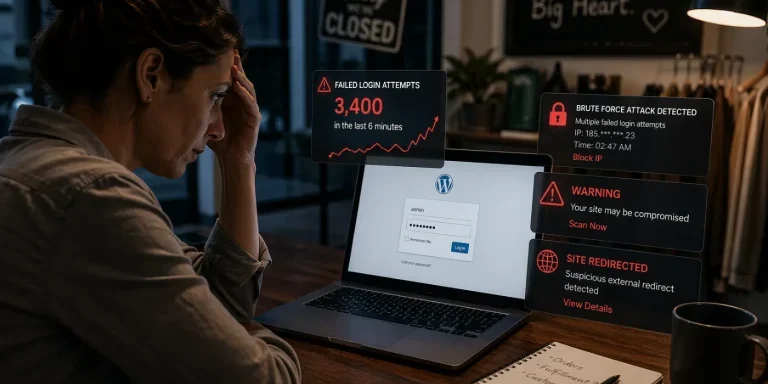
Website Security for Businesses: Your 2026 Survival Guide
Picture this. At 2:47 on a Tuesday morning, a retailer in Portsmouth has 3,400 login attempts hit the admin page of her WordPress site in under six minutes. By 2:53, one of them works. By sunrise, her homepage is redirecting customers to a fake pharmaceutical site, her Google rankings have collapsed, and her payment processor…
Google Local Services Ads: The Most Valuable Digital Real Estate for Local Businesses.
It’s 11 PM on a Thursday in January. The temperature outside is nine degrees. And your furnace just stopped working. You grab your phone. You type “emergency furnace repair near me.” And you do what every single person in that situation does: you tap the first thing that looks trustworthy. You don’t scroll. You don’t…
How to Build a Brand That Feels Human in an AI-Heavy Marketing World
There’s a beverage company you’d recognize by name. Last holiday season, their marketing team decided to rebuild their iconic TV ad using generative AI. New technology. Massive efficiency gains. Fraction of the production cost. The internet tore it apart. Viewers called it soulless. They weren’t wrong. The ad looked technically perfect in every sense, and…

Is Zero-Click Search Killing Your Website Traffic? Here’s the Real Answer
She refreshed the analytics dashboard one more time, hoping the numbers had changed. They hadn’t. Website sessions were down 31% year over year. The phone wasn’t ringing less. Leads were actually up. But her web traffic looked like it was falling off a cliff, and she couldn’t explain it to her business partner without sounding…

How to Turn Customer Wins Into B2B Success Stories That Actually Drive Sales
In B2B marketing, trust matters more than ever. Most buyers are not looking for another polished pitch. Instead, they want proof. They want to know your solution works, that companies like theirs have seen results, and that choosing you feels like a smart move. That is why customer success stories are so valuable. A strong…

Schema Markup: The Invisible Code That Gets Your Business Found on Google
You searched for a plumber at 9 PM on a Tuesday. Not just any plumber. One near you, with good reviews, open right now. Google handed you three options at the top of the page. Stars. Hours. Phone number. One click to call. You picked the first one. Here’s what you probably didn’t think about:…

Why Your Trade Show Booth Is a Ghost Town (And How to Fix It)
You spent $8,000 on the booth space. Another $3,000 on graphics. You shipped in a custom display, flew in two sales reps, and booked a hotel for three nights. Then the show doors opened, attendees streamed past your perfectly designed exhibit, and you spent most of Tuesday afternoon rearranging brochures. Sound familiar? It’s not a…
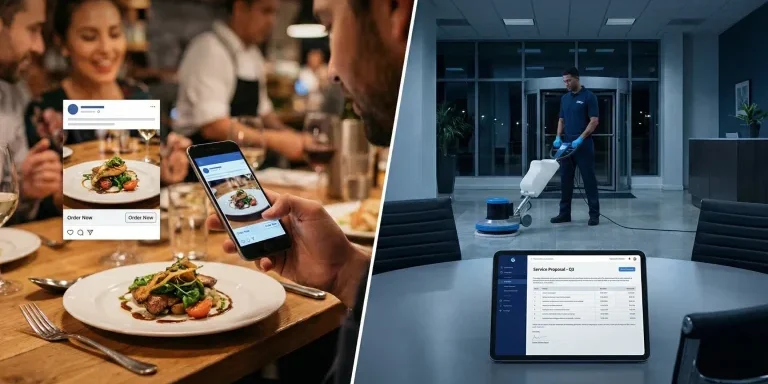
B2B vs B2C Marketing: What Local Brands Should Know in 2026
Two businesses. Same city. Same ad budget. Completely different results. A local restaurant owner runs Facebook ads featuring gorgeous food photography. Bookings spike within the week. Meanwhile, a commercial cleaning company runs nearly identical ads — same platform, same spend — and hears nothing. Not a single inquiry. Same tool. Same effort. Completely different outcome.…
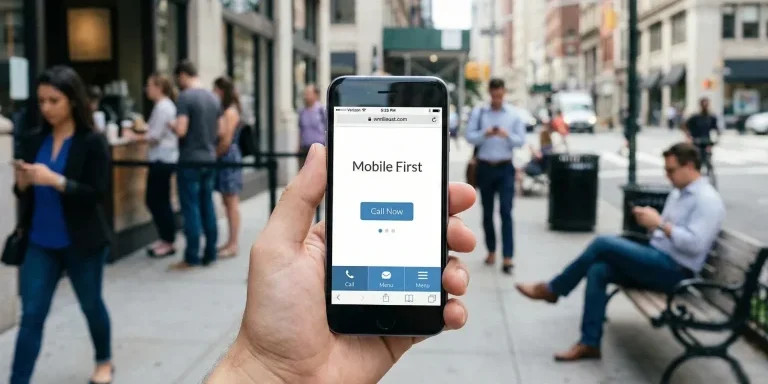
Mobile-First Design: Guide, SEO Benefits & Best Practices (2026)
Your website loads on phones. But was it actually built for them? Most businesses still design for desktops first, then try to squeeze everything onto smaller screens. That approach is backward. Your customers aren’t browsing during lunch breaks at their desk anymore. They’re checking you out while standing in line, walking between meetings, or sitting…
Omnichannel Marketing Solutions
Merging creativity and technology for comprehensive brand experiences.

PIXELS
Harnessing digital platforms for impactful brand promotion and audience engagement through strategic touchpoints.

PROMOS
Making the intangible tangible through high-quality promotional items that echo your brand's voice and values.

PLACES
Transforming physical environments into powerful brand narratives that forge connections with everyone who enters your space.