
AI and SEO: How Machine Learning is Changing Search Rankings
The rules of search just changed. Here’s what your business needs to know.
If your website traffic has felt unpredictable lately, you’re not imagining things. Between 2024 and 2025, Google fundamentally rewired how search works. The old playbook—keywords, backlinks, and page rankings—isn’t broken. It’s just incomplete.
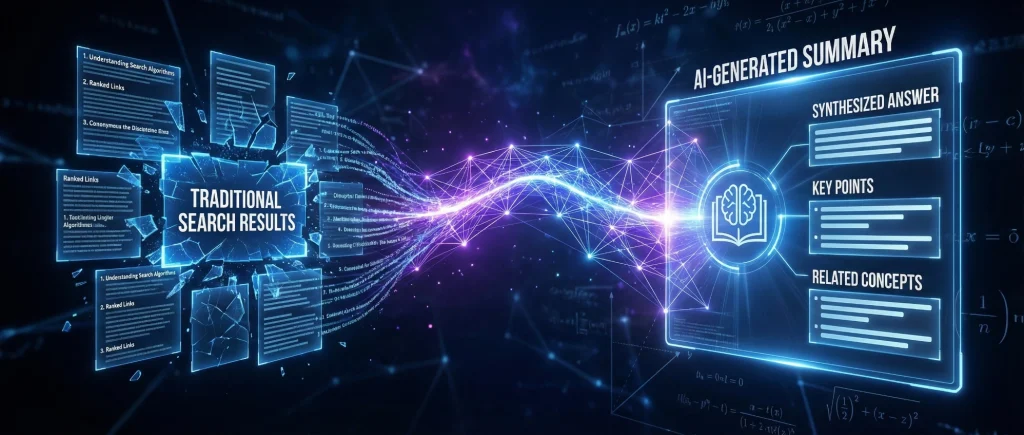
Search engines aren’t librarians anymore, pointing you to the right shelf. They’re research assistants, reading the books and giving you the summary. This shift from indexing to reasoning changes everything about how businesses get found online.
What Actually Changed (And Why It Matters to Your Business)
The AI Overview Effect
When you search Google now, you often see an AI-generated summary at the top of the page. That’s the AI Overview, powered by Google’s Gemini technology. These summaries answer questions directly, without requiring a click.
The impact? Significant. Studies from late 2025 show organic click-through rates dropping by 62% on queries with AI Overviews. Paid search clicks fell 68% on the same queries.
The reality: More searches are now “zero-click” experiences. Users get their answer and move on.
From Keywords to Context
Traditional SEO focused on matching specific words. You optimized for “plumber Manchester NH” and hoped to rank when someone searched that exact phrase.
Modern search uses something called vector search and semantic understanding. Google converts your content into mathematical representations of meaning. When someone searches for “emergency pipe repair near me,” Google matches the intent and context, not just the words.
What this means: Your content needs to answer questions clearly, not just contain keywords. The machine needs to understand what you’re actually saying, not just what words you’re using.
The Metrics That Still Matter (And The Ones That Don’t)
What’s Losing Value
Page rankings alone: Being #1 doesn’t guarantee traffic anymore if the AI Overview answers the question above your listing.
Keyword density: Stuffing keywords into content to hit a magic percentage never worked well. Now it actively hurts you.
Generic backlinks: Links from random, unrelated sites won’t help. The algorithm recognizes relevance.
What’s Gaining Value
Answer ownership: Being cited as a source in AI Overviews drives massive value. Sites cited in these summaries see 35% more organic clicks and 91% more paid clicks compared to those that aren’t.
Experience signals: Google’s algorithm now prioritizes E-E-A-T (Experience, Expertise, Authoritativeness, Trustworthiness). The first E—Experience—is the anti-AI signal. Can you prove you actually did this, used this, or lived this?
Structured data: Schema markup tells machines exactly what your content means. For local businesses, this includes your hours, services, and reviews. For e-commerce, it’s product details, prices, and availability.
What Businesses Need to Do Now
1. Structure Content for Machine Reading
AI systems break your content into chunks and convert them to mathematical vectors. Clear structure helps.
Action steps:
- Use descriptive H2 and H3 headings that explicitly state questions
- Write a clear, direct answer in the first 40-60 words
- Break long paragraphs into scannable sections
- Include specific data, statistics, and original insights
2. Demonstrate Real Experience
Generic information gets summarized and blended. Unique experience gets cited.
How to show experience:
- Include original photos from your business or projects
- Share specific examples: “When we installed HVAC systems in the North End last winter, we discovered…”
- Provide data from your actual work: “In our analysis of 50 local campaigns…”
- Use first-person language naturally: “we tested,” “I noticed,” “our team found”

3. Optimize for the Answer, Not Just the Click
If someone asks “what are the signs of a leaking roof,” don’t make them click through three pages to find out. Answer directly, then provide depth.
The structure that works:
- Question: Clear H2 stating the exact question
- Direct Answer: 2-3 sentences giving the core answer
- Detail: Expand with specifics, data, and context
- Next Steps: What should they do with this information?
This satisfies both the AI (which wants clear answers) and the human (who wants depth and context).
4. Claim Your Business Entity
Google’s Knowledge Graph needs to know who you are. For local businesses, this means:
- Maintain an accurate, complete Google Business Profile
- Keep NAP (Name, Address, Phone) consistent across all directories
- Gather authentic reviews regularly
- Add detailed attributes (services, hours, photos, products)
For B2B companies, this includes:
- Author profiles for blog content
- Team member bios with credentials
- Company information structured with schema markup
- Industry affiliations and certifications
Industry-Specific Implications
Service Businesses (HVAC, Plumbing, Legal, Medical)
Voice search and local queries still drive strong traffic. 76% of voice searches have local intent. Your Google Business Profile is your most valuable asset.
Focus: Answer common questions clearly. “Do I need to replace my furnace or can it be repaired?” These practical questions still drive calls and appointments.
E-Commerce
Product comparison queries are AI-friendly. When users ask “best running shoes for flat feet under $150,” your product might appear if your data is structured correctly.
Focus: Detailed product specifications in tables, clear comparison points, and honest pros/cons help AI systems recommend your products.
Professional Services (Marketing, Consulting, Accounting)
Thought leadership content that demonstrates unique expertise and experience gets cited in AI summaries.
Focus: Original research, case studies with specific results, and insider insights you can only provide from doing the work.
The Volatility Will Continue
Google ran major algorithm updates in March 2024, August 2024, November 2024, and December 2025. Each one fine-tuned how AI processes content.
This isn’t a one-time change. Search engines are continuously training their AI systems. Rankings will fluctuate as the algorithms learn.
Your protection: Focus on quality over quick wins. Sites built on genuine expertise and structured content weather updates better than those chasing algorithm loopholes.
What This Means for Your Marketing Budget
The zero-click problem is real, but it’s not universal. Certain queries still drive clicks:
- Local searches: People still want to see the map and choose
- Shopping queries: Users browse multiple options before buying
- Complex decisions: Big purchases require research across sources
The strategic shift: Track “brand lift” and “influence” alongside clicks. Being cited in AI Overviews builds authority even if users don’t click immediately. They remember your brand when they’re ready to buy.
Getting Started: Three Actions This Week
1. Audit Your Top 10 Pages Look at your highest-traffic content. Does each page:
- State a clear question in the H2?
- Answer it directly in the first paragraph?
- Provide unique value (not just rewording what everyone else says)?
2. Update Your Google Business Profile If you’re a local business:
- Add fresh photos from the last month
- Respond to recent reviews
- Verify your hours and services are current
- Add attributes customers actually search for
3. Review One Piece of Content for Experience Signals Take one blog post or service page. Can you add:
- Specific examples from your work?
- Original data or observations?
- Photos showing you actually did this?
- Named experts or testimonials?
The Bottom Line
Machine learning isn’t replacing SEO. It’s elevating the bar for what counts as quality.
The businesses that thrive in AI search will be those that genuinely help users, demonstrate real expertise, and structure their knowledge so machines can understand and recommend it.
Keywords still matter, but context matters more. Rankings still matter, but citations matter more. Traffic still matters, but trust matters more.
The technical complexity has increased, but the core principle is simpler than ever: Create genuinely helpful content based on real experience, make it easy to understand, and format it so machines can share it accurately.
Your competitors are navigating this same transition. The ones who adapt fastest will own the answers in their market.
Need help adapting your digital strategy for AI search? Brandit’s PIXELS team stays current with algorithm changes and implements practical solutions that work for New Hampshire and New England businesses. From local SEO to complete digital marketing strategies, we translate the technical complexity into results that matter.
Contact us: 603.645.2500 | branditms.com
Ready to Take Your Brand Beyond Ordinary?
Your marketing shouldn’t just exist. It should perform. If you’re done settling for “good enough,” let’s build something impossible to ignore. Brandit helps you connect every digital, physical, and promotional touchpoint into one unstoppable brand experience.
Real Results,
Real Reactions
What Our Clients Say

"I sent out three bids for my marketing needs for this year and Brandit was the most responsive and provided great ideas. One company I reached out hadn't even gotten back to me while the other wasn't even close to being comparable to Brandit's creativity, pricing and service."
"I have used Brandit for several projects and they always come through with fantastic pricing and customer service. I highly recommend them."
Southern New Hampshire University

"Thanks to Brandit's generous contribution to the Big Ideas for Building Independence Capital Campaign, Easterseals NH is now better able to serve people with disabilities or special needs. With your support, we raised nearly $2.6 million for renovations to our headquarters."
"It has been an incredible journey! We couldn't have done it without you, and wish to take this opportunity to thank you and your team at Brandit Marketing Solutions for all that you have done and your generous donation."
Easterseals, NH

"Bringing Brandit Marketing Solutions into the CMC-fold is the best thing and most appreciative thing I've done since being at the Hospital."
Catholic Medical Center
"Exceptional does not even begin to cover the work that these people do. I have worked closely with other marketing firms and Brandit tops them every time. From innovative ideas to customer service that rivals the best of the best. I just couldn't speak more highly of them."
Southern New Hampshire University

"The Granite Group, headquartered in Concord, NH, distributes plumbing, heating, cooling, water and propane supplies to contractors and fuel dealers across New England through over 45 wholesale branches and their Online Store. The company also operates 15 retail showrooms under The Ultimate Bath Store name.
Brandit is pleased to say that we have been working with the Granite Group for over ten years which happens to be almost as long as this company has been in existence. In 2020, TGG was named one of New Hampshire's best places to work."
The Granite Group
10+ Year Partnership

"Over my long career, I have been in a position where I have worked closely with numerous vendors/suppliers. I can honestly say that I have never engaged with a company that is as amazing and responsive as Brandit."
"A sincere thanks to the team for the hustle on getting our shirts and tradeshow materials done for our group! You really relieved our pressure and I know it wasn't an easy task. Your effort and turnaround time was and is appreciated. Believe me when I say that I do not take for granted the relationship we have built over the years. Your service is top notch."
C&S Wholesale Grocers
"For almost a decade, the team at Brandit delivered successful and effective marketing solutions, spearheaded the merchandising of the FIRST brand by creating one-of-a-kind products, built, hosted, and managed their very first ecommerce store supporting all programs, staff, partners, sponsors, teams, and customers globally.
In addition, Brandit set up and managed multiple on-site retail stores at their premier Championship events where we serviced over 65,000 attendees. Today we provide web services as well as branded merchandise for regional partners".
FIRST Robotics

"The Brandit Marketing Solutions Ltd Team is wonderful to work with and we appreciate what they do to make us look good! They have expanded their services in recent years to meet whatever marketing needs you may have…from apparel and giveaway items to video and web services to graphic design and printing services, even graphic enhancements for your interior/exterior office space."
"I have worked with this team since the founding of their company and look forward to many more years of working together!"
Boys & Girls Club of Manchester

"The Brandit team is a talented group of creative professionals that I've worked with for years. Top notch!"
Art Murphy
Our Insights
.

What Are the Best Local SEO Tools for 2026? | Brandit
Did you know that 46% of all Google searches have local intent? And according to recent data, 80% of U.S. consumers search for local businesses at least weekly, while 32% do so daily. (Source). Those numbers prove one thing: Local SEO is no longer optional. It’s essential for any business that relies on nearby customers.…
Local vs Traditional SEO: Which One Does Your Business Need?
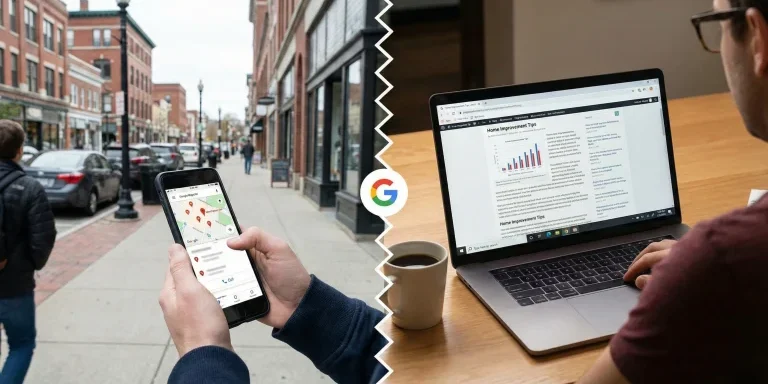
Ever searched “coffee near me” or “roofing contractor in Manchester, NH” and instantly saw Google Maps listings, business reviews, and contact info at the top? Now compare that to searching “best home decor ideas” where blog articles, Pinterest boards, and ecommerce sites dominate. This isn’t a coincidence. It’s Google interpreting your search intent and deciding…
Google Business Profile Optimization: Visuals, Posts & Products That Drive Local SEO
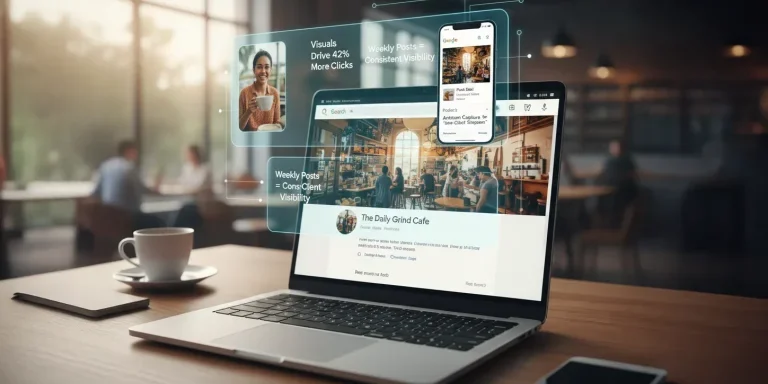
Once your Google Business Profile (GBP) is verified and fully filled out, the next step is engagement and heading into 2026, that’s not optional. Google’s local algorithm now tracks not just what’s on your profile, but how often it’s updated, how visually compelling it is, and how well it answers a searcher’s intent. The businesses…

Bots, Spam, and the Fight for Authenticity: How to Spot & Stop Imposters Online
If your inbox, contact form, or social media comments have been flooded lately with strange messages or suspicious “requests,” you’re not imagining it. AI-driven bots have gone mainstream, and they’re getting disturbingly good at pretending to be real people. Generative AI tools have made it easy for anyone to create automated programs that talk, type,…
Geofencing & How It Attracts Local Customers in Manchester, NH
Are you missing out on customers who pass by your storefront without ever stepping inside? If the answer is yes, there’s a smart solution. It’s called geofencing marketing, and it’s helping businesses in Manchester, NH connect with people right when they’re nearby your store, shop, or outlet. What is Geofencing & How Does It Work?…

Q3 Tariff Update: The Price Increases & Marketing Strategies for 2026
The financial cascade is now complete: Product Categories: The New Winners and Losers Most Challenging Categories Metals & Drinkware: 25-50% tariffs on steel/aluminum continue to devastate traditional favorites Electronics: Consumer tech faces 10-25% increases, though selective exemptions create opportunities Jewelry: The “triple-whammy” of high tariffs, record precious metal prices, and 50% copper tariffs makes this…

2025 Social Media Trends: Strategic Guide for Marketing Success
As we look ahead to social media trends in 2025, businesses need to prepare for significant changes in the digital landscape. These emerging social media trends will reshape how brands connect with their audiences and drive engagement. From evolving platform dynamics to new consumer behaviors, understanding and adapting to these 2025 trends is crucial for…

Social Media ROI Guide: Essential Metrics for Marketing Success
Social media isn’t just about likes and shares anymore. To truly succeed, you need to prove its impact on your bottom line. This guide goes beyond vanity metrics, revealing the essential data points that demonstrate your social media ROI and fuel business growth. Learn how to track, analyze, and optimize your strategy for maximum results.…
How to Build a Consistent Brand Across All Platforms
In today’s crowded marketplace, a strong and consistent brand presence isn’t just an asset—it’s a necessity. Your brand goes beyond a mere logo or visual identity; it embodies your tone of voice, messaging, and the overall experience you offer customers. Crafting a cohesive brand that seamlessly translates from your website to social media and offline…

Data Privacy in Digital Marketing: The Complete Guide for 2025
Picture this: You’re scrolling through your social media feed when an ad pops up for the exact product you were just discussing with a friend. Coincidence? Not quite. Welcome to the world of modern digital marketing, where data drives everything—but at what cost? In today’s digital landscape, data privacy isn’t just another checkbox on your…
Omnichannel Marketing Solutions
Merging creativity and technology for comprehensive brand experiences.
PIXELS
Harnessing digital platforms for impactful brand promotion and audience engagement through strategic touchpoints.

PROMOS
Making the intangible tangible through high-quality promotional items that echo your brand's voice and values.

PLACES
Transforming physical environments into powerful brand narratives that forge connections with everyone who enters your space.