

How to Build a Brand That Feels Human in an AI-Heavy Marketing World
There’s a beverage company you’d recognize by name. Last holiday season, their marketing team decided to rebuild their iconic TV ad using generative AI. New technology. Massive efficiency gains. Fraction of the production cost.
The internet tore it apart.
Viewers called it soulless. They weren’t wrong. The ad looked technically perfect in every sense, and it felt like absolutely nothing. The company had optimized their way out of the one thing their audience actually wanted from them: proof that a real person still cared enough to show up.
That story is playing out across industries right now, just at smaller scales and with less press coverage. And if you run a business in New Hampshire, southern Maine, or metro Boston, it directly applies to you.
Here’s what’s happening and what you can actually do about it.
The Numbers Tell a Clear Story
HubSpot’s 2026 State of Marketing Report landed with a finding that should make every business owner pause: 61% of marketing professionals consider the current AI environment the most significant disruption they’ve seen in twenty years.
That’s not hype. In fact, the mechanics of marketing have genuinely changed. Today, 80% of marketing teams use AI for content creation. Three-quarters use it for media production. In total, over 86% of marketers are using AI tools somewhere in their workflow.
More content than ever before is the result. Less engagement than ever before is the consequence.
Social media engagement rates across major platforms have dropped to between 1.4% and 2.8%. To put that in perspective: brands are producing more content, spending more on distribution, and connecting less with actual people. Meanwhile, consumer preference for AI-generated content has collapsed from 60% three years ago to just 26% today.
People aren’t anti-technology. They’re anti-generic. And right now, a lot of AI-produced content is very, very generic.
The reason is baked into how these systems work. Generative models are trained on existing content, which means they optimize for what already exists, not for what makes your business distinct. As a result, marketers have started calling the output “competent beige.” Technically correct, emotionally absent.
For brands willing to lean into what makes them human, that gap isn’t a problem. It’s an opening.
The First Move: Build a Point of View You Actually Believe
Before you can fix your content, your video, your merchandise, or your physical presence, you have to fix something more foundational. Most brands don’t have a clear Point of View. Instead, they have a logo, a color palette, and a vague sense of what they do.
That’s no longer enough.
A Point of View (POV) isn’t a tagline. It’s the belief system that drives every decision your brand makes. When you have one, it’s obvious. When you don’t, AI-generated content exposes the gap immediately, because it has nothing real to amplify.
Building a strong POV requires four inputs, often called the 4C Model:
- Company: What do you actually believe? What are you genuinely good at? What would you never compromise on?
- Category: How does your industry typically behave, and where do you disagree with it?
- Consumer: What are your customers anxious about, and what do they actually want (which is often different from what they say they want)?
- Culture: What’s shifting in the broader world that’s relevant to your business and audience?
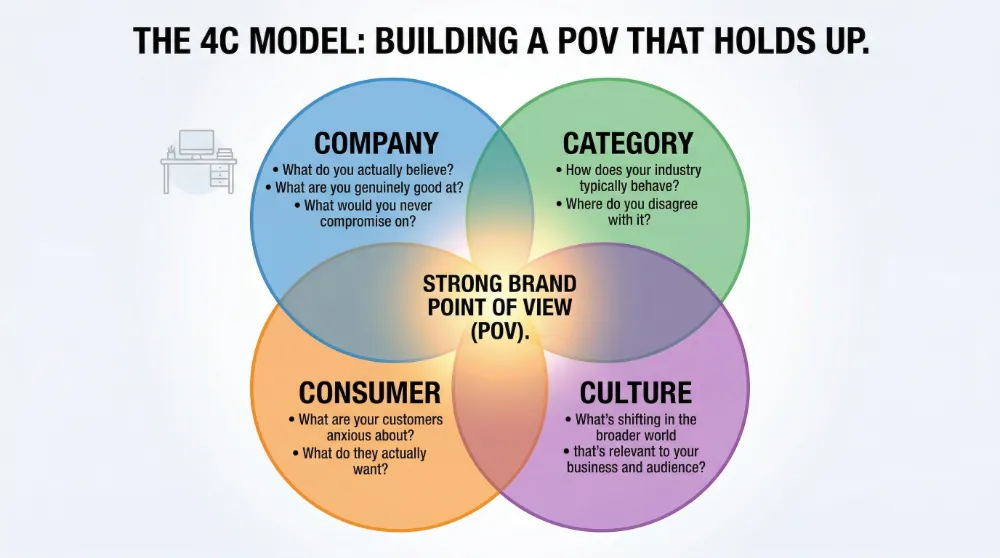
Work through those four questions honestly and you’ll have the raw material for a POV that holds up over time. Brands that lose their identity usually lose it because they react to every algorithm update and trend without any fixed point to return to.
Beyond the framework itself, once you’ve developed your POV, you need someone who owns it. Someone with the authority to say “that’s off-brand” and make it stick. Without that accountability, even well-intentioned teams drift.
The Content Shift: From Volume to Authority
The old SEO game was built on volume. More posts, more keywords, more pages. That model is breaking down.
Why? Because AI search interfaces — think Google’s AI Overviews, ChatGPT search, Perplexity — synthesize information and deliver answers directly to users, often without a website visit at all. The technical term for adapting to this is Generative Engine Optimization, or GEO. The practical reality, though, is simpler: the brands that show up in AI-generated answers are the ones that have established genuine authority on their topics.
You can’t fake authority at scale. You can perform it once, but the systems get smarter and audiences get better at noticing.
So what actually builds authority in this environment?
- Email newsletters that function as real editorial products, not promotional blasts. Curated, opinionated, worth reading because they contain something you can’t find anywhere else.
- Long-form content like podcast episodes and in-depth guides that demonstrate you understand your topic at a level your competitors don’t. A single well-produced 30-minute conversation can be atomized into weeks of downstream content.
- Consistency of perspective. Authoritative brands say things. They take positions. They don’t publish content designed to offend no one and therefore matter to no one.
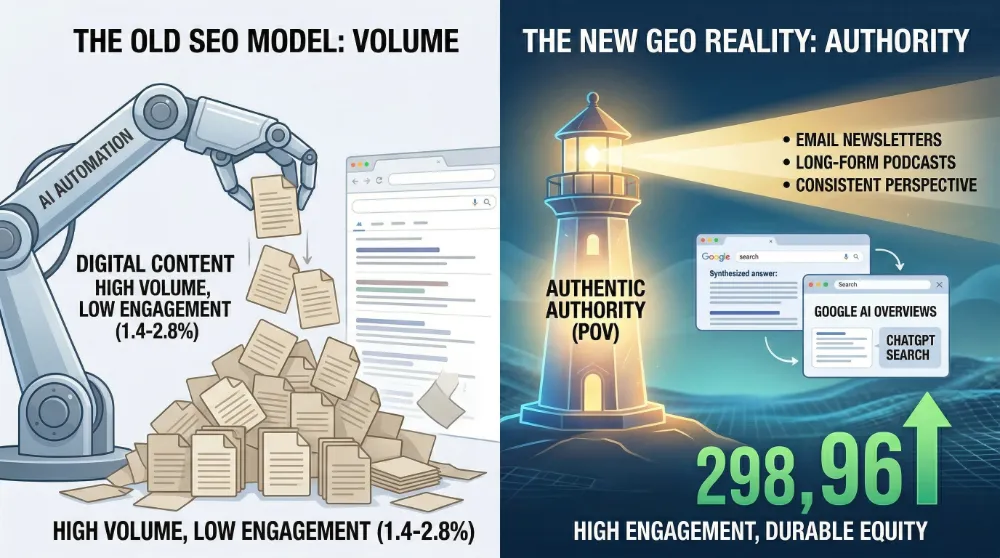
For small and mid-sized businesses in New Hampshire and the region, this is actually good news. You don’t need the content volume of a national brand. Instead, depth and specificity are what set you apart — and those are things a national brand can’t manufacture. Your market, your customer relationships, your community context: that’s the advantage. Lean into it.
The Video Shift: Imperfection as Strategy
For years, the goal of brand video was polish. Professional lighting. Perfect edits. Wardrobe approved. Background staged.
That instinct is now actively working against you.
Audiences have developed a finely tuned ability to detect synthetic perfection. They’ve seen enough AI-generated video to recognize its aesthetic fingerprints. So when content looks too clean, too scripted, or too perfect, they assume something is being hidden.
The brands winning with video right now are doing something that feels counterintuitive: they’re showing the mess.
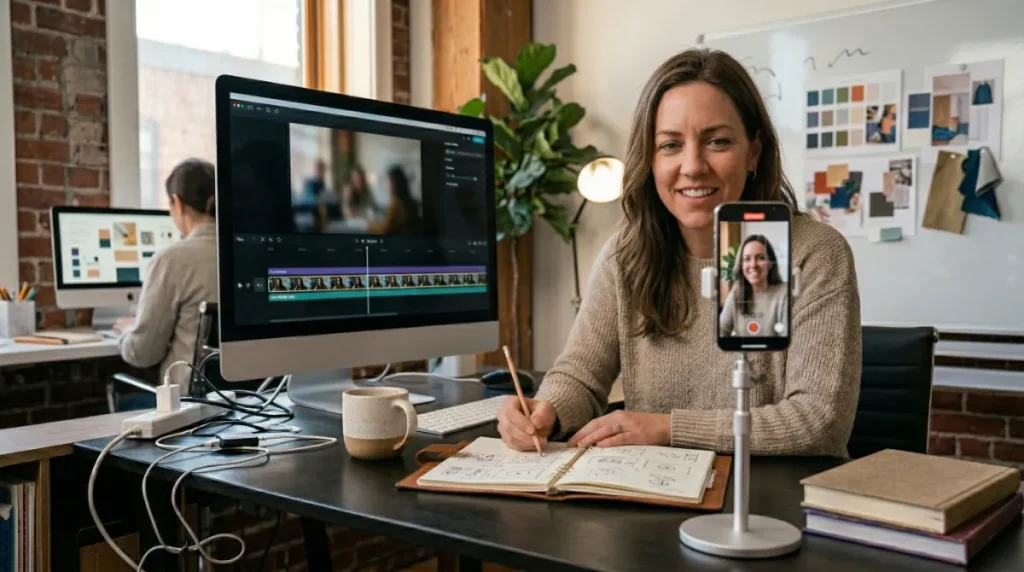
Founders document real days. Behind-the-scenes footage includes mistakes. Executives talk about what isn’t working, not just what is. Unscripted answers to customer questions replace polished scripts. Collectively, this approach has a name: action-driven storytelling. The goal isn’t to look good. Rather, it’s to make your audience feel something, then give them a reason to act on it. Vulnerability, when it’s genuine, builds trust faster than any polished production ever could.
For video right now, the practical guidance is:
- Founder-led content outperforms brand-produced content. A shaky iPhone video from the owner of a business will consistently outperform a slick agency video that doesn’t include a real person.
- Documentary style ages better than commercial style. “We’re in the process of building something” is more interesting than “Here’s our finished, perfect product.”
- Authentic imperfection isn’t an accident. Plan for it. Give people permission to not be perfect on camera. Audiences can tell when messiness is real, and when it’s performed.
The Physical Shift: What AI Can’t Touch
Here’s a reality that the digital-first marketing world keeps underestimating: physical experiences encode memory differently than digital ones.
You remember the weight of something that surprised you — the texture of packaging that felt more expensive than you expected, the smell of a well-designed retail space, the heft of a branded item you actually use every day.
No screen can replicate any of that.
Consider the data: 81% of Gen Z adults report wishing they could disconnect from their devices, and 65% of consumers say they want physical places to offer experiences they can’t replicate digitally. This isn’t nostalgia. It’s a natural human response to overstimulation.
The brands taking this seriously are rethinking three things.
Promotional Products
Cheap branded merchandise communicates that your brand is cheap. Premium, thoughtful, high-utility items communicate the opposite. The psychology here is direct: the physical weight and quality of something you touch tells you something about the brand that gave it to you. If you’re still sending plastic pens, you’re sending a message you probably don’t intend.
Physical Retail and Event Spaces
The strategy is no longer “move people through efficiently.” Instead, it’s “slow people down intentionally.” Immersive environments, communal seating, sensory details, analog design elements — spaces designed to feel like a relief from the digital world make people stay longer, remember more, and talk about the experience afterward.
Environmental Graphic Design
This is where your brand identity lives in the physical world. Beyond logos on lobby walls, it’s about how a space makes someone feel from the moment they walk in. Tactile materials, acoustic design, spatial flow — these answer the question that good design always asks: how does this brand feel? That question matters more now than it ever has.
Brands that treat physical touchpoints as strategic, not decorative, create experiences that digital marketing can amplify but never replicate.
Pulling It Together: Integrated Beats Isolated
Here’s where most businesses get stuck. They know content matters. They believe video has changed. They understand that physical presence builds trust. Yet they’re managing each of these in a separate silo, with separate vendors, separate strategies, and no shared thread connecting any of it.
The result is a fragmented brand experience. And in a world where AI can surface inconsistencies instantly, that fragmentation is increasingly obvious to your audience.
By contrast, the brands building durable equity right now are treating all of these things as parts of a single system. The same POV that informs your newsletter drives the aesthetic of your founder’s video. That same thread shows up in the materials you choose for your branded merchandise. And ultimately, it lives in the physical environment your customers walk into.
Think of it this way: the goal isn’t to do all of these things. The goal is to do them in a way that clearly came from the same place.
That kind of integration is hard to build. It’s also very hard to copy.
So Where Do You Start?
If this feels like a lot, that’s fair. Pick the thread that matters most to your business right now and pull it.
If your brand identity has drifted, start with your Point of View. Get it written down. Get everyone aligned on it. Then look at your content and video through that lens.
For brands producing a lot but seeing little engagement, the answer is usually to cut the volume and invest in one format you can own with real depth and real perspective.
And if your physical touchpoints are an afterthought, start treating them as a priority. The materials you put in customers’ hands, the spaces you invite them into, the events you host — all of these are doing marketing work whether you’re paying attention to them or not.
AI is a genuine tool. Use it. Just don’t let it be your voice.
Your business has a perspective, a history, and a set of people behind it that no model can generate. That’s your advantage. The only question is whether you’re using it.
Want to talk through what this looks like for your business? Brandit helps New Hampshire companies build brands that work across content, video, merchandise, and physical environments. Reach out at branditms.com or call 603.645.2500.
Ready to Take Your Brand Beyond Ordinary?
Your marketing shouldn’t just exist. It should perform. If you’re done settling for “good enough,” let’s build something impossible to ignore. Brandit helps you connect every digital, physical, and promotional touchpoint into one unstoppable brand experience.
Real Results,
Real Reactions
What Our Clients Say

"I sent out three bids for my marketing needs for this year and Brandit was the most responsive and provided great ideas. One company I reached out hadn't even gotten back to me while the other wasn't even close to being comparable to Brandit's creativity, pricing and service."
"I have used Brandit for several projects and they always come through with fantastic pricing and customer service. I highly recommend them."
Southern New Hampshire University

"Thanks to Brandit's generous contribution to the Big Ideas for Building Independence Capital Campaign, Easterseals NH is now better able to serve people with disabilities or special needs. With your support, we raised nearly $2.6 million for renovations to our headquarters."
"It has been an incredible journey! We couldn't have done it without you, and wish to take this opportunity to thank you and your team at Brandit Marketing Solutions for all that you have done and your generous donation."
Easterseals, NH

"Bringing Brandit Marketing Solutions into the CMC-fold is the best thing and most appreciative thing I've done since being at the Hospital."
Catholic Medical Center
"Exceptional does not even begin to cover the work that these people do. I have worked closely with other marketing firms and Brandit tops them every time. From innovative ideas to customer service that rivals the best of the best. I just couldn't speak more highly of them."
Southern New Hampshire University

"The Granite Group, headquartered in Concord, NH, distributes plumbing, heating, cooling, water and propane supplies to contractors and fuel dealers across New England through over 45 wholesale branches and their Online Store. The company also operates 15 retail showrooms under The Ultimate Bath Store name.
Brandit is pleased to say that we have been working with the Granite Group for over ten years which happens to be almost as long as this company has been in existence. In 2020, TGG was named one of New Hampshire's best places to work."
The Granite Group
10+ Year Partnership

"Over my long career, I have been in a position where I have worked closely with numerous vendors/suppliers. I can honestly say that I have never engaged with a company that is as amazing and responsive as Brandit."
"A sincere thanks to the team for the hustle on getting our shirts and tradeshow materials done for our group! You really relieved our pressure and I know it wasn't an easy task. Your effort and turnaround time was and is appreciated. Believe me when I say that I do not take for granted the relationship we have built over the years. Your service is top notch."
C&S Wholesale Grocers

"For almost a decade, the team at Brandit delivered successful and effective marketing solutions, spearheaded the merchandising of the FIRST brand by creating one-of-a-kind products, built, hosted, and managed their very first ecommerce store supporting all programs, staff, partners, sponsors, teams, and customers globally.
In addition, Brandit set up and managed multiple on-site retail stores at their premier Championship events where we serviced over 65,000 attendees. Today we provide web services as well as branded merchandise for regional partners".
FIRST Robotics

"The Brandit Marketing Solutions Ltd Team is wonderful to work with and we appreciate what they do to make us look good! They have expanded their services in recent years to meet whatever marketing needs you may have…from apparel and giveaway items to video and web services to graphic design and printing services, even graphic enhancements for your interior/exterior office space."
"I have worked with this team since the founding of their company and look forward to many more years of working together!"
Boys & Girls Club of Manchester

"The Brandit team is a talented group of creative professionals that I've worked with for years. Top notch!"
Art Murphy
Our Insights
.

Stale Service Pages Tell Google You’ve Closed. Here’s How to Tell It You Haven’t
Your phone used to ring. Then it slowed. Now your top service page sits on page two of Google, and you have no idea why. Nothing is broken. Your site loads. Your contact form works. Your services are the same ones you offered last year, and the year before that. So what changed? Probably nothing…
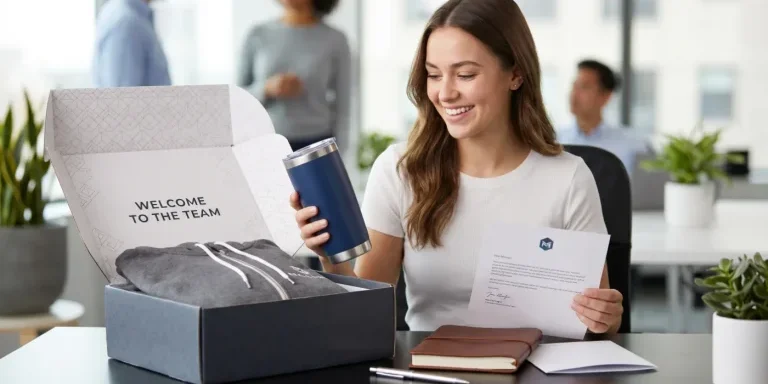
Your New Hire’s First Day Says a Lot About Your Company. The Welcome Kit Decides What.
Your new hire shows up on day one. Their laptop isn’t ready. Their manager is in back-to-back meetings. Someone hands them a stack of forms and a pen with another company’s logo on it. You just told them everything they need to know. The first day isn’t just paperwork. It’s the moment a new employee…
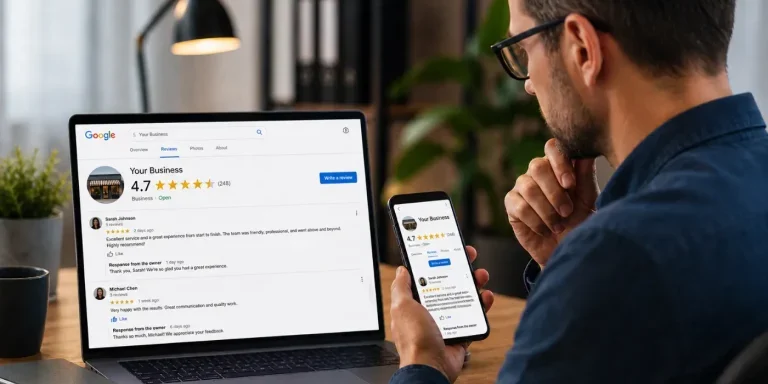
Your 4.7-Star Rating Is Quietly Losing You Customers
You opened your Google Business Profile this morning and saw a 4.7-star average across 34 reviews. Solid, right? Here’s the uncomfortable part. The most recent review is eight months old. None of them have owner responses. And down the street, a competitor sitting at 4.5 stars with 180 reviews, fresh feedback, and visible replies is…
Regional Trade Show Marketing: Why Smaller Shows Can Deliver Bigger ROI
You just spent $25,000 on a booth at a massive industry expo. Three days, 40,000 attendees, and a fishbowl full of business cards. Back at the office, your team starts making calls. Most numbers go to voicemail. The ones who do pick up barely remember your booth. Sound familiar? Here’s a number that should change…
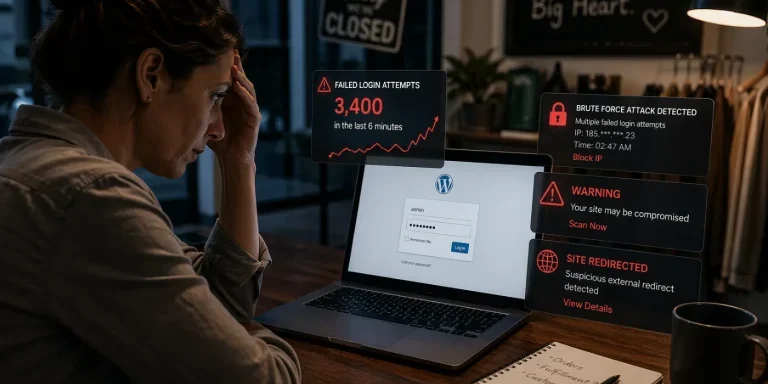
Website Security for Businesses: Your 2026 Survival Guide
Picture this. At 2:47 on a Tuesday morning, a retailer in Portsmouth has 3,400 login attempts hit the admin page of her WordPress site in under six minutes. By 2:53, one of them works. By sunrise, her homepage is redirecting customers to a fake pharmaceutical site, her Google rankings have collapsed, and her payment processor…
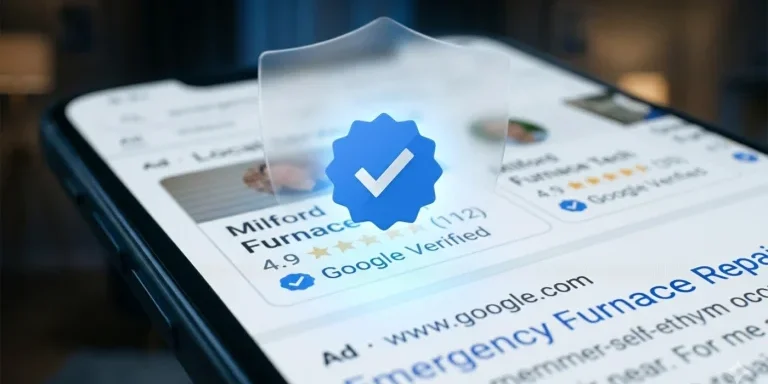
Google Local Services Ads: The Most Valuable Digital Real Estate for Local Businesses.
It’s 11 PM on a Thursday in January. The temperature outside is nine degrees. And your furnace just stopped working. You grab your phone. You type “emergency furnace repair near me.” And you do what every single person in that situation does: you tap the first thing that looks trustworthy. You don’t scroll. You don’t…

Is Zero-Click Search Killing Your Website Traffic? Here’s the Real Answer
She refreshed the analytics dashboard one more time, hoping the numbers had changed. They hadn’t. Website sessions were down 31% year over year. The phone wasn’t ringing less. Leads were actually up. But her web traffic looked like it was falling off a cliff, and she couldn’t explain it to her business partner without sounding…

How to Turn Customer Wins Into B2B Success Stories That Actually Drive Sales
In B2B marketing, trust matters more than ever. Most buyers are not looking for another polished pitch. Instead, they want proof. They want to know your solution works, that companies like theirs have seen results, and that choosing you feels like a smart move. That is why customer success stories are so valuable. A strong…

Schema Markup: The Invisible Code That Gets Your Business Found on Google
You searched for a plumber at 9 PM on a Tuesday. Not just any plumber. One near you, with good reviews, open right now. Google handed you three options at the top of the page. Stars. Hours. Phone number. One click to call. You picked the first one. Here’s what you probably didn’t think about:…

Why Your Trade Show Booth Is a Ghost Town (And How to Fix It)
You spent $8,000 on the booth space. Another $3,000 on graphics. You shipped in a custom display, flew in two sales reps, and booked a hotel for three nights. Then the show doors opened, attendees streamed past your perfectly designed exhibit, and you spent most of Tuesday afternoon rearranging brochures. Sound familiar? It’s not a…
Omnichannel Marketing Solutions
Merging creativity and technology for comprehensive brand experiences.

PIXELS
Harnessing digital platforms for impactful brand promotion and audience engagement through strategic touchpoints.

PROMOS
Making the intangible tangible through high-quality promotional items that echo your brand's voice and values.

PLACES
Transforming physical environments into powerful brand narratives that forge connections with everyone who enters your space.