
Your 4.7-Star Rating Is Quietly Losing You Customers
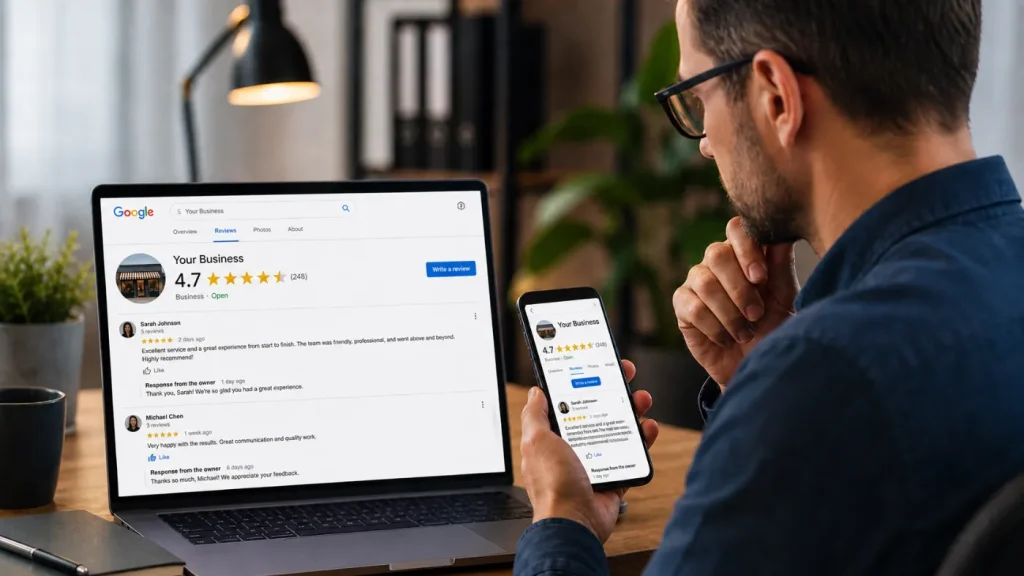
You opened your Google Business Profile this morning and saw a 4.7-star average across 34 reviews. Solid, right?
Here’s the uncomfortable part. The most recent review is eight months old. None of them have owner responses. And down the street, a competitor sitting at 4.5 stars with 180 reviews, fresh feedback, and visible replies is quietly winning the customers who used to be yours.
The rules of online reviews changed. Most businesses didn’t get the memo.
For years, the playbook was simple: chase a higher star rating, ignore the rest. That playbook now creates real exposure on three fronts: customers who quietly choose competitors, search visibility that compounds against you over time, and AI-generated recommendations that pull from review data you’ve stopped feeding. Buyers in 2026 don’t trust a number alone. Neither do the systems that surface businesses in Google’s local pack, Maps recommendations, and AI-powered search experiences.
This is what the research actually shows, what’s at stake if you ignore it, and the weekly system any business can use to fix it.
Why a High Star Rating Is No Longer Enough
Your average rating is now table stakes. Most buyers expect to see at least 4.0 stars before they’ll consider a business, and BrightLocal’s 2026 research shows 31% require 4.5 stars or higher. But once you’re past those minimum trust thresholds, recency, volume, and visible responses often become the tie-breakers, not the second decimal point of your average.
BrightLocal’s 2024 consumer research found that 75% of consumers always or regularly read online reviews before contacting a business. They aren’t just glancing at the star average. 47% say the “sort by newest” feature on Google is highly useful, 27% say reviews from the past two weeks influence their decision, and 59% expect to see between 20 and 99 reviews before they trust a star rating at all.
The shift goes further. PowerReviews ecommerce research, drawing from more than 9,000 U.S. consumers, found that 64% are more likely to buy from a business with fewer recent reviews than one with more reviews older than three months. The data is from product retail, but the underlying buyer behavior, treating freshness as proof of current quality, is highly relevant to local services. A competitor with fresher reviews will often be the safer-feeling choice, regardless of which one has more reviews overall.
A pristine 5.0 average can also work against you. Product-review research from the Spiegel Research Center suggests purchase probability tends to peak between 4.2 and 4.5 stars and softens as the average climbs toward a flawless 5.0. The buyer behavior is intuitive even outside ecommerce: about 46% of online consumers, and 53% of Gen Z, distrust perfect ratings outright. Perfection often reads as manipulation, not excellence.
The score got you in the door. What happens after that is what closes the sale.
What’s Actually at Stake
The cost of ignoring this isn’t theoretical. It shows up in three places that matter to any business owner: lost revenue, lost search visibility, and a reputation you can no longer control.
Lost revenue. A profile with stale reviews looks abandoned. Buyers assume you’ve changed hands, cut quality, or gone out of business. Even if your product is identical to what it was a year ago, the perception is that you’ve slipped. BrightLocal found that 88% of consumers would use a business that responds to all its reviews, but only 47% would use one that doesn’t respond at all. That’s not a small gap. That’s nearly half your potential customers walking away because you went silent.
Lost search visibility. Google states clearly in its local ranking documentation that prominence is influenced by how many reviews you have and your positive ratings. Industry analysis from firms like Whitespark identifies four review-related factors among the top 20 Google local ranking signals: high numerical ratings, high review count, sustained influx over time, and recent reviews. The translation is straightforward: a competitor collecting two reviews a week while you collect zero in eight months is building a meaningful prominence gap, and that gap tends to compound rather than self-correct.
Lost AI visibility. This is the new one most businesses haven’t noticed yet. AI-generated search results have become common enough that they show up routinely in local and informational queries, with industry trackers reporting prevalence rates that vary widely by query type and study methodology. Google Maps’ generative AI features explicitly analyze nearby businesses using photos, ratings, and reviews to build recommendations, and Google’s newer Ask Maps experience uses Gemini to answer real-world local questions conversationally. BrightLocal’s 2026 AI report found that 45% of consumers are now asking AI for local business recommendations, and 88% of them fact-check the reviews the AI cites.
Stale, sparse, or generic reviews give AI systems thin material to work with. Rich, recent, descriptive reviews give those systems specific phrases to associate with your business when someone asks “best dentist open Saturday for anxious children” or “reliable HVAC contractor in Manchester.” Your review corpus is now machine-readable reputation infrastructure. It either works for you or it doesn’t.
The Signals That Actually Matter Now
Buyers and algorithms both look at four things. Star average is only one of them, and arguably the least differentiating once you’re above 4.0.
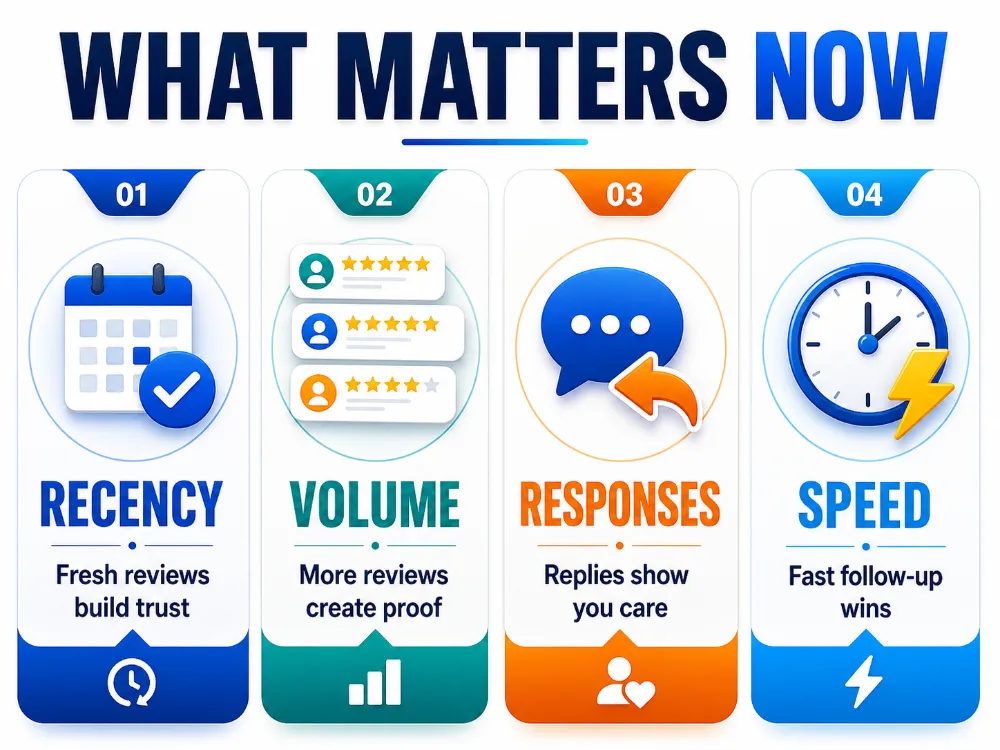
Recency. Rio SEO’s 2025 local search study found that 84% of consumers search for local businesses online daily, and PowerReviews data shows 44% want reviews ideally from within the past month. Once your most recent review is more than 90 days old, the risk of being passed over rises, especially when nearby competitors have fresh feedback. By six months of silence, your profile reads as inactive even when the business is doing fine.
Volume. Sterling Sky’s 2025 case work documented small but measurable Google Maps ranking improvements when businesses crossed from nine reviews to ten. The first 10 to 20 reviews matter disproportionately for under-reviewed profiles: ten can move the needle on early Maps visibility, while twenty is a consumer-trust threshold many buyers expect to see before they engage. Once you pass that range, sustained volume becomes a market-share signal. Younger buyers feel this most: 61% of Gen Z and 53% of Millennials say “a lot of reviews” is the top differentiator when comparing businesses.
Response rate. This is where most businesses leave the most money on the table. Beyond the 88% versus 47% trust gap from BrightLocal, response activity correlates with stronger search performance. A 2026 industry analysis tracking 5,000 local businesses across 47 industries found that companies responding to 75% or more of their reviews ranked an average of 2.3 positions higher in local search than those that ignored feedback. Google does not publish response rate as a direct ranking formula, so treat this as a strong correlation rather than a guaranteed lever, but the directional finding lines up with Google’s own statement that replying to reviews helps a business stand out.
Response speed. The window has shrunk. Rio SEO found 59% of consumers expect a response within 24 hours from local businesses they reach out to. The same 5,000-business analysis showed organizations replying within 24 hours ranked 1.6 positions higher on average than those replying after a week. For 1- and 2-star reviews, the practical standard is now under three hours: long enough to draft something thoughtful, short enough to demonstrate you’re paying attention.
How Each Major Platform Plays the Game
Not all review platforms work the same way. Treating them identically is one of the most common mistakes businesses make.
Google Business Profile. The most transparent of the major platforms. Google explicitly states that more reviews and positive ratings can help your local ranking and that replying to reviews helps your business stand out. Soliciting genuine reviews is allowed; incentivizing them, asking only happy customers, or discouraging negative feedback violates policy and can trigger removal. Google blocked or removed more than 240 million policy-violating reviews in 2024 alone.
Yelp. The strictest platform on solicitation. Yelp’s published policy is “don’t ask for reviews,” and its automated recommendation software may filter out reviews that look solicited, even when they’re real. The smart Yelp strategy is profile completeness, on-site signage that lets customers find you organically, and excellent service. Active outreach can backfire here.
Facebook and Meta. Reviews and recommendations contribute to social validation, but Meta’s publicly accessible review-specific ranking guidance is sparse compared to Google. Treat Facebook reviews as trust proof for buyers who land there, not as a transparent ranking lever you can game.
Amazon. Its own compliance-heavy ecosystem with strict policies and aggressive enforcement on review manipulation. If you sell on Amazon, follow Amazon-specific review rules rather than reusing local-business tactics; the consequences for violations can include permanent loss of selling privileges.
TripAdvisor. Explicit about what drives ranking: quality, recency, and quantity of reviews, plus consistency over time. Recent reviews get more weight, and rankings are recalculated daily. Management responses don’t directly affect the ranking algorithm here, but TripAdvisor publishes strict response guidelines that prohibit threats, accusations of fraud, or sharing personal information about reviewers.
The takeaway: a single outreach playbook copied across platforms will hurt you on at least one of them. Build platform-specific habits, not one-size-fits-all campaigns.
The Weekly Routine That Keeps Reviews Working
The fix isn’t a quarterly campaign. It’s a recurring 60- to 90-minute weekly block that any business can sustain. Friday afternoon works well for most teams: the operational week is winding down, you can clear the backlog, and you head into the weekend traffic with a fresh profile.
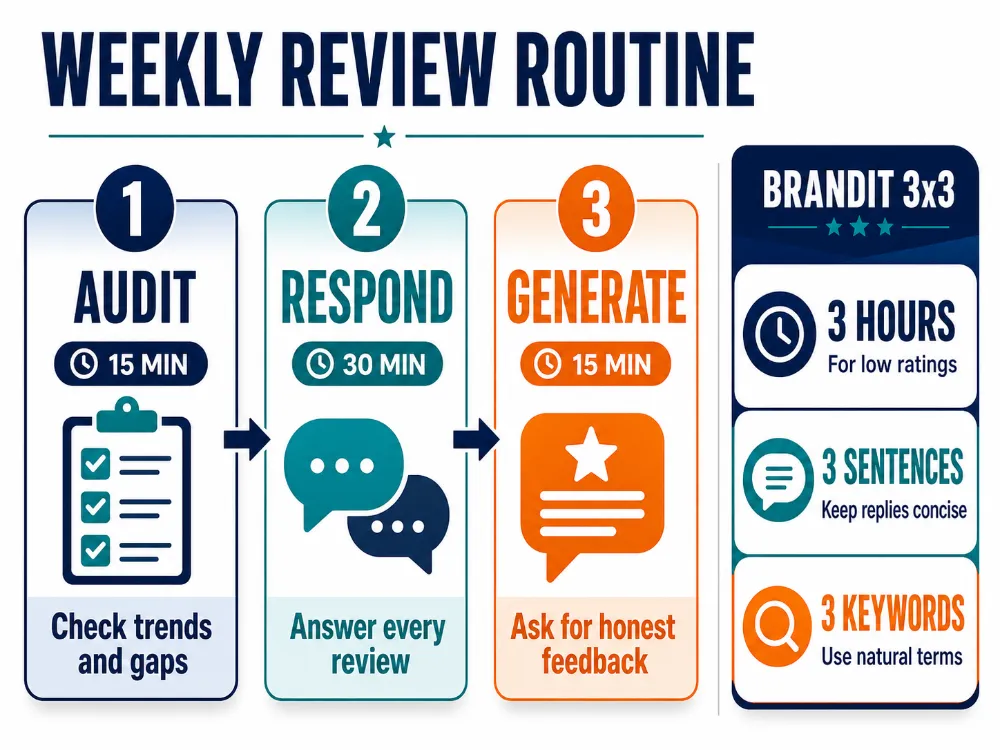
Here’s what the routine looks like in practice.
Phase 1: Audit (15 minutes)
Pull your weekly review activity across Google and your other primary platforms. Check three things: average rating trajectory, new review volume in the last seven days, and how your velocity compares to your top three local competitors. If competitors are pulling in eight new reviews a week and you’re at one, you have a market-share problem hiding in plain sight.
While you’re there, verify your name, address, phone number, and hours are accurate everywhere. Inconsistent business data confuses both customers and AI crawlers trying to validate your entity.
Phase 2: Respond and Engage (30 minutes)
Apply what we call the Brandit 3×3 standard:
- 3 hours to respond to any 1- or 2-star review. Speed contains damage and signals accountability to every passive reader who scrolls past.
- 3 sentences as the optimal response length. Acknowledge the feedback, express genuine care or thanks, and offer a specific next step. Long defensive replies make you look guilty.
- 3 keywords woven naturally into the response. Mention the service, location, or specific product. Not keyword stuffing, but natural language that helps AI crawlers associate your business with relevant terms.
Reply to positive reviews within seven days. Personalize each one. Generic “thanks for the kind words” replies are a missed opportunity, both for the reciprocity loop with that customer and for the semantic context you could be feeding search algorithms.
For genuinely problematic reviews, including ones that violate platform community guidelines, are clearly meant for another business, or contain harassment, use the platform’s dispute tools. Don’t argue in public.
Phase 3: Generate (15 minutes)
Send honest review requests to recent customers through your normal email or text channels. The word “honest” matters. Asking for reviews is allowed on Google. Asking for positive reviews, offering rewards in exchange for sentiment, or pressuring specific wording is not. The FTC’s Consumer Reviews and Testimonials Rule, effective October 2024, prohibits fake reviews, buying positive or negative reviews, suppressing negative reviews, and offering incentives tied to a particular review sentiment. Google’s policy on its own surfaces is stricter still: don’t offer incentives in exchange for posting, changing, or removing reviews at all.
Identify a few high-value customers from the past week and send a personalized request. Their detailed reviews carry disproportionate weight for AI systems and high-consideration buyers. Upload one or two new photos to your profile while you’re there. Visual content is increasingly visible across platform experiences and heavily used by consumers themselves: 51% of buyers say reviews with photos help them choose one local business over another.
That’s it. Three phases, about an hour, executed every week.
Templates You Can Use This Week
Keep responses short, specific, and human. Google explicitly recommends professional and concise replies.
Positive review response: “Hi [First Name], thanks for taking the time to share this. We’re glad [specific service or product] worked well for you. We appreciate your feedback and look forward to working with you again.”
Neutral review response: “Hi [First Name], thank you for the honest feedback. We’re glad you chose us, and we’re sorry the experience didn’t fully meet expectations. If you’re open to it, please reach out to [contact] directly so we can learn more and improve.”
Negative review response: “Hi [First Name], we’re sorry to hear this. What you described isn’t the experience we want our customers to have. We’d like to look into it and make it right. Please contact [name and contact route] with any details you can share.”
Review request: “Hi [First Name], thanks again for choosing [Business Name]. If you have a minute, would you share an honest review about your experience? Your feedback helps other customers and helps us improve. [Review Link]”
Notice what these templates don’t do. They don’t ask for stars. They don’t dictate language. They don’t promise discounts or rewards. That’s by design, and it’s what keeps you compliant with Google, Amazon, and the FTC.
One platform exception: do not use these templates for Yelp. Yelp’s stated policy is that businesses should not ask customers for reviews at all, and solicited reviews may be filtered out of the recommended count. On Yelp, claim and complete your profile, use Yelp’s provided signage if you want, and let reviews come organically.
What Not To Do
A few moves cause more long-term damage than the original problem.
Don’t argue in public replies. Even when the reviewer is wrong, defending yourself in the response field makes you look defensive to every future reader.
Don’t post identifying customer details in a response. TripAdvisor and Google both prohibit this, and you can lose the response privilege entirely.
Don’t confirm a customer or client relationship in regulated industries. Healthcare practices, law firms, financial advisors, and other businesses with privacy obligations should keep public review responses generic. A simple “we appreciate the feedback and would welcome the chance to speak with you directly” is safer than confirming, even implicitly, that someone is a patient or client. HIPAA, attorney-client confidentiality, and state-level financial privacy rules don’t pause for Google reviews.
Don’t buy reviews, trade reviews with other businesses, or run “review for a discount” campaigns. Beyond the platform consequences, the FTC’s Consumer Reviews and Testimonials Rule prohibits fake reviews, paying for reviews, and incentives tied to specific sentiment. Trustpilot alone removed 4.5 million fake reviews in 2024 using AI moderation, and roughly 90% of those removals happened automatically before any human ever saw them. The detection tools have gotten very good. Shortcuts get caught.
Don’t rely on a single platform. BrightLocal found 36% of consumers use two review sites and 41% use three or more before deciding. Showing up only on Google leaves the other half of your buyers checking dead profiles on Yelp, Facebook, or industry-specific platforms.
Don’t treat your average rating as the scoreboard. Treat recency, response, and volume as the real metrics, and let the average follow.
The KPIs Worth Tracking
If you want to know whether your review strategy is working, track these:
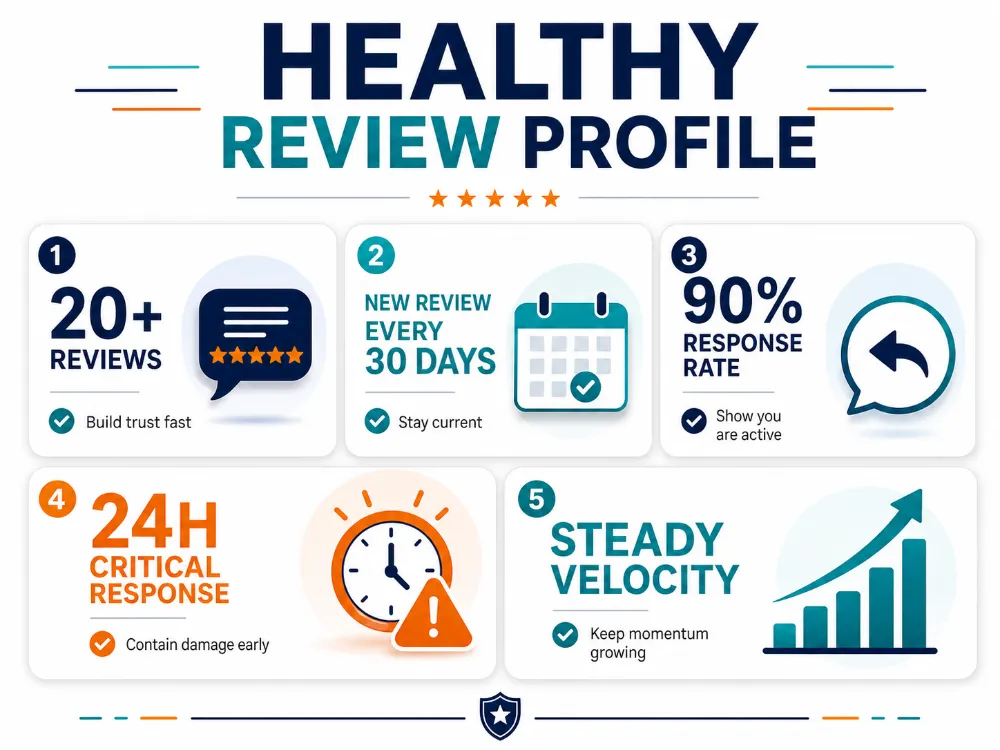
Response rate. Aim for 90% of all reviews and 100% of 1- to 3-star reviews.
Critical review SLA. Reply to 1- and 2-star reviews within 24 hours, ideally within 3.
Positive review SLA. Reply to 4- and 5-star reviews within 7 days.
Review velocity. Match the average monthly cadence of your top three competitors, then aim for one more.
Minimum volume. Get to 20 reviews on your primary profile, then keep going. Under-reviewed profiles often see ranking gains at the 10-review mark, and trust scales meaningfully through 50.
Recency. Don’t let your most recent review sit older than 30 days on core profiles. Treat 90+ days as a five-alarm fire.
Theme capture. Every week, log the top three recurring positives and top three recurring negatives. Your reviews are free market research and free copywriting material.
These are simple numbers. Most businesses don’t track any of them. The ones that do tend to outrank, outconvert, and outlast the ones that don’t.
The Real Goal
Go back to that opening profile. 4.7 stars, 34 reviews, no responses, no new feedback in eight months.
The number isn’t the problem. The silence is.
A living review profile, with fresh feedback, visible responses, steady velocity, and descriptive content, is now part of your operational infrastructure. It tells customers you’re paying attention. It tells Google your business is active and prominent. It tells AI systems what specific things you’re known for. And it does this work for you whether or not anyone clicks through to your website.
The competitor down the street isn’t beating you because they have better service or a slicker website. They’re beating you because they figured out that managing online reviews is a weekly habit, not a quarterly project. The good news: that’s a habit any business can build, starting this Friday afternoon.
Of course, the playbook above takes consistency to be worth anything, and consistency is exactly what tends to slip when the rest of the business gets busy. You can run this routine yourself for 60 to 90 minutes every Friday, or you can hand it off to a team that builds and manages the review infrastructure for you so it doesn’t go dark the first time a quarter gets hectic. Both work. The one that doesn’t work is meaning to do it and not doing it.
That handoff is part of what we do at Brandit. If review management keeps falling to the bottom of the list, or if you’d rather spend your Fridays on the parts of the business only you can do, we’re happy to take it from here.
Ready to Take Your Brand Beyond Ordinary?
Your marketing shouldn’t just exist. It should perform. If you’re done settling for “good enough,” let’s build something impossible to ignore. Brandit helps you connect every digital, physical, and promotional touchpoint into one unstoppable brand experience.
Real Results,
Real Reactions
What Our Clients Say

"I sent out three bids for my marketing needs for this year and Brandit was the most responsive and provided great ideas. One company I reached out hadn't even gotten back to me while the other wasn't even close to being comparable to Brandit's creativity, pricing and service."
"I have used Brandit for several projects and they always come through with fantastic pricing and customer service. I highly recommend them."
Southern New Hampshire University

"Thanks to Brandit's generous contribution to the Big Ideas for Building Independence Capital Campaign, Easterseals NH is now better able to serve people with disabilities or special needs. With your support, we raised nearly $2.6 million for renovations to our headquarters."
"It has been an incredible journey! We couldn't have done it without you, and wish to take this opportunity to thank you and your team at Brandit Marketing Solutions for all that you have done and your generous donation."
Easterseals, NH

"Bringing Brandit Marketing Solutions into the CMC-fold is the best thing and most appreciative thing I've done since being at the Hospital."
Catholic Medical Center
"Exceptional does not even begin to cover the work that these people do. I have worked closely with other marketing firms and Brandit tops them every time. From innovative ideas to customer service that rivals the best of the best. I just couldn't speak more highly of them."
Southern New Hampshire University

"The Granite Group, headquartered in Concord, NH, distributes plumbing, heating, cooling, water and propane supplies to contractors and fuel dealers across New England through over 45 wholesale branches and their Online Store. The company also operates 15 retail showrooms under The Ultimate Bath Store name.
Brandit is pleased to say that we have been working with the Granite Group for over ten years which happens to be almost as long as this company has been in existence. In 2020, TGG was named one of New Hampshire's best places to work."
The Granite Group
10+ Year Partnership

"Over my long career, I have been in a position where I have worked closely with numerous vendors/suppliers. I can honestly say that I have never engaged with a company that is as amazing and responsive as Brandit."
"A sincere thanks to the team for the hustle on getting our shirts and tradeshow materials done for our group! You really relieved our pressure and I know it wasn't an easy task. Your effort and turnaround time was and is appreciated. Believe me when I say that I do not take for granted the relationship we have built over the years. Your service is top notch."
C&S Wholesale Grocers

"For almost a decade, the team at Brandit delivered successful and effective marketing solutions, spearheaded the merchandising of the FIRST brand by creating one-of-a-kind products, built, hosted, and managed their very first ecommerce store supporting all programs, staff, partners, sponsors, teams, and customers globally.
In addition, Brandit set up and managed multiple on-site retail stores at their premier Championship events where we serviced over 65,000 attendees. Today we provide web services as well as branded merchandise for regional partners".
FIRST Robotics

"The Brandit Marketing Solutions Ltd Team is wonderful to work with and we appreciate what they do to make us look good! They have expanded their services in recent years to meet whatever marketing needs you may have…from apparel and giveaway items to video and web services to graphic design and printing services, even graphic enhancements for your interior/exterior office space."
"I have worked with this team since the founding of their company and look forward to many more years of working together!"
Boys & Girls Club of Manchester

"The Brandit team is a talented group of creative professionals that I've worked with for years. Top notch!"
Art Murphy
Our Insights
.
Brand Consistency: Make Your Site & Sign Match
Your website looks sharp. Your storefront sign looks fine. Your business cards came back a slightly different shade of blue than you remembered. Each one on its own seems like a small thing. Together, they cost you customers and money. Brand consistency is whether everything a customer sees from you looks and sounds like it…

Sustainable Promotional Products: A Buyer’s Reality Check
That recycled tote you ordered for the trade show has a problem. The product page called it eco-friendly, you felt good about the choice, and you moved on. Here is the uncomfortable part: when auditors actually test merchandise carrying self-declared green labels, close to half cannot back up the claim. The word on the page…
What Is AI Search Readiness and How Can Local Businesses Improve Visibility?
Your next lead may begin with an AI agent researching your company before a person ever visits your website or contacts your team. Google is expanding the ways its AI-powered Search tools can help people find and compare local providers. A customer can describe what they need, ask Google to research nearby businesses, and use…
Premium vs. Volume: Rethinking Your Promotional Products Budget
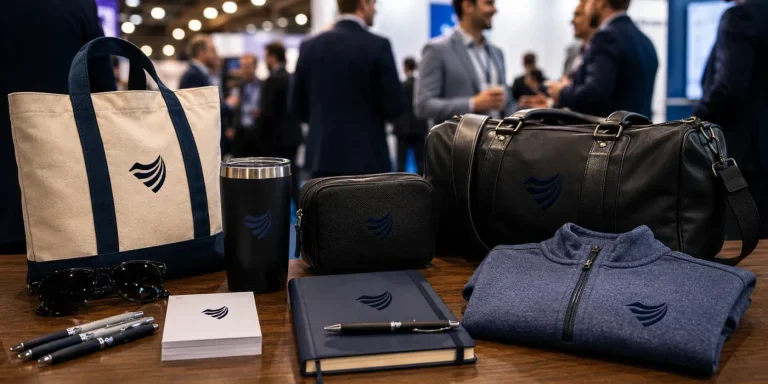
You order 500 pens for the trade show. They cost a little over a dollar each, they have your logo, and they feel like a responsible use of the budget. Three weeks later, most of them are in a junk drawer, a parking lot, or a trash can. A few never made it out of…

Holiday SEO Timeline: Why December Rankings Start in Summer
The businesses that dominate search results this December made their move back in July. Not out of habit. They moved early because search rewards steady, consistent work in a way that no last-minute push can replicate. Holiday SEO is not a campaign you switch on when the decorations come out. It is an advantage you…

Corporate Holiday Gifting Timeline: Why Q4 Planning Starts in July
Here is the part nobody tells you about corporate gifting: the best time to lock in your holiday program is right now, in July. Not October. Not “right after Halloween.” July. That sounds early enough to be a joke. It is not. The companies that run corporate gifting well, sending memorable and on-time gifts to…

Website Performance Audit: Why Q3 Beats Q4 Every Time
Your website traffic is about to drop. Vacations start, inboxes go quiet, and the steady hum of summer browsing replaces the urgency of buying season. Most businesses read that slowdown as a reason to coast. That is the expensive mistake. The quiet stretch from July through September is the best window all year to run…

Summer Foot Traffic: Win It With a Mobile-First Website
Picture a family on a sidewalk in Portsmouth on a Saturday in July. It is 86 degrees, the kids are hungry, and someone pulls out a phone and types “lunch near me.” Three places show up on the map. They tap the first one. If that site loads fast and the menu is right there,…

Modern Phishing Scams: What Smart Businesses Need to Know
The old advice for spotting a scam email no longer works. Watch for bad spelling, awkward grammar, and a generic greeting, and you were safe. That rule protected people for years. Modern phishing scams have erased every one of those tells. Attackers now write clean, personalized messages, hide their links inside images, and move the…

Branded Koozies and Sunglasses Aren’t Lazy: High-Yield Summer Promotional Products
Someone on your team just rolled their eyes at the idea of branded sunglasses. Too obvious. Too expected. Let’s do something clever instead, maybe a little desk gadget or a puzzle nobody asked for. That instinct feels smart. It usually costs you the campaign. Here’s the part most people miss: the “clever” item lives on…
Omnichannel Marketing Solutions
Merging creativity and technology for comprehensive brand experiences.

PIXELS
Harnessing digital platforms for impactful brand promotion and audience engagement through strategic touchpoints.

PROMOS
Making the intangible tangible through high-quality promotional items that echo your brand's voice and values.

PLACES
Transforming physical environments into powerful brand narratives that forge connections with everyone who enters your space.