
Your New Hire’s First Day Says a Lot About Your Company. The Welcome Kit Decides What.
Your new hire shows up on day one. Their laptop isn’t ready. Their manager is in back-to-back meetings. Someone hands them a stack of forms and a pen with another company’s logo on it.
You just told them everything they need to know.
The first day isn’t just paperwork. It’s the moment a new employee decides whether they made the right call accepting your offer. It’s also their first real experience of your onboarding process, company culture, and internal brand standards. And what you put in their hands during that window shapes how they feel about your company for years, not weeks.
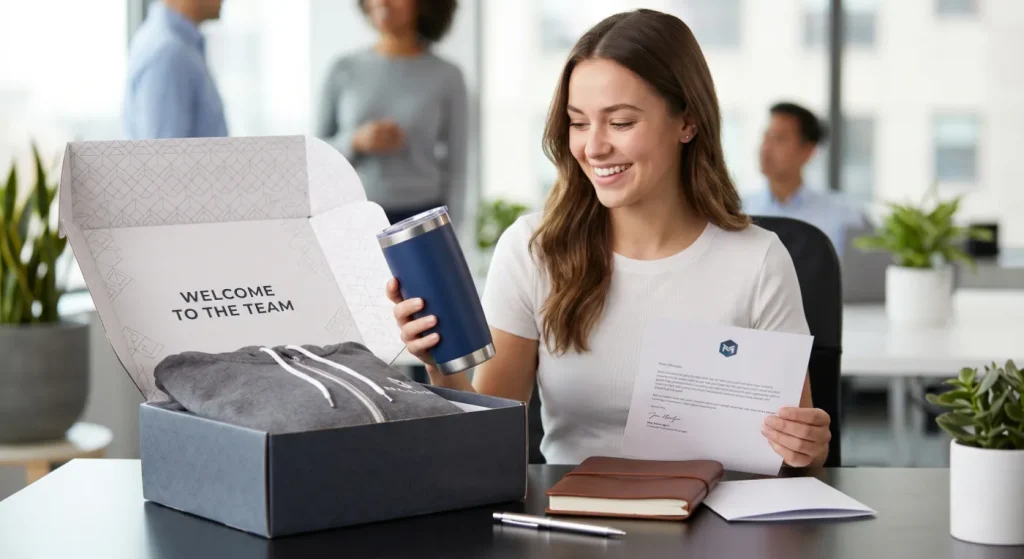
A welcome kit may look like a small detail, but it becomes one of the first physical touchpoints in the employee experience. Done well, it tells the new hire they were expected, prepared for, and already part of the team.
How a Branded Employee Welcome Kit Reduces the First-Year Retention Cliff?
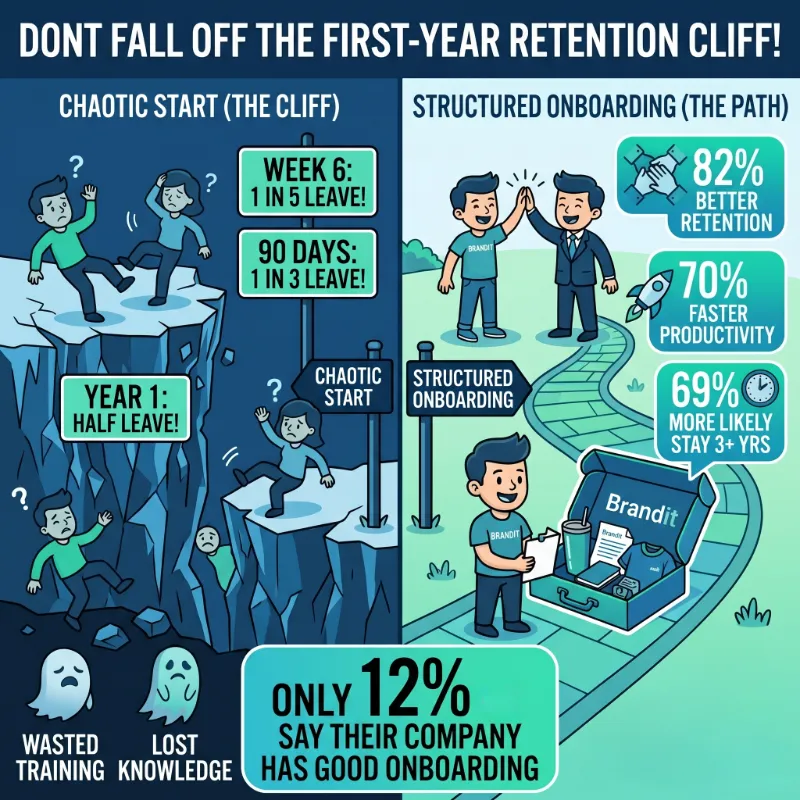
Almost half of voluntary quits happen within an employee’s first year. One in three new hires walks out within 90 days. One in five departures happens in the first six weeks.
Replacing them costs you between 50% and 200% of their annual salary. SHRM puts the baseline cost of a single hire around $4,000. CareerBuilder pegs the loss at $14,000 per employee who leaves in year one.
That’s not a recruiting problem. That’s an onboarding problem.
The math gets worse when you factor in what didn’t happen. The training time wasted. The team member pulled off real work to mentor someone who left. The institutional knowledge that walked out the door. The clients who noticed the inconsistency.
Early turnover usually starts long before someone resigns. It starts when a new hire feels unprepared, disconnected, or unsure whether the company they joined matches the company they were sold during the hiring process.
And here’s what makes this preventable: companies with structured onboarding see 82% better retention. Employees who go through a strong onboarding experience are 69% more likely to stay at least three years. They become productive 70% faster.
Despite all that, only 12% of employees say their company has a good onboarding process.
That’s an enormous gap between what works and what most businesses actually do. A stronger first-day experience, backed by clear onboarding, useful tools, and intentional employee touchpoints, can help close that gap before doubt turns into turnover.
Why New Hire Onboarding Fails Without a Physical Touchpoint?
A welcome kit isn’t merchandise. It’s a message about how your company operates.
When a new employee opens a thoughtfully designed kit on day one, they’re reading between the lines. The quality of the apparel tells them whether you cut corners. The personalization tells them whether they’re a number. The presentation tells them whether your brand standards are real or just talk.
This isn’t sentimental. It’s how human brains work.
People form lasting impressions in the first few minutes of any new environment. Psychologists call this the primacy effect. Your new hire’s brain is scanning for signals about whether this place is organized, whether they belong, whether the company that wooed them during recruitment is the same one they’re showing up to.
A generic kit with cheap pens and an ill-fitting t-shirt sends one message. A curated employee welcome kit with useful items, consistent branding, and a personal touch sends a completely different one.
Both messages stick.
Beyond Swag: The Employee Retention Strategy Every HR Leader Needs
For years, “swag” meant whatever was cheapest in bulk. Logo-stamped pens. Bargain water bottles. T-shirts that ran small and washed worse.
That approach is dead. Or it should be.
The modern workforce, especially the talent you actually want to hire, has different expectations. They notice quality. They notice sustainability. They notice when a company invests in them versus when a company is checking a box.
The new standard is fewer items, but better ones. A premium hoodie they’ll actually wear. An insulated tumbler that earns desk space instead of cabinet exile. A notebook with paper worth writing on. Tech accessories that solve a real problem on day one, not at the bottom of a drawer by week two.
That’s the difference between random promotional products and a strategic onboarding kit. One adds clutter. The other supports the employee experience, reinforces brand quality, and makes the new hire feel like the company thought through their first week.
The thinking is straightforward: every item in the kit should earn its place. If it won’t get used, it shouldn’t be in the box.
Integrating Strategic Gifts into Your New Hire Onboarding Process
Strong onboarding kits work in three layers. Each one does a different job.
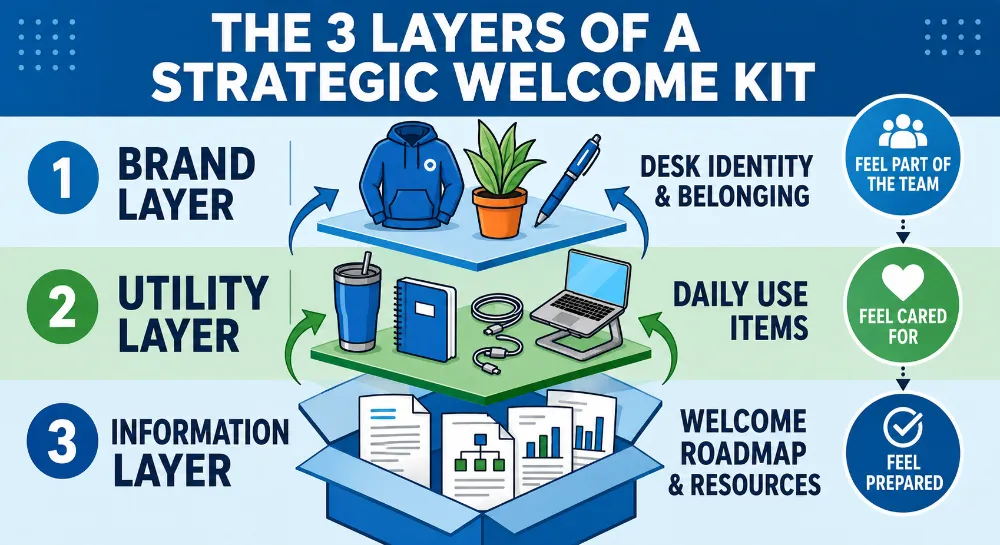
- The information layer – This is the personalized welcome letter, the team org chart with bios, the 30-60-90 day roadmap that shows the new hire what success looks like. A handwritten note from their manager beats a generic card every time. Specifics matter more than polish.
- The utility layer – These are the items that solve real problems on day one. For remote employees, that might be a laptop stand that fixes their home office posture, or a cable organizer that ends the tangle. For in-office hires, it’s the headphones, the notebook, the tumbler. The test isn’t whether something is impressive. The test is whether it gets used in week one.
- The brand layer – This is the apparel, the desk items, the things that show up in the background of video calls and on the daily commute. These build identity over time. They turn a new hire into someone who proudly represents the brand, both inside and outside work hours.
Done well, the three layers reinforce each other. The information makes them feel prepared. The utility makes them feel cared for. The brand makes them feel like they belong.
Bridging the Distance: Remote Employee Onboarding Best Practices
If you’re hiring remote employees, the welcome kit isn’t optional. It’s the only physical contact your company has with that person before they start work.
Remote workers are 25% more likely to feel isolated than in-office staff. They miss the office tour, the lunch with the team, the casual hallway introductions. The kit has to do that work instead.
Ship it to arrive 24 to 48 hours before their start date. Make it land before the first Zoom call. The unboxing should happen while anticipation is still high, not as an afterthought a week into the role.
For hybrid teams, parity matters. If your office hires get a full kit and your remote hires get a watered-down version, you’ve just told half your workforce they matter less. That message lands hard, and it doesn’t go away.
A remote employee welcome kit should make distance feel intentional, not disconnected. Useful home-office items, branded apparel, onboarding resources, and a personal note help replace some of the first-day moments remote hires miss in person.
Turning New Hires into Advocates Through Employer Branding
Here’s where most companies leave value on the table.
When a new employee gets a welcome kit they actually love, they post about it. On LinkedIn. On Instagram. To their professional network. With photos.
That’s employee-generated content with built-in credibility: the new hire who chose you, sharing a real first-day moment. Each post can reach potential candidates, clients, competitors, and the employee’s wider professional network. The reach compounds with every new hire.
Companies that understand this provide a simple social media kit alongside the physical one. Suggested hashtags. Photography guidelines. Tagged accounts. Nothing pushy, just enough to make sharing easy for the people who want to.
That’s how a welcome kit becomes part of recruitment marketing, not just onboarding. Authentic posts from real employees, showing real moments of belonging, often carry more trust than a polished campaign from the HR team.
Streamlining Logistics with Professional Custom Kitting Services
Building a welcome kit that does all of this isn’t just a sourcing problem. It’s a strategy problem.
The kit has to match your brand standards. The merchandise has to be quality enough that employees actually use it. The packaging has to make the unboxing feel intentional. The logistics have to work whether you’re hiring three people a year or three hundred.
That’s the work we do at Brandit. Custom kitting is one of the cornerstone services in our PROMOS pillar, and we’ve spent decades helping businesses across New Hampshire, Southern Maine, and Metro Boston turn welcome kits into something that earns its keep.
Three things make our approach different.
- We go a bit beyond – Creative ideation, strategic sourcing, and project management are services we don’t charge extra for. They’re how we work. You get a partner who thinks through the whole experience, not a vendor who quotes you on water bottles.
- We integrate across pillars – Your welcome kit shouldn’t feel disconnected from your office signage, your website, or your social media presence. Because PROMOS works alongside our PIXELS (digital marketing) and PLACES (environmental branding) services, the kit your new hire opens lines up with every other brand touchpoint they’ll encounter.
- We handle the logistics – Sourcing, assembly, packaging, fulfillment, and direct-to-home shipping for remote hires. You tell us when someone starts. We make sure their kit arrives on time, every time.
Next Steps: Building Your Employee Retention Strategy This Week
If your current onboarding kit is a t-shirt and a pen, you have a problem worth fixing.
Start with three questions:
- What does your new hire actually need on day one?
- Which items in your current kit get used after week two?
- What does the unboxing experience say about your company’s standards?
If you don’t like the answers, that’s useful. It means there’s room to make a real change, not a cosmetic one.
A welcome kit isn’t going to fix a broken culture. But for companies that already have a good thing going, it’s one of the highest-leverage moves you can make. Better retention, faster productivity, stronger employer brand, and free marketing from your most credible advocates.
That’s a lot of return for something that lives in a box on someone’s first day.
Ensuring Quality: Why Custom Kitting Services Must Match Your Employer Branding
Your welcome kit should feel as intentional as the offer letter, the interview process, and the team your new hire is joining.
Brandit Marketing Solutions helps businesses turn that first physical touchpoint into something useful, branded, and ready to arrive on time.
If the box matters, the details inside it should too.
Visit Brandit: Your Partner for Custom Kitting & Onboarding
- How a Branded Employee Welcome Kit Reduces the First-Year Retention Cliff?
- Why New Hire Onboarding Fails Without a Physical Touchpoint?
- Beyond Swag: The Employee Retention Strategy Every HR Leader Needs
- Integrating Strategic Gifts into Your New Hire Onboarding Process
- Bridging the Distance: Remote Employee Onboarding Best Practices
- Turning New Hires into Advocates Through Employer Branding
- Streamlining Logistics with Professional Custom Kitting Services
- Next Steps: Building Your Employee Retention Strategy This Week
- Ensuring Quality: Why Custom Kitting Services Must Match Your Employer Branding
- Visit Brandit: Your Partner for Custom Kitting & Onboarding
Ready to Take Your Brand Beyond Ordinary?
Your marketing shouldn’t just exist. It should perform. If you’re done settling for “good enough,” let’s build something impossible to ignore. Brandit helps you connect every digital, physical, and promotional touchpoint into one unstoppable brand experience.
Real Results,
Real Reactions
What Our Clients Say

"I sent out three bids for my marketing needs for this year and Brandit was the most responsive and provided great ideas. One company I reached out hadn't even gotten back to me while the other wasn't even close to being comparable to Brandit's creativity, pricing and service."
"I have used Brandit for several projects and they always come through with fantastic pricing and customer service. I highly recommend them."
Southern New Hampshire University

"Thanks to Brandit's generous contribution to the Big Ideas for Building Independence Capital Campaign, Easterseals NH is now better able to serve people with disabilities or special needs. With your support, we raised nearly $2.6 million for renovations to our headquarters."
"It has been an incredible journey! We couldn't have done it without you, and wish to take this opportunity to thank you and your team at Brandit Marketing Solutions for all that you have done and your generous donation."
Easterseals, NH

"Bringing Brandit Marketing Solutions into the CMC-fold is the best thing and most appreciative thing I've done since being at the Hospital."
Catholic Medical Center
"Exceptional does not even begin to cover the work that these people do. I have worked closely with other marketing firms and Brandit tops them every time. From innovative ideas to customer service that rivals the best of the best. I just couldn't speak more highly of them."
Southern New Hampshire University

"The Granite Group, headquartered in Concord, NH, distributes plumbing, heating, cooling, water and propane supplies to contractors and fuel dealers across New England through over 45 wholesale branches and their Online Store. The company also operates 15 retail showrooms under The Ultimate Bath Store name.
Brandit is pleased to say that we have been working with the Granite Group for over ten years which happens to be almost as long as this company has been in existence. In 2020, TGG was named one of New Hampshire's best places to work."
The Granite Group
10+ Year Partnership

"Over my long career, I have been in a position where I have worked closely with numerous vendors/suppliers. I can honestly say that I have never engaged with a company that is as amazing and responsive as Brandit."
"A sincere thanks to the team for the hustle on getting our shirts and tradeshow materials done for our group! You really relieved our pressure and I know it wasn't an easy task. Your effort and turnaround time was and is appreciated. Believe me when I say that I do not take for granted the relationship we have built over the years. Your service is top notch."
C&S Wholesale Grocers
"For almost a decade, the team at Brandit delivered successful and effective marketing solutions, spearheaded the merchandising of the FIRST brand by creating one-of-a-kind products, built, hosted, and managed their very first ecommerce store supporting all programs, staff, partners, sponsors, teams, and customers globally.
In addition, Brandit set up and managed multiple on-site retail stores at their premier Championship events where we serviced over 65,000 attendees. Today we provide web services as well as branded merchandise for regional partners".
FIRST Robotics
"The Brandit Marketing Solutions Ltd Team is wonderful to work with and we appreciate what they do to make us look good! They have expanded their services in recent years to meet whatever marketing needs you may have…from apparel and giveaway items to video and web services to graphic design and printing services, even graphic enhancements for your interior/exterior office space."
"I have worked with this team since the founding of their company and look forward to many more years of working together!"
Boys & Girls Club of Manchester

"The Brandit team is a talented group of creative professionals that I've worked with for years. Top notch!"
Art Murphy
Our Insights
.
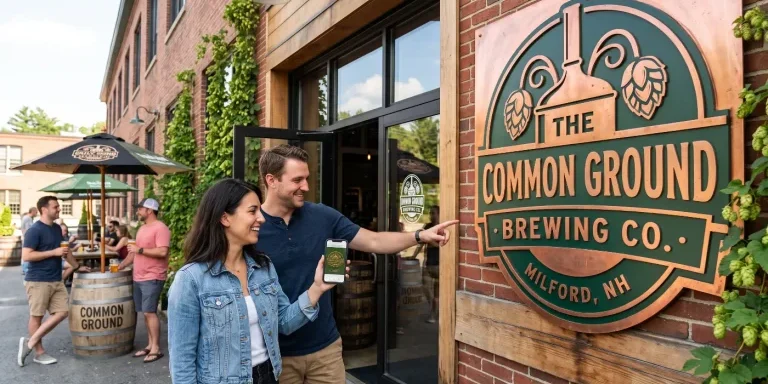
Brand Consistency: Make Your Site & Sign Match
Your website looks sharp. Your storefront sign looks fine. Your business cards came back a slightly different shade of blue than you remembered. Each one on its own seems like a small thing. Together, they cost you customers and money. Brand consistency is whether everything a customer sees from you looks and sounds like it…
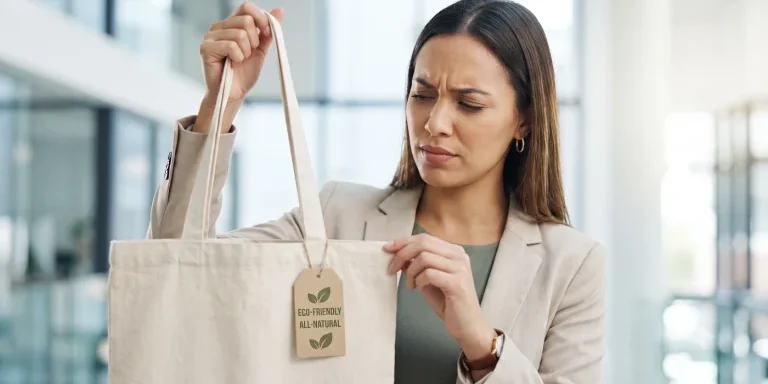
Sustainable Promotional Products: A Buyer’s Reality Check
That recycled tote you ordered for the trade show has a problem. The product page called it eco-friendly, you felt good about the choice, and you moved on. Here is the uncomfortable part: when auditors actually test merchandise carrying self-declared green labels, close to half cannot back up the claim. The word on the page…
What Is AI Search Readiness and How Can Local Businesses Improve Visibility?
Your next lead may begin with an AI agent researching your company before a person ever visits your website or contacts your team. Google is expanding the ways its AI-powered Search tools can help people find and compare local providers. A customer can describe what they need, ask Google to research nearby businesses, and use…
Premium vs. Volume: Rethinking Your Promotional Products Budget
You order 500 pens for the trade show. They cost a little over a dollar each, they have your logo, and they feel like a responsible use of the budget. Three weeks later, most of them are in a junk drawer, a parking lot, or a trash can. A few never made it out of…

Holiday SEO Timeline: Why December Rankings Start in Summer
The businesses that dominate search results this December made their move back in July. Not out of habit. They moved early because search rewards steady, consistent work in a way that no last-minute push can replicate. Holiday SEO is not a campaign you switch on when the decorations come out. It is an advantage you…

Corporate Holiday Gifting Timeline: Why Q4 Planning Starts in July
Here is the part nobody tells you about corporate gifting: the best time to lock in your holiday program is right now, in July. Not October. Not “right after Halloween.” July. That sounds early enough to be a joke. It is not. The companies that run corporate gifting well, sending memorable and on-time gifts to…

Website Performance Audit: Why Q3 Beats Q4 Every Time
Your website traffic is about to drop. Vacations start, inboxes go quiet, and the steady hum of summer browsing replaces the urgency of buying season. Most businesses read that slowdown as a reason to coast. That is the expensive mistake. The quiet stretch from July through September is the best window all year to run…

Summer Foot Traffic: Win It With a Mobile-First Website
Picture a family on a sidewalk in Portsmouth on a Saturday in July. It is 86 degrees, the kids are hungry, and someone pulls out a phone and types “lunch near me.” Three places show up on the map. They tap the first one. If that site loads fast and the menu is right there,…

Modern Phishing Scams: What Smart Businesses Need to Know
The old advice for spotting a scam email no longer works. Watch for bad spelling, awkward grammar, and a generic greeting, and you were safe. That rule protected people for years. Modern phishing scams have erased every one of those tells. Attackers now write clean, personalized messages, hide their links inside images, and move the…
Branded Koozies and Sunglasses Aren’t Lazy: High-Yield Summer Promotional Products
Someone on your team just rolled their eyes at the idea of branded sunglasses. Too obvious. Too expected. Let’s do something clever instead, maybe a little desk gadget or a puzzle nobody asked for. That instinct feels smart. It usually costs you the campaign. Here’s the part most people miss: the “clever” item lives on…
Omnichannel Marketing Solutions
Merging creativity and technology for comprehensive brand experiences.
PIXELS
Harnessing digital platforms for impactful brand promotion and audience engagement through strategic touchpoints.
PROMOS
Making the intangible tangible through high-quality promotional items that echo your brand's voice and values.

PLACES
Transforming physical environments into powerful brand narratives that forge connections with everyone who enters your space.