
Short-Form Video Content That Converts Local Customers
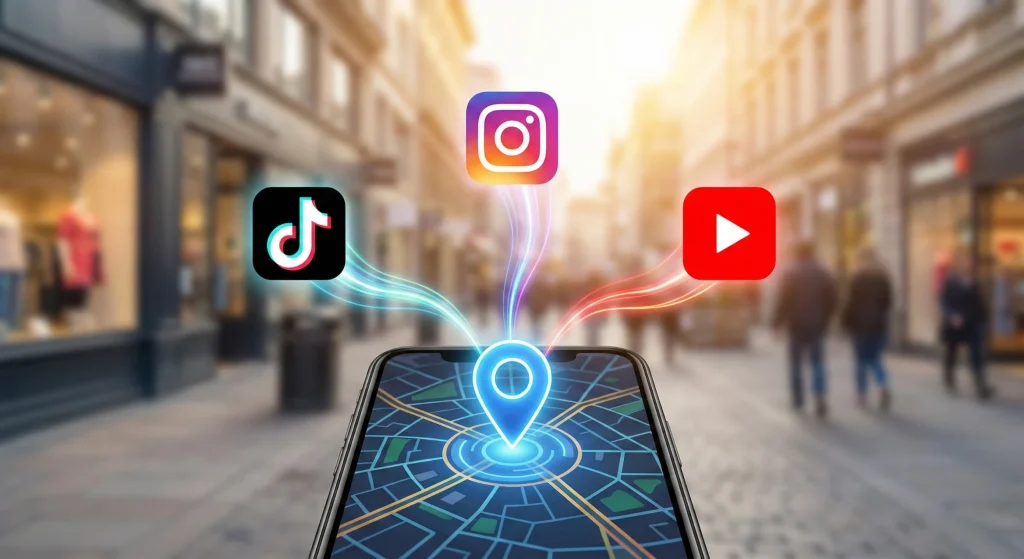
Your competitors are showing up in “Nearby” feeds on TikTok. They’re appearing in Instagram map searches. Their YouTube Shorts are ranking on Google when customers search for services in your area.
You’re not.
This isn’t about going viral. It’s about being found by the customer driving past your location right now, phone in hand, searching for exactly what you offer.
The Local Discovery Shift Nobody’s Talking About
Here’s what changed in 2025: 78% of consumers now prefer learning about local products and services through short video content. That’s not “nice to have” territory. That’s “your business is invisible without it” territory.
TikTok launched a “Nearby” feed that prioritizes local content. Instagram added searchable maps where users browse businesses by location. YouTube Shorts now appear directly in Google Maps listings.
The platforms aren’t prioritizing viral content anymore. They’re prioritizing relevant content. A video with 500 views from people within 10 miles of your business is worth more than 50,000 views from people who’ll never walk through your door.
The question isn’t whether to use video. The question is whether you want to be visible to customers already looking for you.
Why Lo-Fi Video Outperforms Polished Production
The biggest mistake local businesses make? Thinking they need expensive equipment and professional production.
They don’t.
Research shows 63% of consumers prefer authentic, relatable content over polished productions. When a potential customer sees a slightly shaky iPhone video of your team working, their brain reads it as trustworthy. When they see a slick commercial, their “persuasion defense” activates. They know they’re being sold to.

Think about it: When you’re choosing a plumber at 10 PM with water leaking through your ceiling, do you want the company with the fancy ad or the one where you just watched the owner explain exactly how they fix that problem?
Low-fidelity signals effort. It says, “We’re too busy doing good work to stage a fake scene.”
The Four Content Types That Actually Drive Customers
Stop posting random content hoping something sticks. Successful local businesses rotate through four strategic content pillars.
Humanization Content: “Meet the Team”
People buy from people, not logos. A 30-second video of your team answering rapid-fire questions (“Name? Job? Favorite local pizza spot?”) does two things: It shows personality and anchors your business in the local community.
A “Day in the Life” video following an employee opening your bakery at 4 AM demonstrates work ethic better than any written description. Customers respect that.
Expertise Content: “Watch Me Work”
Process videos build trust faster than testimonials. A time-lapse of a messy room being organized, a car being detailed, or a hair transformation proves competence without words.
For service businesses, educational shorts addressing specific local problems work exceptionally well. An HVAC tech filming “Why your AC freezes in Phoenix heat” positions the business as helpful expert, not desperate salesperson.
Evidence Content: “Real Customer Reactions”
The most persuasive content is a happy customer’s genuine reaction. With permission, film the moment they see their finished hair, their repaired car, or taste your signature dish. Those micro-expressions of delight can’t be faked.
Create a “selfie station” or Instagram-worthy wall in your business. Offer a small discount for customers who tag you. Their posts reach people your business account never could.
Community Content: “We’re Local Too”
Film your intro in front of a recognizable local landmark. It stops the scroll for locals who recognize the background immediately.
Review another local business that doesn’t compete with you. A gym owner trying the local smoothie shop cross-pollinates audiences and builds community goodwill.
Take a viral trend and apply a local twist: “When traffic on Route 3 is backed up…” This signals to both the algorithm and the audience that you belong here.

Platform Strategy: Where to Post What
Each platform serves a different purpose in the local customer journey.
TikTok is your discovery engine. The “Nearby” feed connects you with strangers who match your customer profile and happen to be local. TikTok’s algorithm “listens” to your voiceover and “reads” your visual frames using AI. If you say “best tacos in downtown Austin,” the system transcribes and indexes that phrase. You don’t need hashtags. You need clear spoken keywords.
Instagram is your validation platform. Customers use Instagram’s map search to verify your “vibe” before visiting. They want to see recent posts tagged at your location. If those posts look appealing, you get the visit. If they’re non-existent or outdated, they move to your competitor.
YouTube Shorts is your authority builder. These videos appear in Google search results and integrate with Google Maps. A Short titled “How to fix a leaking tap in hard water areas” can generate local traffic for years. While a TikTok video lives for 48-72 hours, YouTube Shorts are indexed like web pages.
Post the same video everywhere, but optimize the captions and tags for each platform’s specific algorithm.
| Platform | Primary Role | Key Local Feature | Best Content Style | Video Lifespan |
|---|---|---|---|---|
| TikTok | Discovery Engine | “Nearby” Feed & Semantic Search | Raw, unpolished, trending | 48-72 hours |
| Validation Platform | Map Search & Story Geotags | Curated, aesthetic, high-quality | Weeks (via profile grid) | |
| YouTube Shorts | Authority Builder | Google Search & Maps Integration | Educational, how-to, problem-solving | Months to years |
Production Reality: You Already Have Everything You Need
Your smartphone is sufficient. An iPhone 13 or equivalent Android produces video quality that performs better than cinema cameras because the “phone look” signals authenticity.
Invest in one thing: a $30-$50 wireless lavalier microphone. Bad audio causes immediate scroll-away. Everything else is optional.
Use natural window light. It’s free and more flattering than expensive lighting kits.
Batch your content. Dedicate one afternoon per month to filming 4-8 videos in one session. Change shirts between takes to make it look like different days. Spend 30 minutes filming generic B-roll of your space, your products, and your team. Store these clips for later when you need quick content.
Edit in CapCut. It’s free, industry-standard, and offers auto-captions that improve accessibility and provide another layer of text for algorithms to index.
The Technical Details That Drive Local Visibility
Geotagging isn’t just turning on location. It’s strategic.
For “awareness” posts, tag the broader city or neighborhood to cast a wider net. For “conversion” posts (like events or promotions), tag your specific business address so bottom-of-funnel customers can find you directly.
Use the “ladder” hashtag strategy. Include one broad industry tag (#RealEstate), one local broad tag (#AustinRealEstate), one hyper-local tag (#78704RealEstate), and your branded tag (#YourBusinessName). This covers all levels of search intent.
Script your videos for search. Say your primary keywords in the first three seconds: “Looking for the best pizza in Chicago?” Put those same words in on-screen text. The algorithm reads both.
Measuring What Actually Matters
Stop tracking global vanity metrics. Total views and worldwide likes mean nothing for a local business.
Track local shares. When someone sends your video to friends nearby, that’s high-intent behavior. Track saves. When users bookmark your video for later, they’re serious prospects. Track comments from local users asking about hours or prices.
The simplest attribution method? Include a verbal offer: “Mention this video for a free cookie.” Keep a tally sheet at the register. At week’s end, count the tallies and calculate exact revenue generated versus cookie cost. Immediate, irrefutable proof of ROI.
For larger operations, use platform-specific offline conversion tracking. TikTok’s Events API and Google’s Store Visits feature can match users who watched your content to actual foot traffic at your location.
Industry-Specific Quick Wins
Restaurants: Film the most visually stimulating moment of your menu. The cheese pull, the sauce pour, the drink fizz. Create a “secret menu” item only available if customers mention the TikTok video. This measures ROI directly.
Salons: Master the 3-second transformation. Before/after transitions provide instant proof of skill. Film the consultation before the service to show you listen—the number one pain point for salon clients.
Home Services: Show the “gross reveal.” What was clogging the drain or hiding in the air filter. Explain pricing transparency. “Why a new AC costs $5,000” is scary but filters out price shoppers and builds deep trust with serious buyers.
Crafting Hooks That Stop the Scroll
The first three seconds determine everything. Here’s what works versus what gets ignored:
| Business Type | Weak Hook (Scroll Past) | Strong Hook (Stop & Watch) | Psychological Trigger |
|---|---|---|---|
| Restaurant | “Come eat at Joe’s Pizza…” | Close-up of cheese pull: “This is why we sell out by 2 PM…” | Scarcity + Sensory Appeal |
| Real Estate | “Check out this new listing…” | “You won’t believe what $400k gets you in [Neighborhood]…” | Curiosity + Value Assessment |
| Contractor | “We fix roofs in [City]…” | Show water damage: “If your ceiling looks like this, stop waiting…” | Fear/Urgency + Problem ID |
| Salon | “Book your appointment today…” | Client shaking head “No”: “She came in with a box dye disaster…” | Narrative Tension + Transformation |
| Gym/Fitness | “Join our gym today…” | “I trained this 55-year-old for 90 days. Watch what happened…” | Transformation + Relatability |
| Auto Repair | “We service all makes…” | “This noise means you have 2 weeks before major damage…” | Fear + Expertise |
The Competitive Advantage Is Time, Not Money
Your competitors are either ignoring video entirely or waiting for “perfect” conditions to start. Neither approach works.
The businesses dominating local search in 2026 started posting imperfect videos in 2024. They learned by doing. They built parasocial relationships with their community one authentic video at a time.
You don’t need a viral hit. You need consistent visibility in your specific geographic radius. You need to be the familiar face customers feel they already know when they’re ready to buy.
The tools are free. The audience is local. The algorithm rewards consistency over perfection.
The only question is: Will your business be visible when your next customer searches?
Ready to dominate local search in your market? Brandit helps New Hampshire, Southern Maine, and Metro Boston businesses create strategic video content that actually drives foot traffic. We handle the strategy, production, and optimization so you can focus on serving the customers video brings through your door. Let’s talk about your local visibility goals: 603.645.2500
- The Local Discovery Shift Nobody's Talking About
- Why Lo-Fi Video Outperforms Polished Production
- The Four Content Types That Actually Drive Customers
- Platform Strategy: Where to Post What
- Production Reality: You Already Have Everything You Need
- The Technical Details That Drive Local Visibility
- Measuring What Actually Matters
- Industry-Specific Quick Wins
- Crafting Hooks That Stop the Scroll
- The Competitive Advantage Is Time, Not Money
Ready to Take Your Brand Beyond Ordinary?
Your marketing shouldn’t just exist. It should perform. If you’re done settling for “good enough,” let’s build something impossible to ignore. Brandit helps you connect every digital, physical, and promotional touchpoint into one unstoppable brand experience.
Real Results,
Real Reactions
What Our Clients Say

"I sent out three bids for my marketing needs for this year and Brandit was the most responsive and provided great ideas. One company I reached out hadn't even gotten back to me while the other wasn't even close to being comparable to Brandit's creativity, pricing and service."
"I have used Brandit for several projects and they always come through with fantastic pricing and customer service. I highly recommend them."
Southern New Hampshire University

"Thanks to Brandit's generous contribution to the Big Ideas for Building Independence Capital Campaign, Easterseals NH is now better able to serve people with disabilities or special needs. With your support, we raised nearly $2.6 million for renovations to our headquarters."
"It has been an incredible journey! We couldn't have done it without you, and wish to take this opportunity to thank you and your team at Brandit Marketing Solutions for all that you have done and your generous donation."
Easterseals, NH

"Bringing Brandit Marketing Solutions into the CMC-fold is the best thing and most appreciative thing I've done since being at the Hospital."
Catholic Medical Center
"Exceptional does not even begin to cover the work that these people do. I have worked closely with other marketing firms and Brandit tops them every time. From innovative ideas to customer service that rivals the best of the best. I just couldn't speak more highly of them."
Southern New Hampshire University

"The Granite Group, headquartered in Concord, NH, distributes plumbing, heating, cooling, water and propane supplies to contractors and fuel dealers across New England through over 45 wholesale branches and their Online Store. The company also operates 15 retail showrooms under The Ultimate Bath Store name.
Brandit is pleased to say that we have been working with the Granite Group for over ten years which happens to be almost as long as this company has been in existence. In 2020, TGG was named one of New Hampshire's best places to work."
The Granite Group
10+ Year Partnership

"Over my long career, I have been in a position where I have worked closely with numerous vendors/suppliers. I can honestly say that I have never engaged with a company that is as amazing and responsive as Brandit."
"A sincere thanks to the team for the hustle on getting our shirts and tradeshow materials done for our group! You really relieved our pressure and I know it wasn't an easy task. Your effort and turnaround time was and is appreciated. Believe me when I say that I do not take for granted the relationship we have built over the years. Your service is top notch."
C&S Wholesale Grocers

"For almost a decade, the team at Brandit delivered successful and effective marketing solutions, spearheaded the merchandising of the FIRST brand by creating one-of-a-kind products, built, hosted, and managed their very first ecommerce store supporting all programs, staff, partners, sponsors, teams, and customers globally.
In addition, Brandit set up and managed multiple on-site retail stores at their premier Championship events where we serviced over 65,000 attendees. Today we provide web services as well as branded merchandise for regional partners".
FIRST Robotics

"The Brandit Marketing Solutions Ltd Team is wonderful to work with and we appreciate what they do to make us look good! They have expanded their services in recent years to meet whatever marketing needs you may have…from apparel and giveaway items to video and web services to graphic design and printing services, even graphic enhancements for your interior/exterior office space."
"I have worked with this team since the founding of their company and look forward to many more years of working together!"
Boys & Girls Club of Manchester

"The Brandit team is a talented group of creative professionals that I've worked with for years. Top notch!"
Art Murphy
Our Insights
.
Brand Consistency: Make Your Site & Sign Match
Your website looks sharp. Your storefront sign looks fine. Your business cards came back a slightly different shade of blue than you remembered. Each one on its own seems like a small thing. Together, they cost you customers and money. Brand consistency is whether everything a customer sees from you looks and sounds like it…

Sustainable Promotional Products: A Buyer’s Reality Check
That recycled tote you ordered for the trade show has a problem. The product page called it eco-friendly, you felt good about the choice, and you moved on. Here is the uncomfortable part: when auditors actually test merchandise carrying self-declared green labels, close to half cannot back up the claim. The word on the page…
What Is AI Search Readiness and How Can Local Businesses Improve Visibility?
Your next lead may begin with an AI agent researching your company before a person ever visits your website or contacts your team. Google is expanding the ways its AI-powered Search tools can help people find and compare local providers. A customer can describe what they need, ask Google to research nearby businesses, and use…
Premium vs. Volume: Rethinking Your Promotional Products Budget
You order 500 pens for the trade show. They cost a little over a dollar each, they have your logo, and they feel like a responsible use of the budget. Three weeks later, most of them are in a junk drawer, a parking lot, or a trash can. A few never made it out of…

Holiday SEO Timeline: Why December Rankings Start in Summer
The businesses that dominate search results this December made their move back in July. Not out of habit. They moved early because search rewards steady, consistent work in a way that no last-minute push can replicate. Holiday SEO is not a campaign you switch on when the decorations come out. It is an advantage you…

Corporate Holiday Gifting Timeline: Why Q4 Planning Starts in July
Here is the part nobody tells you about corporate gifting: the best time to lock in your holiday program is right now, in July. Not October. Not “right after Halloween.” July. That sounds early enough to be a joke. It is not. The companies that run corporate gifting well, sending memorable and on-time gifts to…

Website Performance Audit: Why Q3 Beats Q4 Every Time
Your website traffic is about to drop. Vacations start, inboxes go quiet, and the steady hum of summer browsing replaces the urgency of buying season. Most businesses read that slowdown as a reason to coast. That is the expensive mistake. The quiet stretch from July through September is the best window all year to run…

Summer Foot Traffic: Win It With a Mobile-First Website
Picture a family on a sidewalk in Portsmouth on a Saturday in July. It is 86 degrees, the kids are hungry, and someone pulls out a phone and types “lunch near me.” Three places show up on the map. They tap the first one. If that site loads fast and the menu is right there,…

Modern Phishing Scams: What Smart Businesses Need to Know
The old advice for spotting a scam email no longer works. Watch for bad spelling, awkward grammar, and a generic greeting, and you were safe. That rule protected people for years. Modern phishing scams have erased every one of those tells. Attackers now write clean, personalized messages, hide their links inside images, and move the…
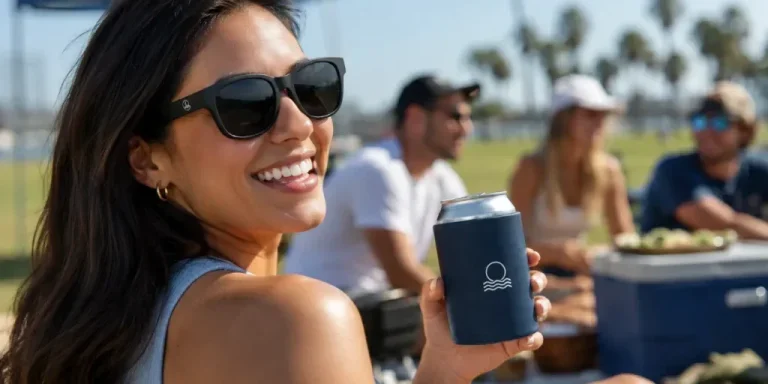
Branded Koozies and Sunglasses Aren’t Lazy: High-Yield Summer Promotional Products
Someone on your team just rolled their eyes at the idea of branded sunglasses. Too obvious. Too expected. Let’s do something clever instead, maybe a little desk gadget or a puzzle nobody asked for. That instinct feels smart. It usually costs you the campaign. Here’s the part most people miss: the “clever” item lives on…
Omnichannel Marketing Solutions
Merging creativity and technology for comprehensive brand experiences.

PIXELS
Harnessing digital platforms for impactful brand promotion and audience engagement through strategic touchpoints.

PROMOS
Making the intangible tangible through high-quality promotional items that echo your brand's voice and values.

PLACES
Transforming physical environments into powerful brand narratives that forge connections with everyone who enters your space.