

Sales vs. Marketing: Understanding Their Roles and synergy
Fueling Success Through Sales and Marketing Synergy
Sales and marketing are two critical pillars of any successful business. They are often spoken about together, yet their roles are distinct and complementary. Understanding the differences and how these two functions support each other is vital for any organization aiming to thrive in a competitive marketplace. In this blog post, we will explore the individual roles of sales and marketing, their differences, and the ways in which they can work together to drive business growth.
What is Marketing?
Marketing is the process of creating awareness and interest in a product or service. It involves identifying customer needs, developing products or services to meet those needs, and promoting them to the right audience. The ultimate goal of marketing is to attract potential customers, engage them, and build a strong brand that resonates with the target market.
Marketing encompasses various activities, including:
- Market Research: Understanding the target audience, their preferences, and the competitive landscape.
- Branding: Creating a unique identity for the product or service that differentiates it from competitors.
- Content Creation: Developing materials such as blog posts, videos, and social media posts to engage and inform the audience.
- Advertising: Promoting the product or service through various channels, including online ads, TV commercials, and print media.
- Public Relations: Managing the company’s image and building relationships with the media and public.
- Social Media Management: Engaging with the audience on platforms like Facebook, Twitter, and Instagram to build brand loyalty.
Marketing sets the stage for sales by creating a strong brand presence and generating leads. It’s about building awareness and nurturing potential customers through the buying journey until they are ready to make a purchase.
What is Sales?
Sales, on the other hand, is the process of converting leads generated by marketing into paying customers. It involves direct interaction with potential customers, understanding their needs, and offering solutions that meet those needs. The primary goal of sales is to close deals and generate revenue for the business.
Sales activities include:
- Prospecting: Identifying potential customers and reaching out to them.
- Pitching: Presenting the product or service to the prospect, highlighting its features and benefits.
- Negotiation: Discussing terms, pricing, and addressing any objections the prospect may have.
- Closing: Finalizing the deal and converting the prospect into a customer.
- Follow-Up: Maintaining relationships with customers to ensure satisfaction and encourage repeat business.
Sales is about direct interaction and persuasion. It requires a deep understanding of the customer’s needs and the ability to build relationships and trust.
The Differences Between Sales and Marketing
While sales and marketing share the common goal of driving revenue, their approaches and focuses differ significantly.
- Focus:
- Marketing focuses on reaching a broad audience and creating awareness. It’s about casting a wide net to attract potential customers.
- Sales focuses on individual customers and closing deals. It’s about converting interested prospects into buyers.
- Approach:
- Marketing uses a one-to-many approach, leveraging advertising, content marketing, and social media to reach a large audience.
- Sales is typically one-to-one, involving personal interactions such as calls, emails, and meetings.
- Timeframe:
- Marketing works on a longer timeframe, building brand awareness and nurturing leads over time.
- Sales operates on a shorter timeframe, aiming to close deals and generate revenue quickly.
- Metrics:
- Marketing success is measured by metrics such as website traffic, engagement rates, lead generation, and brand recognition.
- Sales success is measured by deals closed, revenue generated, and conversion rates.
- Role in the Customer Journey:
- Marketing drives the top of the funnel—awareness and lead nurturing.
- Sales drives the middle and bottom—converting leads into customers and building long-term relationships.
How Sales and Marketing Support Each Other
Despite their differences, sales and marketing are interdependent and must collaborate to achieve business goals. Here’s how they support one another:
- Lead Generation and Nurturing:
- Marketing generates leads through campaigns, content, and promotions. Sales follows up to convert them.
- Sales provides feedback on lead quality, helping marketing refine targeting and messaging.
- Alignment on Target Audience:
- Marketing defines buyer personas that help sales understand their audience.
- Sales provides real-world feedback from direct customer interactions to improve marketing strategy.
- Content Creation and Utilization:
- Marketing creates case studies, whitepapers, and social proof assets that support the sales process.
- Sales reports back on which content resonates most, improving future campaigns.
- Brand Consistency:
- Marketing ensures cohesive messaging and visuals across all channels.
- Sales reinforces brand voice and trust during customer conversations.
- Closed-Loop Reporting:
- Marketing tracks lead sources and campaign performance.
- Sales shares conversion data, helping both teams measure true ROI.
- Customer Feedback and Product Development:
- Sales gathers direct feedback from customers on pain points and desires.
- Marketing uses that data to inform content, product updates, and positioning.
- Personalization:
- Marketing leverages CRM data to personalize campaigns.
- Sales uses personalized assets to make pitches more relevant and effective.
- Shared Goals and KPIs:
- Both teams should align on metrics like CAC (customer acquisition cost) and LTV (lifetime value).
- Regular syncs ensure marketing drives qualified leads and sales converts them efficiently.
- Technology Integration:
- Marketing uses CRM, analytics, and automation tools to manage leads.
- Sales integrates with these tools for full-funnel visibility.
- Continuous Improvement:
- Marketing optimizes campaigns based on sales feedback and analytics.
- Sales adapts approaches based on marketing data and new tools.
Building a Strong Sales and Marketing Alignment
To maximize synergy between sales and marketing, businesses must foster a culture of collaboration and communication. Here’s how:
- Regular Meetings: Schedule recurring syncs to discuss goals, challenges, and opportunities.
- Shared Goals and KPIs: Define common success metrics and ensure accountability across teams.
- Open Communication: Maintain transparent updates on campaigns, lead quality, and customer feedback.
- Cross-Training: Encourage team members to experience each other’s workflows—sales shadowing marketing, and vice versa.
- Technology Integration: Use unified systems for data sharing and collaboration (like a shared CRM).
- Feedback Loop: Establish structured feedback processes to refine strategies continuously.
- Celebrate Successes: Recognize joint achievements to reinforce collaboration and morale.
Conclusion
Sales and marketing are distinct yet complementary functions that drive growth together. While marketing creates awareness and attracts leads, sales converts those leads into lasting relationships. When these two departments collaborate, the result is a unified force that boosts revenue, strengthens brand loyalty, and fuels sustainable success.
Alignment requires consistent communication, shared goals, and mutual respect. When sales and marketing operate as partners instead of silos, the entire organization benefits—delivering better results for both the business and its customers.
Contact us today to see how we can help you engage your audience.
Ready to Take Your Brand Beyond Ordinary?
Your marketing shouldn’t just exist. It should perform. If you’re done settling for “good enough,” let’s build something impossible to ignore. Brandit helps you connect every digital, physical, and promotional touchpoint into one unstoppable brand experience.
Real Results,
Real Reactions
What Our Clients Say

"I sent out three bids for my marketing needs for this year and Brandit was the most responsive and provided great ideas. One company I reached out hadn't even gotten back to me while the other wasn't even close to being comparable to Brandit's creativity, pricing and service."
"I have used Brandit for several projects and they always come through with fantastic pricing and customer service. I highly recommend them."
Southern New Hampshire University

"Thanks to Brandit's generous contribution to the Big Ideas for Building Independence Capital Campaign, Easterseals NH is now better able to serve people with disabilities or special needs. With your support, we raised nearly $2.6 million for renovations to our headquarters."
"It has been an incredible journey! We couldn't have done it without you, and wish to take this opportunity to thank you and your team at Brandit Marketing Solutions for all that you have done and your generous donation."
Easterseals, NH

"Bringing Brandit Marketing Solutions into the CMC-fold is the best thing and most appreciative thing I've done since being at the Hospital."
Catholic Medical Center
"Exceptional does not even begin to cover the work that these people do. I have worked closely with other marketing firms and Brandit tops them every time. From innovative ideas to customer service that rivals the best of the best. I just couldn't speak more highly of them."
Southern New Hampshire University

"The Granite Group, headquartered in Concord, NH, distributes plumbing, heating, cooling, water and propane supplies to contractors and fuel dealers across New England through over 45 wholesale branches and their Online Store. The company also operates 15 retail showrooms under The Ultimate Bath Store name.
Brandit is pleased to say that we have been working with the Granite Group for over ten years which happens to be almost as long as this company has been in existence. In 2020, TGG was named one of New Hampshire's best places to work."
The Granite Group
10+ Year Partnership

"Over my long career, I have been in a position where I have worked closely with numerous vendors/suppliers. I can honestly say that I have never engaged with a company that is as amazing and responsive as Brandit."
"A sincere thanks to the team for the hustle on getting our shirts and tradeshow materials done for our group! You really relieved our pressure and I know it wasn't an easy task. Your effort and turnaround time was and is appreciated. Believe me when I say that I do not take for granted the relationship we have built over the years. Your service is top notch."
C&S Wholesale Grocers

"For almost a decade, the team at Brandit delivered successful and effective marketing solutions, spearheaded the merchandising of the FIRST brand by creating one-of-a-kind products, built, hosted, and managed their very first ecommerce store supporting all programs, staff, partners, sponsors, teams, and customers globally.
In addition, Brandit set up and managed multiple on-site retail stores at their premier Championship events where we serviced over 65,000 attendees. Today we provide web services as well as branded merchandise for regional partners".
FIRST Robotics

"The Brandit Marketing Solutions Ltd Team is wonderful to work with and we appreciate what they do to make us look good! They have expanded their services in recent years to meet whatever marketing needs you may have…from apparel and giveaway items to video and web services to graphic design and printing services, even graphic enhancements for your interior/exterior office space."
"I have worked with this team since the founding of their company and look forward to many more years of working together!"
Boys & Girls Club of Manchester

"The Brandit team is a talented group of creative professionals that I've worked with for years. Top notch!"
Art Murphy
Our Insights
.

Stale Service Pages Tell Google You’ve Closed. Here’s How to Tell It You Haven’t
Your phone used to ring. Then it slowed. Now your top service page sits on page two of Google, and you have no idea why. Nothing is broken. Your site loads. Your contact form works. Your services are the same ones you offered last year, and the year before that. So what changed? Probably nothing…

Your New Hire’s First Day Says a Lot About Your Company. The Welcome Kit Decides What.
Your new hire shows up on day one. Their laptop isn’t ready. Their manager is in back-to-back meetings. Someone hands them a stack of forms and a pen with another company’s logo on it. You just told them everything they need to know. The first day isn’t just paperwork. It’s the moment a new employee…
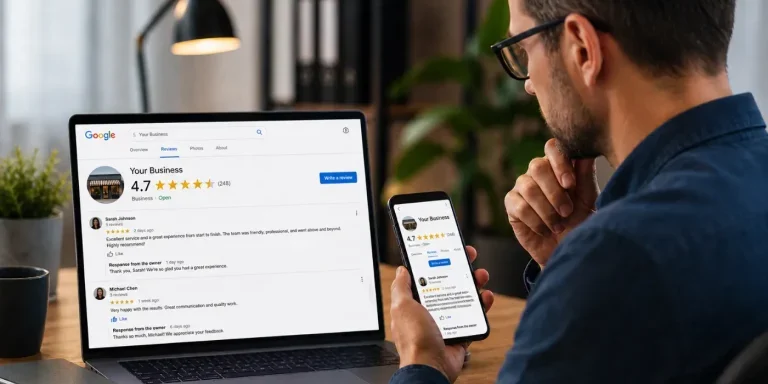
Your 4.7-Star Rating Is Quietly Losing You Customers
You opened your Google Business Profile this morning and saw a 4.7-star average across 34 reviews. Solid, right? Here’s the uncomfortable part. The most recent review is eight months old. None of them have owner responses. And down the street, a competitor sitting at 4.5 stars with 180 reviews, fresh feedback, and visible replies is…

Regional Trade Show Marketing: Why Smaller Shows Can Deliver Bigger ROI
You just spent $25,000 on a booth at a massive industry expo. Three days, 40,000 attendees, and a fishbowl full of business cards. Back at the office, your team starts making calls. Most numbers go to voicemail. The ones who do pick up barely remember your booth. Sound familiar? Here’s a number that should change…

Website Security for Businesses: Your 2026 Survival Guide
Picture this. At 2:47 on a Tuesday morning, a retailer in Portsmouth has 3,400 login attempts hit the admin page of her WordPress site in under six minutes. By 2:53, one of them works. By sunrise, her homepage is redirecting customers to a fake pharmaceutical site, her Google rankings have collapsed, and her payment processor…
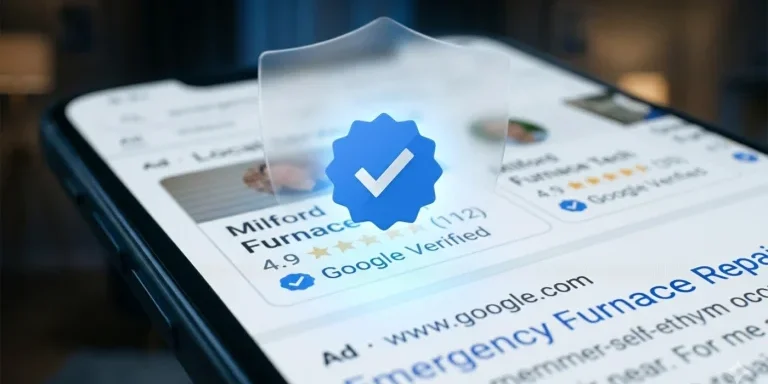
Google Local Services Ads: The Most Valuable Digital Real Estate for Local Businesses.
It’s 11 PM on a Thursday in January. The temperature outside is nine degrees. And your furnace just stopped working. You grab your phone. You type “emergency furnace repair near me.” And you do what every single person in that situation does: you tap the first thing that looks trustworthy. You don’t scroll. You don’t…

How to Build a Brand That Feels Human in an AI-Heavy Marketing World
There’s a beverage company you’d recognize by name. Last holiday season, their marketing team decided to rebuild their iconic TV ad using generative AI. New technology. Massive efficiency gains. Fraction of the production cost. The internet tore it apart. Viewers called it soulless. They weren’t wrong. The ad looked technically perfect in every sense, and…

Is Zero-Click Search Killing Your Website Traffic? Here’s the Real Answer
She refreshed the analytics dashboard one more time, hoping the numbers had changed. They hadn’t. Website sessions were down 31% year over year. The phone wasn’t ringing less. Leads were actually up. But her web traffic looked like it was falling off a cliff, and she couldn’t explain it to her business partner without sounding…

How to Turn Customer Wins Into B2B Success Stories That Actually Drive Sales
In B2B marketing, trust matters more than ever. Most buyers are not looking for another polished pitch. Instead, they want proof. They want to know your solution works, that companies like theirs have seen results, and that choosing you feels like a smart move. That is why customer success stories are so valuable. A strong…

Schema Markup: The Invisible Code That Gets Your Business Found on Google
You searched for a plumber at 9 PM on a Tuesday. Not just any plumber. One near you, with good reviews, open right now. Google handed you three options at the top of the page. Stars. Hours. Phone number. One click to call. You picked the first one. Here’s what you probably didn’t think about:…
Omnichannel Marketing Solutions
Merging creativity and technology for comprehensive brand experiences.

PIXELS
Harnessing digital platforms for impactful brand promotion and audience engagement through strategic touchpoints.

PROMOS
Making the intangible tangible through high-quality promotional items that echo your brand's voice and values.

PLACES
Transforming physical environments into powerful brand narratives that forge connections with everyone who enters your space.