

How to Turn Customer Wins Into B2B Success Stories That Actually Drive Sales
In B2B marketing, trust matters more than ever.
Most buyers are not looking for another polished pitch. Instead, they want proof. They want to know your solution works, that companies like theirs have seen results, and that choosing you feels like a smart move.
That is why customer success stories are so valuable.
A strong success story does more than highlight a happy client. It helps future buyers picture what success could look like for their own team. It also gives sales teams stronger proof points, makes your brand feel more human, and supports the buying journey from awareness to decision.
However, many companies still treat case studies like an afterthought. They collect a quote, add a headline, list a few numbers, and post it on a page that few people visit. As a result, the content falls flat.
Today, that approach is not enough.
The best customer success stories are built with purpose. They are designed to connect with the reader, answer common concerns, and move prospects one step closer to action.
Think beyond the standard case study
A customer success story is not just a summary of what happened.
Rather, it is a strategic story with a clear goal. Instead of saying, “Look how great we are,” it should help the reader think, “This sounds like our situation. We have that problem too. Maybe this could work for us.”
That shift changes everything.
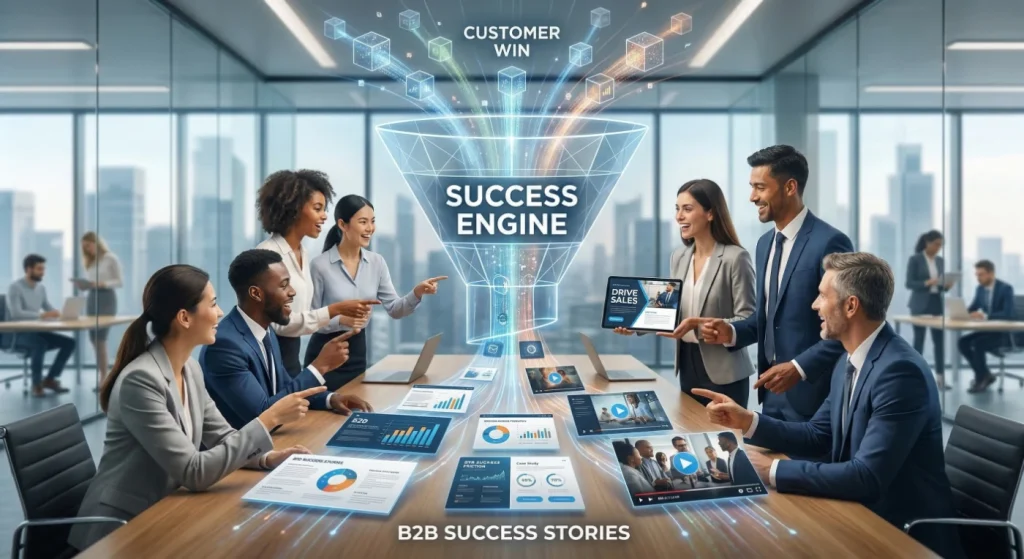
The strongest stories make the customer the hero. Your company is the guide that helped them solve a real problem and reach a better outcome. Because of that, the story feels more relatable and more believable.
Choose the right customer
One of the most common mistakes in B2B marketing is choosing any happy client and hoping the story will connect.
A better approach is to ask a more focused question: which customer story will speak most clearly to the audience you want to reach?
Look for customers who match your ideal buyer. For example, they may share a similar industry, company size, challenge, or goal. Most importantly, their success should feel realistic.
In fact, the best story is not always the most dramatic one. Usually, it is the one that feels most achievable. Buyers do not need a miracle. They need a result they can imagine for their own business.
Put this into practice
Create a simple checklist before you start outreach:
- similar industry or audience
- a clear problem before your solution
- measurable improvement afterward
- a customer contact who is positive and credible
- results that feel repeatable
This small step will help you choose stories that work harder for your brand.
Find the internal champion
Companies do not say yes to case studies. People do.
That is why it helps to find the internal champion. In many cases, this is the person who led the project, pushed for the solution, or saw the results up close.
For that person, the story is not just about helping your brand. It can also highlight their work, their leadership, and their success. When you frame it that way, the request feels much more appealing.
Put this into practice
Reach out after a positive moment, such as:
- a successful launch
- a strong renewal
- a major milestone
- a high NPS score
- positive feedback on a call
Then keep your message warm and specific:
“Your team has made great progress, and we would love to highlight that success. We think your story could help other companies facing similar challenges.”
This feels collaborative, not pushy.
Ask stronger questions
Better stories start with better interviews.
If you ask broad questions, you will usually get broad answers. On the other hand, thoughtful questions can uncover details that make the story more useful and more persuasive.
Start with the “before.” What was not working? What was frustrating, slow, expensive, or unclear? This part matters because readers need to understand the pain before they care about the outcome.
Next, ask about the decision process. Who was involved? What concerns came up? What made the choice difficult? These answers often reveal the same objections future buyers may have.
Finally, explore the change. What improved? What surprised them? What results matter most now?
Put this into practice
Use a simple set of questions like these:
- What challenge made you start looking for a new solution?
- What was the old process costing your team?
- What made this decision difficult?
- What stood out during the evaluation stage?
- What changed after implementation?
- What results matter most now?
- What would you say to another company thinking about making a similar move?
With these questions, you can gather enough detail without making the interview feel heavy.
Use a simple story structure
You do not need a complicated framework. In most cases, a simple structure works best.
One of the easiest formats is:
Before → After → How
Before
Start by showing what life looked like before the change. Explain the challenge clearly. Show the friction, the cost, or the lost time.
After
Then paint the improved picture. Show what changed and why it mattered. Help the reader see the result in practical terms.
How
Finally, explain how the customer got there. This is where your solution comes in. At this stage, your brand becomes the bridge between the problem and the result.
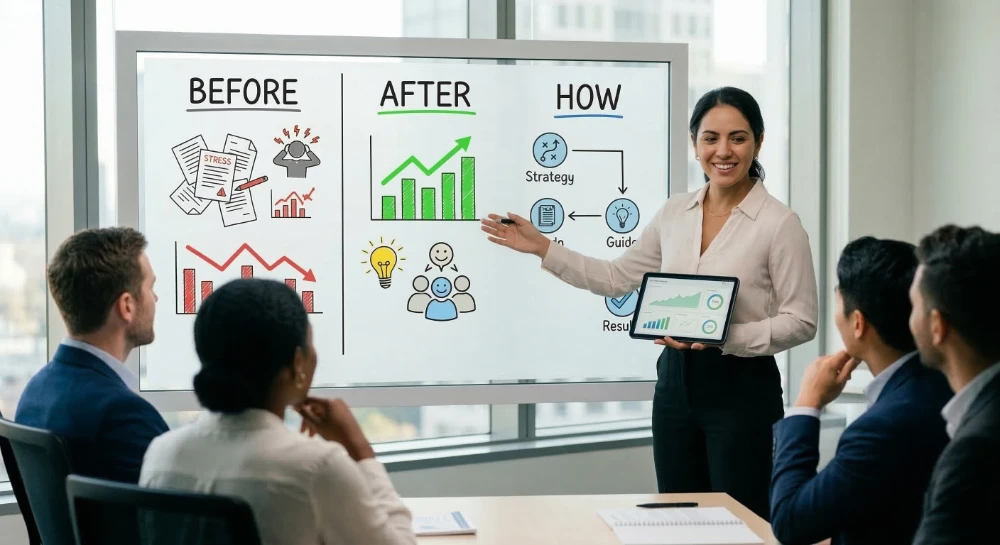
Because this structure is clear and easy to follow, it works especially well for B2B readers.
Balance proof with personality
B2B buyers want numbers. At the same time, they also want confidence.
That means your customer story should include both hard proof and human insight.
Hard proof may include:
- revenue growth
- time saved
- higher lead quality
- lower costs
- stronger engagement
- better efficiency
Human insight may include:
- less stress for the team
- smoother workflows
- faster decision-making
- more confidence in the process
- better collaboration across departments
Together, these details make the story more believable and more memorable.
Put this into practice
For each customer story, include:
- one clear business challenge
- two or three measurable outcomes
- one strong customer quote
- one lesson the reader can apply
That combination gives the piece both value and credibility.
Keep it easy to read
Even a strong story can lose impact if it feels hard to get through.
So keep the layout simple. Use clear subheadings, short paragraphs, and natural language. Also, pull out key stats when possible. If you have visuals, use them to support the message rather than distract from it.
Remember, many readers will scan before they fully read. Therefore, your main points should be easy to spot right away.
Plan for approval early
A great story can slow down quickly if approvals are not clear from the start.
To avoid that, talk about the review process before you do the interview. Ask who needs to approve the final version. Clarify what results can be shared. Confirm whether names, titles, logos, and quotes need extra sign-off.
Put this into practice
Ask this question early:
“Who else should be involved in approving this story?”
That one question can save a lot of time later.
Do more with each story
Publishing a customer success story on your website is a good start. Still, it should not end there.
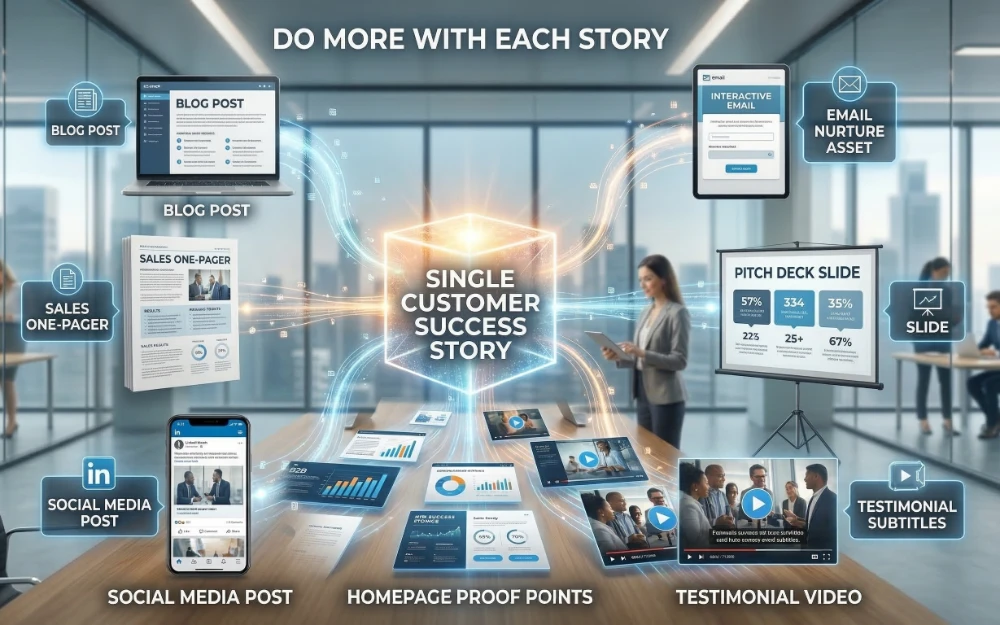
A single story can become many useful pieces of content. For example, you can turn it into:
- a blog post
- a sales one-pager
- a social media post
- an email nurture asset
- a pitch deck slide
- a short testimonial video
- homepage proof points
As a result, one interview can support multiple parts of your marketing and sales strategy.
A practical example
Let’s say a customer used your service to improve lead quality, create a more consistent brand experience, and strengthen trade show follow-up.
You do not need to force all of that into one long piece.
Instead, you can break it into smaller assets:
- a full blog post about the overall transformation
- a sales asset focused on lead quality
- a social post about trade show follow-up
- a website snippet about brand consistency
- an email focused on the pain points they faced before the change
This makes the story more flexible and more useful.
The easiest way to start
If the whole process feels overwhelming, start small.
Choose one strong customer. Interview them with better questions. Write the story using Before, After, and How. Then pull out one quote, three results, and one practical lesson.
After that, use the story in at least three places.
That is enough to build momentum. Once you do it once, the process becomes easier to repeat.
Final thought
B2B customer success stories work because they reduce risk.
They help future buyers see that change is possible, that results are real, and that someone like them has already gone first. In other words, they give prospects confidence.
So do not treat customer stories like filler content. Instead, use them as trust-building tools. Use them as sales support. Use them as proof that your brand delivers what it promises.
When prospects can see their own challenges reflected in someone else’s success, your marketing stops sounding like a pitch.
It starts sounding useful.
- Think beyond the standard case study
- Choose the right customer
- Find the internal champion
- Ask stronger questions
- Use a simple story structure
- Before → After → How
- Balance proof with personality
- Keep it easy to read
- Plan for approval early
- Do more with each story
- A practical example
- The easiest way to start
- Final thought
Ready to Take Your Brand Beyond Ordinary?
Your marketing shouldn’t just exist. It should perform. If you’re done settling for “good enough,” let’s build something impossible to ignore. Brandit helps you connect every digital, physical, and promotional touchpoint into one unstoppable brand experience.
Real Results,
Real Reactions
What Our Clients Say

"I sent out three bids for my marketing needs for this year and Brandit was the most responsive and provided great ideas. One company I reached out hadn't even gotten back to me while the other wasn't even close to being comparable to Brandit's creativity, pricing and service."
"I have used Brandit for several projects and they always come through with fantastic pricing and customer service. I highly recommend them."
Southern New Hampshire University

"Thanks to Brandit's generous contribution to the Big Ideas for Building Independence Capital Campaign, Easterseals NH is now better able to serve people with disabilities or special needs. With your support, we raised nearly $2.6 million for renovations to our headquarters."
"It has been an incredible journey! We couldn't have done it without you, and wish to take this opportunity to thank you and your team at Brandit Marketing Solutions for all that you have done and your generous donation."
Easterseals, NH

"Bringing Brandit Marketing Solutions into the CMC-fold is the best thing and most appreciative thing I've done since being at the Hospital."
Catholic Medical Center
"Exceptional does not even begin to cover the work that these people do. I have worked closely with other marketing firms and Brandit tops them every time. From innovative ideas to customer service that rivals the best of the best. I just couldn't speak more highly of them."
Southern New Hampshire University

"The Granite Group, headquartered in Concord, NH, distributes plumbing, heating, cooling, water and propane supplies to contractors and fuel dealers across New England through over 45 wholesale branches and their Online Store. The company also operates 15 retail showrooms under The Ultimate Bath Store name.
Brandit is pleased to say that we have been working with the Granite Group for over ten years which happens to be almost as long as this company has been in existence. In 2020, TGG was named one of New Hampshire's best places to work."
The Granite Group
10+ Year Partnership

"Over my long career, I have been in a position where I have worked closely with numerous vendors/suppliers. I can honestly say that I have never engaged with a company that is as amazing and responsive as Brandit."
"A sincere thanks to the team for the hustle on getting our shirts and tradeshow materials done for our group! You really relieved our pressure and I know it wasn't an easy task. Your effort and turnaround time was and is appreciated. Believe me when I say that I do not take for granted the relationship we have built over the years. Your service is top notch."
C&S Wholesale Grocers
"For almost a decade, the team at Brandit delivered successful and effective marketing solutions, spearheaded the merchandising of the FIRST brand by creating one-of-a-kind products, built, hosted, and managed their very first ecommerce store supporting all programs, staff, partners, sponsors, teams, and customers globally.
In addition, Brandit set up and managed multiple on-site retail stores at their premier Championship events where we serviced over 65,000 attendees. Today we provide web services as well as branded merchandise for regional partners".
FIRST Robotics
"The Brandit Marketing Solutions Ltd Team is wonderful to work with and we appreciate what they do to make us look good! They have expanded their services in recent years to meet whatever marketing needs you may have…from apparel and giveaway items to video and web services to graphic design and printing services, even graphic enhancements for your interior/exterior office space."
"I have worked with this team since the founding of their company and look forward to many more years of working together!"
Boys & Girls Club of Manchester

"The Brandit team is a talented group of creative professionals that I've worked with for years. Top notch!"
Art Murphy
Our Insights
.
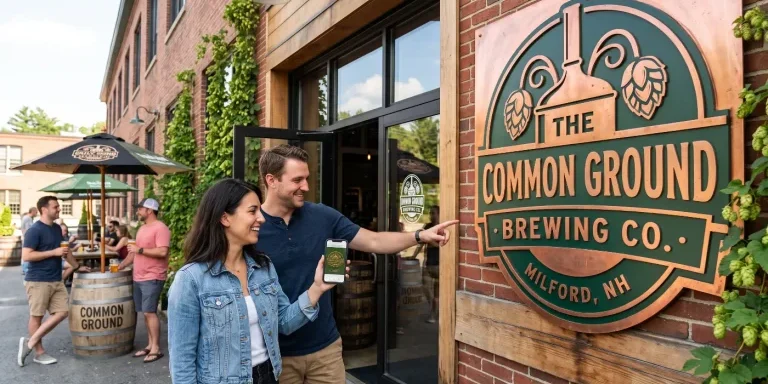
Brand Consistency: Make Your Site & Sign Match
Your website looks sharp. Your storefront sign looks fine. Your business cards came back a slightly different shade of blue than you remembered. Each one on its own seems like a small thing. Together, they cost you customers and money. Brand consistency is whether everything a customer sees from you looks and sounds like it…
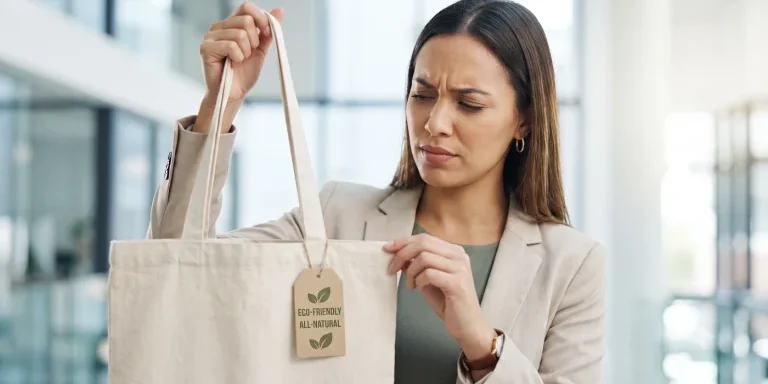
Sustainable Promotional Products: A Buyer’s Reality Check
That recycled tote you ordered for the trade show has a problem. The product page called it eco-friendly, you felt good about the choice, and you moved on. Here is the uncomfortable part: when auditors actually test merchandise carrying self-declared green labels, close to half cannot back up the claim. The word on the page…
What Is AI Search Readiness and How Can Local Businesses Improve Visibility?
Your next lead may begin with an AI agent researching your company before a person ever visits your website or contacts your team. Google is expanding the ways its AI-powered Search tools can help people find and compare local providers. A customer can describe what they need, ask Google to research nearby businesses, and use…
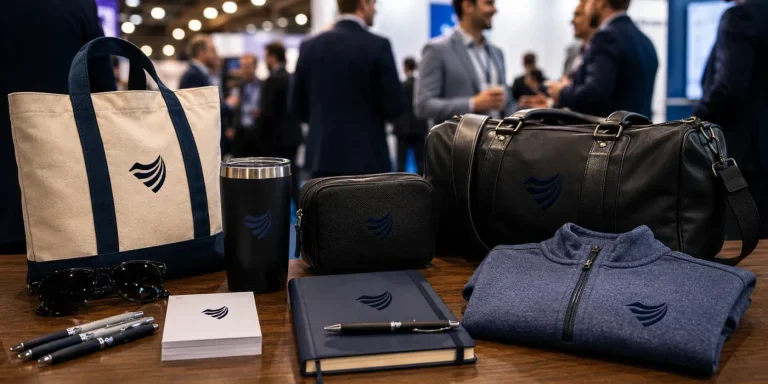
Premium vs. Volume: Rethinking Your Promotional Products Budget
You order 500 pens for the trade show. They cost a little over a dollar each, they have your logo, and they feel like a responsible use of the budget. Three weeks later, most of them are in a junk drawer, a parking lot, or a trash can. A few never made it out of…

Holiday SEO Timeline: Why December Rankings Start in Summer
The businesses that dominate search results this December made their move back in July. Not out of habit. They moved early because search rewards steady, consistent work in a way that no last-minute push can replicate. Holiday SEO is not a campaign you switch on when the decorations come out. It is an advantage you…

Corporate Holiday Gifting Timeline: Why Q4 Planning Starts in July
Here is the part nobody tells you about corporate gifting: the best time to lock in your holiday program is right now, in July. Not October. Not “right after Halloween.” July. That sounds early enough to be a joke. It is not. The companies that run corporate gifting well, sending memorable and on-time gifts to…

Website Performance Audit: Why Q3 Beats Q4 Every Time
Your website traffic is about to drop. Vacations start, inboxes go quiet, and the steady hum of summer browsing replaces the urgency of buying season. Most businesses read that slowdown as a reason to coast. That is the expensive mistake. The quiet stretch from July through September is the best window all year to run…

Summer Foot Traffic: Win It With a Mobile-First Website
Picture a family on a sidewalk in Portsmouth on a Saturday in July. It is 86 degrees, the kids are hungry, and someone pulls out a phone and types “lunch near me.” Three places show up on the map. They tap the first one. If that site loads fast and the menu is right there,…

Modern Phishing Scams: What Smart Businesses Need to Know
The old advice for spotting a scam email no longer works. Watch for bad spelling, awkward grammar, and a generic greeting, and you were safe. That rule protected people for years. Modern phishing scams have erased every one of those tells. Attackers now write clean, personalized messages, hide their links inside images, and move the…

Branded Koozies and Sunglasses Aren’t Lazy: High-Yield Summer Promotional Products
Someone on your team just rolled their eyes at the idea of branded sunglasses. Too obvious. Too expected. Let’s do something clever instead, maybe a little desk gadget or a puzzle nobody asked for. That instinct feels smart. It usually costs you the campaign. Here’s the part most people miss: the “clever” item lives on…
Omnichannel Marketing Solutions
Merging creativity and technology for comprehensive brand experiences.

PIXELS
Harnessing digital platforms for impactful brand promotion and audience engagement through strategic touchpoints.

PROMOS
Making the intangible tangible through high-quality promotional items that echo your brand's voice and values.

PLACES
Transforming physical environments into powerful brand narratives that forge connections with everyone who enters your space.