

B2B vs B2C Marketing: What Local Brands Need to Know
Two businesses. Same city. Same ad budget. Completely different results.
A local restaurant owner runs Facebook ads featuring gorgeous food photography. Bookings spike within the week. Meanwhile, a commercial cleaning company runs nearly identical ads — same platform, same spend — and hears nothing. Not a single inquiry.
Same tool. Same effort. Completely different outcome.
The restaurant owner assumes digital marketing works. The cleaning company owner assumes it doesn’t. They’re both wrong about the same thing: they’re treating two fundamentally different businesses as if they play by the same rules.
They don’t. And once you understand why, everything about your marketing starts to make more sense.
The Real Divide: Desire vs. Fear
Before we get into tactics, we have to get into psychology — because that’s where the real difference lives.
When a consumer buys from a local business, the decision is emotional. Hungry right now. Bored. Wants to treat themselves. The stakes are low enough that impulse drives action. A coffee shop doesn’t need to convince someone their latte is worth it. They just need to be findable at the moment the craving hits.
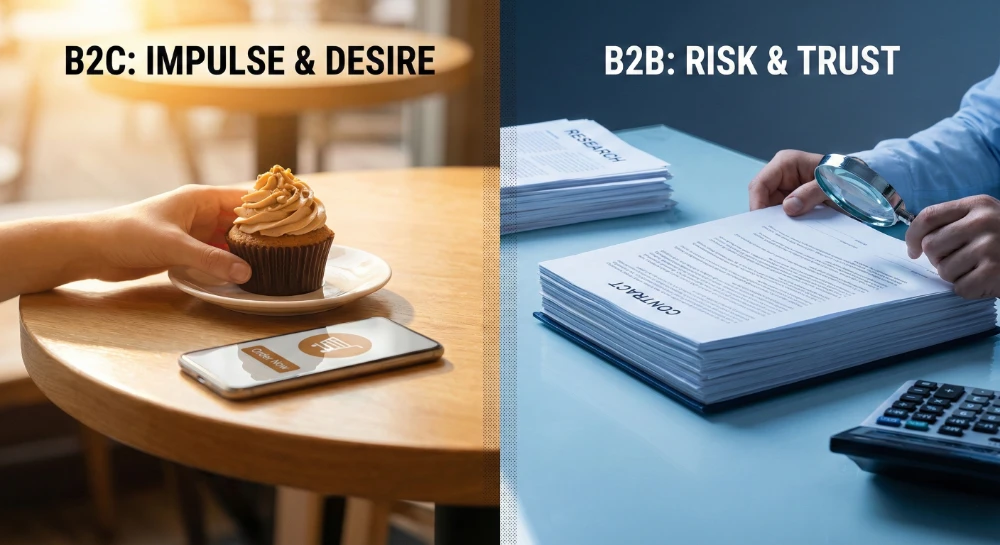
B2C marketing is, at its core, about desire.
B2B marketing is about something else entirely: fear.
When a business owner or manager hires a vendor, the professional stakes are real. A bad hire doesn’t just cost money — it can mean data loss, project failure, or a hard conversation with leadership. The decision isn’t just financial. It’s about professional reputation.
That fear drives B2B buyers toward caution. They research longer, involve more people in the decision, and need proof of competence before they’ll even take a meeting. The local advantage in B2B isn’t charm or proximity — it’s accountability. A local vendor can be called, visited, and held responsible in ways a remote provider can’t.
Understanding this isn’t academic. It determines whether your marketing investment comes back to you as revenue or disappears into the void.
Two Different Clocks
The difference in psychology creates a difference in time.
A consumer decides in minutes. A restaurant, a boutique, a gym — the sales cycle is measured in days at most, often in the seconds between seeing a social post and placing an order. Marketing has to capture attention and convert it immediately.
B2B runs on a completely different clock. A commercial landscaping contract, a managed IT agreement, a commercial insurance policy — the sales cycle runs months. Sometimes a year or more. The prospect you connect with today might not be ready to move until Q3. Maybe Q1 next year.
This changes everything about how you allocate your marketing effort.
B2C needs to be always-on and everywhere. The coffee shop can’t predict when someone three blocks away will decide they need a latte. So the brand has to be visible constantly, tuned to capture the impulse moment when it arrives.
B2B needs depth and endurance. The prospect who found your case study in February and didn’t call until October isn’t an anomaly — that’s the sales cycle working correctly. Marketing that nurtures over time, through content that keeps the relationship warm, is what eventually closes the deal.
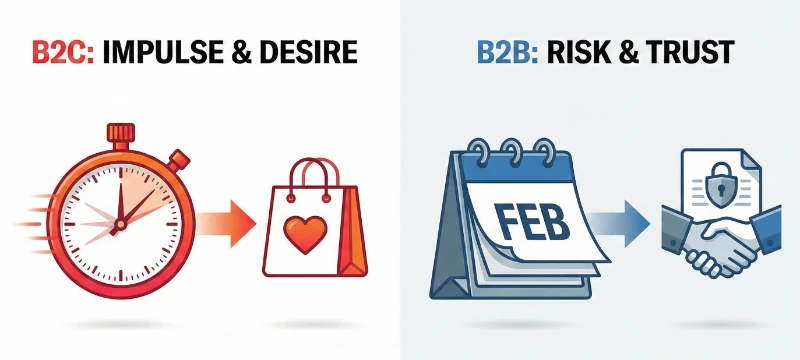
The metrics shift accordingly. B2C measures daily sales, foot traffic, booking rate. B2B measures pipeline, lead quality, and how quickly qualified prospects move toward a decision.
What This Means for How You Get Found
Local SEO looks different depending on which lane you’re in. Not just different tactics — a different understanding of what “being found” actually means.
For B2C, the Google Business Profile is everything. The map pack — those three local businesses that appear above organic results — captures the majority of intent-driven searches. When someone types “Italian restaurant downtown” or “nail salon near me,” they’re ready to act. Getting into that map pack requires consistent reviews, accurate business information, strong photo content, and local engagement signals.
B2B discovery works differently. A facilities manager looking for a commercial HVAC company isn’t just checking Google Maps. They’re searching for answers to specific problems — “energy efficiency for large office buildings” or “commercial HVAC maintenance contracts” — and they’re landing on the businesses whose content best addresses those problems. Domain authority, backlinks from industry sources, and deep written content matter far more than check-ins.
Industry data on this is telling. An HVAC contractor running geo-targeted paid ads converts around 3% of traffic into leads — because the search intent is urgent and specific. A B2B SaaS company converts closer to 1%. Not because their marketing is weaker, but because the buyer needs more time, more proof, more reassurance before they’re ready to raise their hand.
Neither number is good or bad in isolation. They’re different games.
The Content That Actually Works
Here’s where most local businesses get it wrong: they pick a content format that works for someone else’s industry and try to apply it to their own.
A bakery following a consultant’s Instagram strategy. A B2B services firm posting quick-tip reels. The format is borrowed. The results don’t follow.
B2C content has one job: stop the scroll. Food photography that makes you hungry at 11am. A reel showing the transformation from dusty attic to organized storage. A photo of a real customer in a boutique’s clothes. Visual, immediate, emotional. The goal is to close the gap between seeing and wanting.
B2B content has a different job: earn trust before anyone picks up the phone. A commercial cleaning company doesn’t need viral content. They need a case study showing how they helped an office building reduce sick days by 30%. They need a post about the specific cleaning protocols required for medical facilities. They need content that speaks directly to the facilities manager’s actual problem — not generic “we’re reliable” claims, but specific evidence of expertise.
There’s a format worth knowing about: the hub-and-spoke content model. A central, comprehensive resource — say, a complete guide to commercial signage regulations in New Hampshire — anchored by a cluster of supporting posts that explore specific angles. This isn’t just content strategy. It’s how search engines decide whether a business has genuine expertise in a topic, which directly determines how often that business shows up when someone is actually looking for help.
One trend worth noting: the line between B2B and B2C content is blurring in one important way. B2B buyers are exhausted by corporate language. They want to see the people behind the company — the founder explaining their approach on video, the team working late on a project, the behind-the-scenes process. Authenticity, which used to feel like a B2C thing, is now one of the most effective trust-builders in B2B.
Reviews Mean Different Things on Each Side
Both B2B and B2C live and die on reputation. But reputation is measured differently.
For a local restaurant or retailer, volume is what matters. A thousand reviews at 4.3 stars beats ten reviews at 4.8 stars, because volume signals legitimacy. The strategy is to make it easy for satisfied customers to leave reviews — a text after their visit, a follow-up email, a prompt at the point of sale.
For a B2B services company, depth beats volume. One detailed review describing a specific challenge, the approach taken, and the measurable result is worth more than a hundred “Great service!” one-liners. Platforms like Clutch have emerged specifically to serve this need — they verify reviews through interviews, document project scope and budget, and give B2B buyers the kind of evidence they actually need to feel safe making a decision.
This means the reputation management effort looks different. B2C pursues consistent volume through automation. B2B pursues quality through relationship — asking specific clients to document their experience in detail, on the platforms where serious B2B buyers actually research.
Networking That Pays Off
Local relationships matter in both worlds. But again, the goal shifts.
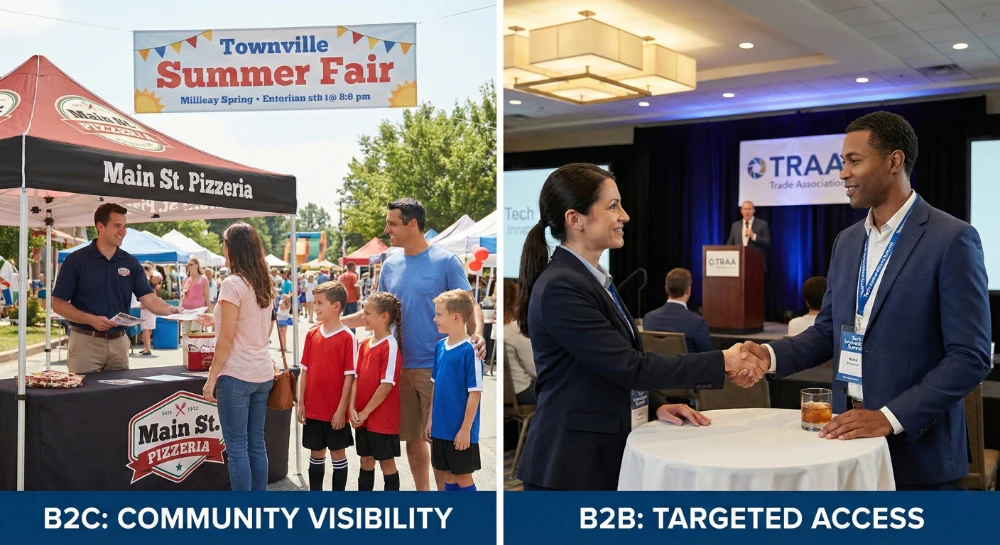
Sponsoring a youth sports league, showing up at a community festival, running a booth at a neighborhood event — these build B2C brand recognition in a positive emotional context. Thousands of families see the name. “Share of heart,” as researchers describe it: the positive association that makes someone more likely to choose your business when the need arises.
B2B networking is less about reach and more about access. A table at a chamber gala, membership in a trade association, an invitation to speak at an industry event — these put you in the same room as the specific decision-makers you need to know. The ROI isn’t measured in impressions. It’s measured in relationships that eventually turn into conversations.
Referral networks like BNI function almost exclusively in the B2B space for a reason: they’re designed for service providers who generate leads from other business owners. A plumber, an accountant, a commercial insurance agent — each one becomes a referral source for the others. It only works because B2B relies on trusted recommendations in a way that B2C typically doesn’t.
Finding Your Lane
If you’re running a consumer-facing business, your marketing needs to be fast, visual, and always present. Get your Google Business Profile working hard. Be visible on the platforms where your customers discover what they want. Make it easy to review you, find you, and reach you in the moment of decision. The competitive advantage is in being the most accessible, most appealing option when the impulse hits.
If you’re running a B2B company, slow down and go deeper. Your marketing is a long-term investment in being the expert that prospects trust when they’re finally ready to act. That means content that answers hard questions, proof of your work in the form of detailed case studies, and a reputation built on verified depth rather than volume. The competitive advantage is in being the safest choice when someone’s professional reputation is on the line.
Most local markets are underdeveloped in one area or the other. B2C businesses underinvest in SEO and reputation management, assuming word of mouth is enough. B2B businesses underinvest in content and stay invisible between networking events.
The gap between where you are and where your marketing should be — that’s where the growth is.
Brandit works with businesses on both sides of this divide — and a lot in the middle. If you’re not sure which approach fits where you are, we’re happy to start that conversation. Reach out to the team at 603.645.2500 or visit BranditMS.com.
Ready to Take Your Brand Beyond Ordinary?
Your marketing shouldn’t just exist. It should perform. If you’re done settling for “good enough,” let’s build something impossible to ignore. Brandit helps you connect every digital, physical, and promotional touchpoint into one unstoppable brand experience.
Real Results,
Real Reactions
What Our Clients Say

"I sent out three bids for my marketing needs for this year and Brandit was the most responsive and provided great ideas. One company I reached out hadn't even gotten back to me while the other wasn't even close to being comparable to Brandit's creativity, pricing and service."
"I have used Brandit for several projects and they always come through with fantastic pricing and customer service. I highly recommend them."
Southern New Hampshire University

"Thanks to Brandit's generous contribution to the Big Ideas for Building Independence Capital Campaign, Easterseals NH is now better able to serve people with disabilities or special needs. With your support, we raised nearly $2.6 million for renovations to our headquarters."
"It has been an incredible journey! We couldn't have done it without you, and wish to take this opportunity to thank you and your team at Brandit Marketing Solutions for all that you have done and your generous donation."
Easterseals, NH

"Bringing Brandit Marketing Solutions into the CMC-fold is the best thing and most appreciative thing I've done since being at the Hospital."
Catholic Medical Center
"Exceptional does not even begin to cover the work that these people do. I have worked closely with other marketing firms and Brandit tops them every time. From innovative ideas to customer service that rivals the best of the best. I just couldn't speak more highly of them."
Southern New Hampshire University

"The Granite Group, headquartered in Concord, NH, distributes plumbing, heating, cooling, water and propane supplies to contractors and fuel dealers across New England through over 45 wholesale branches and their Online Store. The company also operates 15 retail showrooms under The Ultimate Bath Store name.
Brandit is pleased to say that we have been working with the Granite Group for over ten years which happens to be almost as long as this company has been in existence. In 2020, TGG was named one of New Hampshire's best places to work."
The Granite Group
10+ Year Partnership

"Over my long career, I have been in a position where I have worked closely with numerous vendors/suppliers. I can honestly say that I have never engaged with a company that is as amazing and responsive as Brandit."
"A sincere thanks to the team for the hustle on getting our shirts and tradeshow materials done for our group! You really relieved our pressure and I know it wasn't an easy task. Your effort and turnaround time was and is appreciated. Believe me when I say that I do not take for granted the relationship we have built over the years. Your service is top notch."
C&S Wholesale Grocers

"For almost a decade, the team at Brandit delivered successful and effective marketing solutions, spearheaded the merchandising of the FIRST brand by creating one-of-a-kind products, built, hosted, and managed their very first ecommerce store supporting all programs, staff, partners, sponsors, teams, and customers globally.
In addition, Brandit set up and managed multiple on-site retail stores at their premier Championship events where we serviced over 65,000 attendees. Today we provide web services as well as branded merchandise for regional partners".
FIRST Robotics

"The Brandit Marketing Solutions Ltd Team is wonderful to work with and we appreciate what they do to make us look good! They have expanded their services in recent years to meet whatever marketing needs you may have…from apparel and giveaway items to video and web services to graphic design and printing services, even graphic enhancements for your interior/exterior office space."
"I have worked with this team since the founding of their company and look forward to many more years of working together!"
Boys & Girls Club of Manchester

"The Brandit team is a talented group of creative professionals that I've worked with for years. Top notch!"
Art Murphy
Our Insights
.
Mobile-First Design: Why “Mobile-Friendly” Isn’t Enough in 2026
Your website loads on phones. But was it actually built for them? Most businesses still design for desktops first, then try to squeeze everything onto smaller screens. That approach is backward. Your customers aren’t browsing during lunch breaks at their desk anymore. They’re checking you out while standing in line, walking between meetings, or sitting…

WordPress vs Custom Development: Which Is Right for Your Business in 2026?
Which Platform Powers Your Business Goals in 2026? Your website is the foundation of your digital presence. It’s where customers find you, learn about your services, and decide whether to do business with you. So when it’s time to build or rebuild that foundation, one question keeps coming up: Should you use WordPress, or invest…

Website Accessibility Compliance: Legal Requirements and Best Practices for 2026
If your business has a website, 2026 brings a new reality you need to understand. The rules around website accessibility have shifted from “nice to have” to “legally required” for many organizations. What was once voluntary guidance has become a compliance mandate with real deadlines, real enforcement, and real consequences for businesses that fall behind.…
Short-Form Video Content That Converts Local Customers
Your competitors are showing up in “Nearby” feeds on TikTok. They’re appearing in Instagram map searches. Their YouTube Shorts are ranking on Google when customers search for services in your area. You’re not. This isn’t about going viral. It’s about being found by the customer driving past your location right now, phone in hand, searching…
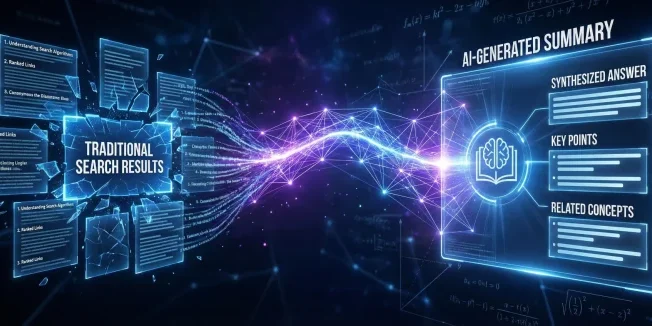
AI and SEO: How Machine Learning is Changing Search Rankings
The rules of search just changed. Here’s what your business needs to know. If your website traffic has felt unpredictable lately, you’re not imagining things. Between 2024 and 2025, Google fundamentally rewired how search works. The old playbook—keywords, backlinks, and page rankings—isn’t broken. It’s just incomplete. Search engines aren’t librarians anymore, pointing you to the…

What Are the Best Local SEO Tools for 2026? | Brandit
Did you know that 46% of all Google searches have local intent? And according to recent data, 80% of U.S. consumers search for local businesses at least weekly, while 32% do so daily. (Source). Those numbers prove one thing: Local SEO is no longer optional. It’s essential for any business that relies on nearby customers.…
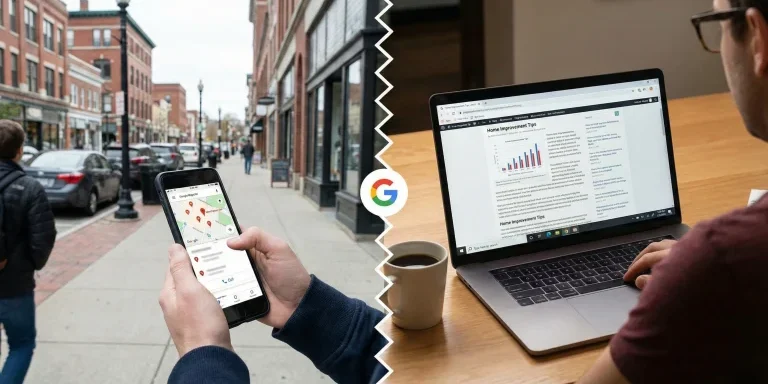
Local vs Traditional SEO: Which One Does Your Business Need?
Ever searched “coffee near me” or “roofing contractor in Manchester, NH” and instantly saw Google Maps listings, business reviews, and contact info at the top? Now compare that to searching “best home decor ideas” where blog articles, Pinterest boards, and ecommerce sites dominate. This isn’t a coincidence. It’s Google interpreting your search intent and deciding…
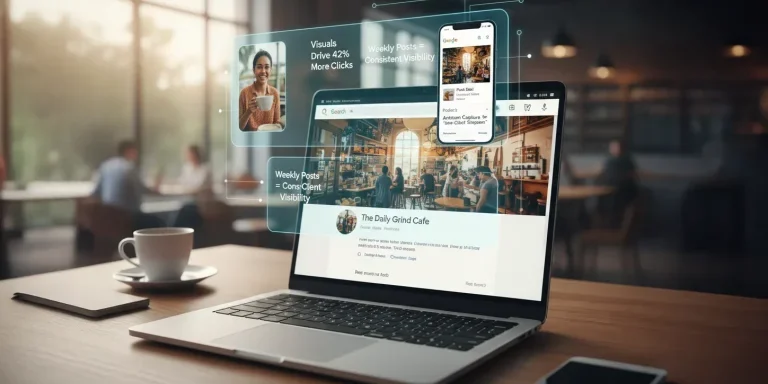
Google Business Profile Optimization: Visuals, Posts & Products That Drive Local SEO
Once your Google Business Profile (GBP) is verified and fully filled out, the next step is engagement and heading into 2026, that’s not optional. Google’s local algorithm now tracks not just what’s on your profile, but how often it’s updated, how visually compelling it is, and how well it answers a searcher’s intent. The businesses…

Bots, Spam, and the Fight for Authenticity: How to Spot & Stop Imposters Online
If your inbox, contact form, or social media comments have been flooded lately with strange messages or suspicious “requests,” you’re not imagining it. AI-driven bots have gone mainstream, and they’re getting disturbingly good at pretending to be real people. Generative AI tools have made it easy for anyone to create automated programs that talk, type,…
Geofencing & How It Attracts Local Customers in Manchester, NH
Are you missing out on customers who pass by your storefront without ever stepping inside? If the answer is yes, there’s a smart solution. It’s called geofencing marketing, and it’s helping businesses in Manchester, NH connect with people right when they’re nearby your store, shop, or outlet. What is Geofencing & How Does It Work?…
Omnichannel Marketing Solutions
Merging creativity and technology for comprehensive brand experiences.

PIXELS
Harnessing digital platforms for impactful brand promotion and audience engagement through strategic touchpoints.

PROMOS
Making the intangible tangible through high-quality promotional items that echo your brand's voice and values.

PLACES
Transforming physical environments into powerful brand narratives that forge connections with everyone who enters your space.