

The Critical Importance of Mobile Optimization in Digital Marketing
Why Ignoring Mobile Users Could Be Costing You
In today’s fast-paced world, smartphones and tablets aren’t just gadgets—they’re essential tools that people use every day. If your business isn’t optimized for mobile users, you might be missing out on valuable opportunities to connect with your audience. Let’s dive into why mobile optimization is crucial for digital marketing success and how you can make sure your mobile strategy hits the mark.
Welcome to the Mobile-First Revolution
The Rise of Mobile Usage
Over the past decade, there’s been a massive shift in how people access the internet. According to Statista, over 50% of global web traffic now comes from mobile devices. And guess what? This number is only going up! People are browsing, shopping, and engaging with content on their phones more than ever before.
Changing Consumer Behavior
This shift to mobile has changed the game for consumer behavior:
- Instant Access: People use their phones for everything—from checking social media to making big purchase decisions.
- High Expectations: A Google study found that 61% of users are unlikely to return to a mobile site they had trouble accessing, and 40% will visit a competitor’s site instead.
Why Mobile Optimization Matters for Digital Marketing
Improved User Experience
At its core, mobile optimization is about making your website user-friendly on smaller screens. This includes:
- Faster Loading Times: Mobile users are often on the go and won’t wait around.
- Easy Navigation: Menus and buttons that are simple to use.
- Readable Content Without Zooming: Text that’s easy to read without pinching the screen.
- Touch-Friendly Buttons and Forms: Designed for fingers, not mouse clicks.
A positive user experience means visitors stay longer, engage more, and are more likely to convert into customers.
Better Search Engine Rankings
Search engines like Google now use mobile-first indexing, which means they prioritize the mobile version of your site when determining rankings. If your site isn’t mobile-friendly, you could see a drop in search rankings, making it harder for potential customers to find you.
Increased Conversion Rates
Mobile-optimized sites tend to see higher conversion rates. This is especially true for local searches:
- 88% of consumers who search for a local business on a mobile device call or visit that business within 24 hours.
Competitive Advantage
In many industries, mobile optimization isn’t just a nice-to-have—it’s expected. By providing a seamless mobile experience, you can stand out from competitors who haven’t made mobile users a priority.
Key Aspects of Mobile Optimization
Responsive Design
Responsive design means your website automatically adjusts to look great on any device—whether it’s a desktop, tablet, or smartphone. It uses flexible layouts, images, and CSS to adapt to the user’s screen size.
Page Speed Optimization
Nobody likes a slow website. For mobile users:
- Minimize Code: Remove unnecessary code to speed up loading times.
- Leverage Browser Caching: Store website data on users’ devices for faster access.
- Optimize Images: Compress images without losing quality.
- Use Content Delivery Networks (CDNs): Deliver content from servers closest to the user.
Simplified Navigation
With less screen space, navigation needs to be straightforward:
- Hamburger Menus: Those three little lines that hide the menu until clicked.
- Clear, Concise Labels: Make it easy to find what they’re looking for.
- Large, Touch-Friendly Buttons: Easy to tap without mistakes.
- Prominent Search Function: Let users find content quickly.
Mobile-Friendly Content
Make your content easy to consume on a small screen:
- Short Paragraphs and Bullet Points: Break up text for readability.
- Plenty of White Space: Avoid clutter.
- Legible Fonts and Sizes: Ensure text is readable without zooming.
- High-Contrast Color Schemes: Improve visibility.
Touch-Friendly Design
Remember, fingers aren’t as precise as a mouse:
- Large Buttons and Links: Easier to tap accurately.
- Adequate Spacing Between Elements: Prevent accidental clicks.
- Easy-to-Fill Forms: Simplify fields and use autofill where possible.
Mobile Optimization Strategies for Digital Marketing
Optimize for Local SEO
With the rise of “near me” searches, local SEO is more important than ever:
- Update Business Information: Ensure details are current on Google My Business and other directories.
- Use Location-Based Keywords: Incorporate them into your content and meta tags.
Leverage Mobile-Specific Features
Enhance user experience with features tailored for mobile:
- Click-to-Call Buttons: Let users contact you instantly.
- Maps and Directions: Integrate with apps like Google Maps.
- Mobile Payment Options: Simplify the purchasing process.
- App Download Prompts: Encourage users to engage further if you have an app.
Create Mobile-Specific Ad Campaigns
When running ads:
- Design for Mobile: Use images and text that display well on small screens.
- Mobile-Friendly Landing Pages: Ensure a seamless experience from ad click to conversion.
- Clear Calls-to-Action: Make it obvious what the user should do next.
Implement Accelerated Mobile Pages (AMP)
AMP is an open-source framework that makes mobile web pages load faster. It’s especially useful for content-heavy sites like blogs and news outlets.
Utilize Progressive Web Apps (PWAs)
PWAs combine the best of web and mobile apps:
- Fast Loading Times
- Offline Functionality
- Home Screen Icons: Users can “install” your site without visiting an app store.
Optimize for Voice Search
With more people using voice assistants, consider:
- Natural Language Keywords: Use phrases people speak rather than type.
- Question-Based Content: Answer common questions your audience might ask.
Measuring Mobile Optimization Success
To see how well your mobile optimization efforts are working, track these key performance indicators (KPIs):
- Mobile Traffic Percentage: How much of your traffic comes from mobile devices?
- Mobile Conversion Rates: Are mobile users taking desired actions?
- Mobile Bounce Rate: Are users leaving your site quickly?
- Mobile Page Load Time: How fast does your site load on mobile?
- Mobile-Specific Search Rankings: How do you rank in mobile search results?
Use tools like Google Analytics and Google Search Console to monitor these metrics and identify areas for improvement.
Common Mobile Optimization Mistakes to Avoid
- Blocking JavaScript, CSS, or Image Files: Search engines need access to these to understand your site.
- Using Unplayable Content: Avoid formats that aren’t supported on mobile, like Flash.
- Intrusive Pop-Ups (Interstitials): These can frustrate users and hurt your SEO.
- Incomplete Mobile Content: Don’t skimp on content for mobile users.
- Not Testing on Multiple Devices and Browsers: Ensure a consistent experience across platforms.
The Future of Mobile Optimization
As technology continues to evolve, mobile optimization will need to adapt to new trends and user expectations:
5G Technology
With 5G networks rolling out, expect:
- Faster Load Times
- More Complex Mobile Experiences
Users will have higher expectations for speed and functionality.
Augmented Reality (AR) and Virtual Reality (VR)
As AR and VR become mainstream, consider how they might enhance your mobile user experience.
Voice and Visual Search
Prepare for new search methods:
- Voice Search: Optimize for how people speak.
- Visual Search: Use high-quality images and proper tagging.
AI and Personalization
Artificial intelligence can help deliver personalized experiences:
- Chatbots: Provide instant customer service.
- Product Recommendations: Suggest items based on user behavior.
Conclusion
Mobile optimization isn’t optional—it’s essential for any business looking to succeed in digital marketing. As mobile usage continues to grow, focusing on providing seamless, user-friendly mobile experiences will help you stay competitive and effectively reach your target audience.
By prioritizing responsive design, speed, navigation, and mobile-friendly content, you’ll not only meet user expectations but also drive conversions and boost your bottom line. Remember, mobile optimization is an ongoing process. Stay updated on the latest trends, continuously test your site, and refine your strategy to thrive in the ever-changing digital landscape.
Ready to take your mobile optimization to the next level?
Start implementing these strategies today and watch your digital marketing efforts soar!
Contact us today to see how we can help you engage your audience.
- Welcome to the Mobile-First Revolution
- Why Mobile Optimization Matters for Digital Marketing
- Key Aspects of Mobile Optimization
- Mobile Optimization Strategies for Digital Marketing
- Measuring Mobile Optimization Success
- Common Mobile Optimization Mistakes to Avoid
- The Future of Mobile Optimization
- Conclusion
Ready to Take Your Brand Beyond Ordinary?
Your marketing shouldn’t just exist. It should perform. If you’re done settling for “good enough,” let’s build something impossible to ignore. Brandit helps you connect every digital, physical, and promotional touchpoint into one unstoppable brand experience.
Real Results,
Real Reactions
What Our Clients Say

"I sent out three bids for my marketing needs for this year and Brandit was the most responsive and provided great ideas. One company I reached out hadn't even gotten back to me while the other wasn't even close to being comparable to Brandit's creativity, pricing and service."
"I have used Brandit for several projects and they always come through with fantastic pricing and customer service. I highly recommend them."
Southern New Hampshire University

"Thanks to Brandit's generous contribution to the Big Ideas for Building Independence Capital Campaign, Easterseals NH is now better able to serve people with disabilities or special needs. With your support, we raised nearly $2.6 million for renovations to our headquarters."
"It has been an incredible journey! We couldn't have done it without you, and wish to take this opportunity to thank you and your team at Brandit Marketing Solutions for all that you have done and your generous donation."
Easterseals, NH

"Bringing Brandit Marketing Solutions into the CMC-fold is the best thing and most appreciative thing I've done since being at the Hospital."
Catholic Medical Center
"Exceptional does not even begin to cover the work that these people do. I have worked closely with other marketing firms and Brandit tops them every time. From innovative ideas to customer service that rivals the best of the best. I just couldn't speak more highly of them."
Southern New Hampshire University

"The Granite Group, headquartered in Concord, NH, distributes plumbing, heating, cooling, water and propane supplies to contractors and fuel dealers across New England through over 45 wholesale branches and their Online Store. The company also operates 15 retail showrooms under The Ultimate Bath Store name.
Brandit is pleased to say that we have been working with the Granite Group for over ten years which happens to be almost as long as this company has been in existence. In 2020, TGG was named one of New Hampshire's best places to work."
The Granite Group
10+ Year Partnership

"Over my long career, I have been in a position where I have worked closely with numerous vendors/suppliers. I can honestly say that I have never engaged with a company that is as amazing and responsive as Brandit."
"A sincere thanks to the team for the hustle on getting our shirts and tradeshow materials done for our group! You really relieved our pressure and I know it wasn't an easy task. Your effort and turnaround time was and is appreciated. Believe me when I say that I do not take for granted the relationship we have built over the years. Your service is top notch."
C&S Wholesale Grocers

"For almost a decade, the team at Brandit delivered successful and effective marketing solutions, spearheaded the merchandising of the FIRST brand by creating one-of-a-kind products, built, hosted, and managed their very first ecommerce store supporting all programs, staff, partners, sponsors, teams, and customers globally.
In addition, Brandit set up and managed multiple on-site retail stores at their premier Championship events where we serviced over 65,000 attendees. Today we provide web services as well as branded merchandise for regional partners".
FIRST Robotics

"The Brandit Marketing Solutions Ltd Team is wonderful to work with and we appreciate what they do to make us look good! They have expanded their services in recent years to meet whatever marketing needs you may have…from apparel and giveaway items to video and web services to graphic design and printing services, even graphic enhancements for your interior/exterior office space."
"I have worked with this team since the founding of their company and look forward to many more years of working together!"
Boys & Girls Club of Manchester

"The Brandit team is a talented group of creative professionals that I've worked with for years. Top notch!"
Art Murphy
Our Insights
.
How to Build a Brand That Feels Human in an AI-Heavy Marketing World
There’s a beverage company you’d recognize by name. Last holiday season, their marketing team decided to rebuild their iconic TV ad using generative AI. New technology. Massive efficiency gains. Fraction of the production cost. The internet tore it apart. Viewers called it soulless. They weren’t wrong. The ad looked technically perfect in every sense, and…

Is Zero-Click Search Killing Your Website Traffic? Here’s the Real Answer
She refreshed the analytics dashboard one more time, hoping the numbers had changed. They hadn’t. Website sessions were down 31% year over year. The phone wasn’t ringing less. Leads were actually up. But her web traffic looked like it was falling off a cliff, and she couldn’t explain it to her business partner without sounding…

How to Turn Customer Wins Into B2B Success Stories That Actually Drive Sales
In B2B marketing, trust matters more than ever. Most buyers are not looking for another polished pitch. Instead, they want proof. They want to know your solution works, that companies like theirs have seen results, and that choosing you feels like a smart move. That is why customer success stories are so valuable. A strong…

Schema Markup: The Invisible Code That Gets Your Business Found on Google
You searched for a plumber at 9 PM on a Tuesday. Not just any plumber. One near you, with good reviews, open right now. Google handed you three options at the top of the page. Stars. Hours. Phone number. One click to call. You picked the first one. Here’s what you probably didn’t think about:…

Why Your Trade Show Booth Is a Ghost Town (And How to Fix It)
You spent $8,000 on the booth space. Another $3,000 on graphics. You shipped in a custom display, flew in two sales reps, and booked a hotel for three nights. Then the show doors opened, attendees streamed past your perfectly designed exhibit, and you spent most of Tuesday afternoon rearranging brochures. Sound familiar? It’s not a…
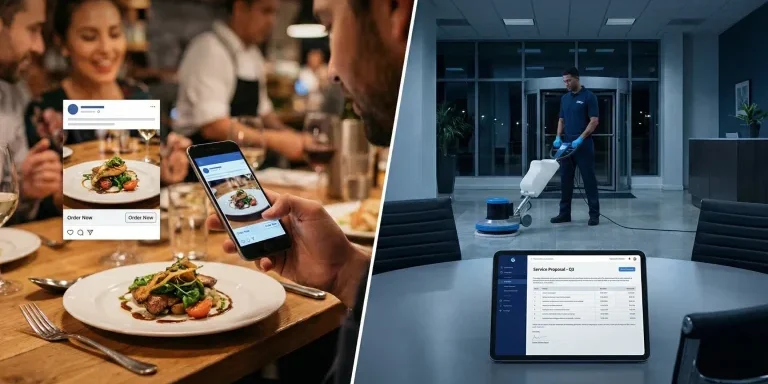
B2B vs B2C Marketing: What Local Brands Should Know in 2026
Two businesses. Same city. Same ad budget. Completely different results. A local restaurant owner runs Facebook ads featuring gorgeous food photography. Bookings spike within the week. Meanwhile, a commercial cleaning company runs nearly identical ads — same platform, same spend — and hears nothing. Not a single inquiry. Same tool. Same effort. Completely different outcome.…
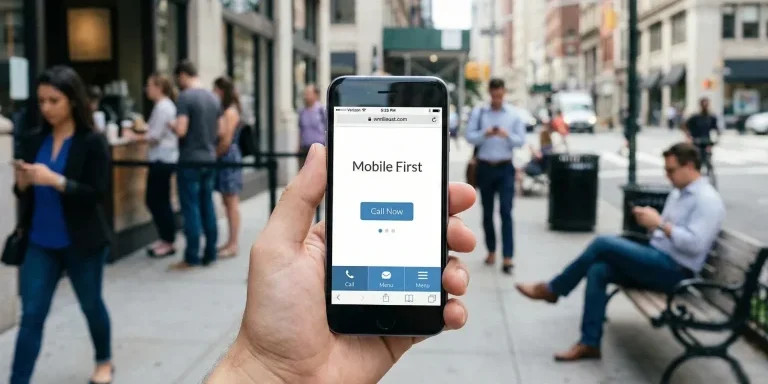
Mobile-First Design: Guide, SEO Benefits & Best Practices (2026)
Your website loads on phones. But was it actually built for them? Most businesses still design for desktops first, then try to squeeze everything onto smaller screens. That approach is backward. Your customers aren’t browsing during lunch breaks at their desk anymore. They’re checking you out while standing in line, walking between meetings, or sitting…

WordPress vs Custom Development: Which Is Right for Your Business in 2026?
Which Platform Powers Your Business Goals in 2026? Your website is the foundation of your digital presence. It’s where customers find you, learn about your services, and decide whether to do business with you. So when it’s time to build or rebuild that foundation, one question keeps coming up: Should you use WordPress, or invest…

Website Accessibility Compliance: Legal Requirements and Best Practices for 2026
If your business has a website, 2026 brings a new reality you need to understand. The rules around website accessibility have shifted from “nice to have” to “legally required” for many organizations. What was once voluntary guidance has become a compliance mandate with real deadlines, real enforcement, and real consequences for businesses that fall behind.…
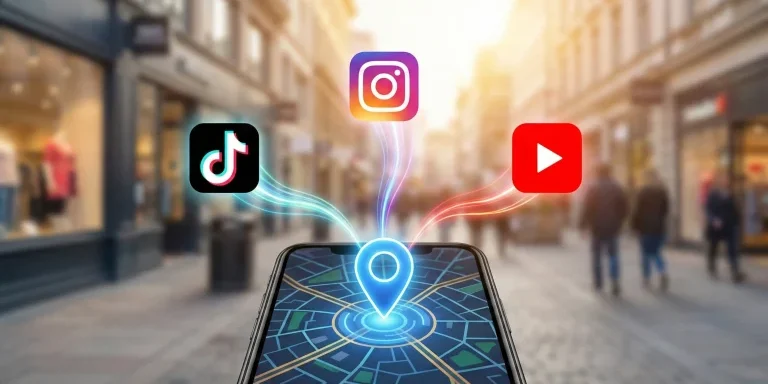
Short-Form Video Content That Converts Local Customers
Your competitors are showing up in “Nearby” feeds on TikTok. They’re appearing in Instagram map searches. Their YouTube Shorts are ranking on Google when customers search for services in your area. You’re not. This isn’t about going viral. It’s about being found by the customer driving past your location right now, phone in hand, searching…
Omnichannel Marketing Solutions
Merging creativity and technology for comprehensive brand experiences.

PIXELS
Harnessing digital platforms for impactful brand promotion and audience engagement through strategic touchpoints.

PROMOS
Making the intangible tangible through high-quality promotional items that echo your brand's voice and values.

PLACES
Transforming physical environments into powerful brand narratives that forge connections with everyone who enters your space.